businessbriefs
Newest

All briefs

561 briefs · 5965 min · 385–480 on page 5 of 6
10:37

Baidu

Robin Li · 2000

Baidu is a foundational case of algorithm-first platform building: its 1996 RankDex technology became its 2000 product, its 2001 ad model predated Google’s, and its 2003 content-search innovations were tailored to Chinese media structures. It achieved national dominance and NASDAQ listing — but never decoupled from search advertising, even as it invested in Apollo, Xiaodu, and AI stacks.

11:52

Bajaj Group

Jamnalal Bajaj · 1926

The Bajaj Group is a 98-year-old Indian industrial conglomerate — not a tech platform, not a VC-backed startup, not a lifestyle brand. Its value comes from physical assets, sectoral spread, and continuity of ownership. It does not claim to disrupt. It owns factories.

10:20

BASF

BASF isn’t a legacy—it’s a rebranding of catastrophe.
11:15

Bayer

Friedrich Bayer · 1863

Bayer was a dyestuffs partnership founded in 1863 by Friedrich Bayer and Johann Friedrich Weskott. It expanded through synthetic dye innovation, relocated due to arsenic contamination, built brand equity via Aspirin and the Bayer Cross, then merged into IG Farben in 1925 — whose assets were seized post-WWII for Nazi atrocities.

12:12

Bernard Arnault

Arnault didn’t build luxury — he bought it, branded it, and insulated it from market logic.
10:42

Beyond Meat

Ethan Brown · 2009

Beyond Meat is a plant-based meat alternative producer founded in 2009 by Ethan Brown to mitigate climate change. It licensed meatless protein technology from University of Missouri professors, launched its first product in 2012, its signature Beyond Burger in 2016, and became the first publicly traded company in its category in 2019. It announced layoffs of 19% of staff in October 2022 due to revenue declines and additional layoffs in November 2023 after a 9% sales decline.

12:09

Bharti Airtel

Sunil Mittal · 1990

Bharti Airtel is not a tech innovator but a regulatory arbitrageur—its real product is the ability to operate at scale across borders where others stall on licensing, spectrum, or infrastructure cost. It built nothing foundational in telecom standards or silicon, but mastered the sequencing: assemble → manufacture → license → outsource → bundle → expand. That sequence works only once per market—and only if you start before the rules harden.

10:57

Bill Gates

Bill Gates didn’t build Microsoft by writing better code—he built it by defining what counted as theft.
9:16

Blockbuster (retailer)

David Cook · 1985

Blockbuster’s story is not about disruption — it is about refusal. It controlled distribution, not demand. It priced convenience as punishment. Its collapse was mechanical, not mystical.

11:20

BNP Paribas

BNP Paribas didn’t outsmart the crisis—it outsourced its survival to governments and paid $8.9 billion to unstick itself from U.S. sanctions.
11:49

Boehringer Ingelheim

Albert Boehringer · 1885

Boehringer Ingelheim is a rare case of sustained private ownership enabling both technical continuity (from lactic acid to biopharma) and social infrastructure (welfare policies pre-dating national systems). Its business model is not about disruption but compound discipline: owning the science, the scale, and the staff.

10:04

BP

William Knox D'Arcy · 1908

BP’s origin story is not about entrepreneurship or engineering — it is about a sovereign concession enabling extraction. Its business model depends on controlling physical assets and political access, not market creation or product innovation.

9:30

Brian Chesky

Airbnb wasn’t built on vision—it was built on rent arrears, cereal boxes, and crashed websites.
11:18

BYD Company

Wang Chuanfu · 1995

BYD is a battery-born, vertically integrated Chinese manufacturing conglomerate whose automotive business now dominates its revenue and global EV output — but the sources disclose no financials, no unit economics, and no evidence of why its integration delivers advantage beyond scale and employment headcount.

11:04

CITIC Group

CITIC Group isn’t China’s gateway to global markets — it’s the state’s offshore balance sheet, built to move money, not ideas.
10:41

CJ Group

Lee Byung-chul · 1953

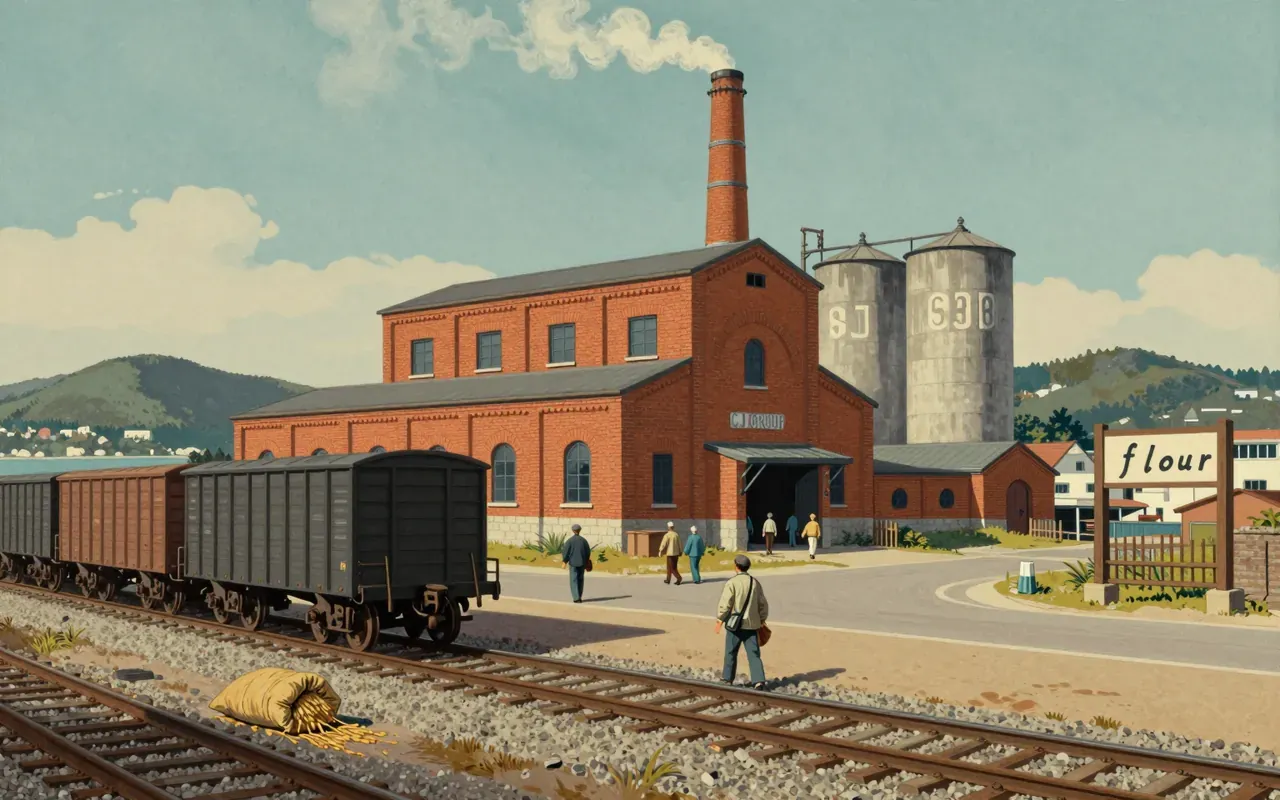
CJ Group is a South Korean chaebol that originated in 1953 as Samsung’s first manufacturing unit: a sugar and flour producer named CheilJedang. It established early industrial firsts — Korea’s first flour mill (1958), first sugar export to Okinawa (1962), and first branded sugar (Beksul, 1965). Its independence from Samsung followed a legal dispute among the Lee family — not market forces. Today it operates across food, bio, logistics, and entertainment, but the sources give no detail on how those businesses interconnect, profit, or compete. It is a case study in legacy infrastructure and familial fracture — not scalable strategy or innovation.

10:58

Daewoo

Kim Woo-choong · 1967

Daewoo was a South Korean chaebol founded in March 1967 by Kim Woo-choong as a small textiles trading corporation. It expanded using government-sponsored cheap loans tied to export potential, acquiring near-bankrupt companies across shipbuilding, electronics, and automotive sectors. By the 1990s, it ranked second largest in assets and third in revenues among South Korean conglomerates. It collapsed in November 1999 with $50 billion in debt after the 1997 Asian financial crisis exposed its reliance on continuous credit. Its story reveals how state-backed finance can substitute for profitability — until it cannot.

10:33

Daimler Company

Gottlieb Daimler · 1896

The Daimler Company was a British motor vehicle manufacturer founded in London in 1896, with manufacturing based in Coventry; it acquired rights to the Daimler name from Gottlieb Daimler and Daimler-Motoren-Gesellschaft; underwent reorganisation in 1904 and was purchased by BSA in 1910; absorbed the Lanchester Motor Company in 1933; held a Royal Warrant from 1902 until the 1950s; employed distinctive technologies including the Daimler-Knight engine, worm gear final drive, and patented fluid flywheel with Wilson preselector gearbox; and was dissolved on 23 December 2025 after years of dormancy.

9:49

Daniel Ek

Daniel Ek didn’t build a music company — he built a licensing wrapper for peer-to-peer infrastructure.
9:56

Danone

Isaac Carasso · 1919

Danone’s origin is a tightly documented sequence: a Barcelona workshop, a legal name fix, physician validation, pharmacy distribution, then expansion. No funding rounds, no founder mythmaking — just regulatory adaptation and clinical credibility turned into commerce.

8:32

Demis Hassabis

Demis Hassabis didn’t build AI — he built the résumé that let him claim it.
12:06

Deutsche Telekom

Europe’s biggest telecom isn’t building the future — it’s renting out the pipes to those who claim they are.
11:24

The Walt Disney Company

Walt Disney · 1923

The Walt Disney Company is an American multinational mass media and entertainment conglomerate founded on October 16, 1923, as the Disney Brothers Studio by Walt and Roy Disney in California. It rose to prominence in animation with Steamboat Willie (1928), diversified into live-action films, television, and theme parks in the 1950s, reversed a post-1966 decline under Michael Eisner via international theme park expansion and the Disney Renaissance (1989–1999), and transformed into a major entertainment conglomerate under Bob Iger through strategic acquisitions (Pixar, Marvel, Lucasfilm, 21st Century Fox). It operates the largest television and film studio in Hollywood.

10:42

Electronic Arts

Trip Hawkins · 1982

EA is not a tech innovator or creative studio — it is a licensing and distribution engine that built cultural legitimacy on developer authorship, then discarded it for scale.

12:48

Elon Musk

He doesn’t build companies — he builds command structures disguised as startups.
10:54

Enzo Ferrari

A racing team disguised as a car company — and a deal that paid for glory with grand tourers.
10:53

Epic Games

Tim Sweeney · 1991

Epic Games is a vertically integrated software and entertainment company whose business model relies on cross-subsidising its store and engine through a hit game. Its self-portrait as a developer ally conflicts with its contractual terms and revenue structure. The gap between that story and its mechanics is where the real lesson lies.

10:38

Facebook

Mark Zuckerberg · 2004

Facebook is an American social networking service founded in 2004 by Mark Zuckerberg and four Harvard College roommates; initially limited to Harvard students, it expanded to other North American universities and then globally to users aged 13+ (14+ in select regions) starting in 2006; as of December 2023 it had ~3.07 billion monthly active users and as of July 2025 ranked third globally by web traffic, with 23% originating from the US; it was the most downloaded mobile app of the 2010s and is accessible across internet-connected devices including PCs, tablets, and smartphones; its headquarters are in Palo Alto, California.

9:11

Ferdinand Porsche

Porsche began as a broke engineering consultancy that sold its own race car project to stay alive — not a dream of sports cars, but a survival calculation.
8:29

Gap Inc.

Don Fisher and Doris Fisher · 1969

Gap Inc. was a logistics play disguised as youth culture — and its early success came from solving stockouts, not selling identity.

11:31

Geely

Li Shufu · 1986

Geely is a founder-led, family-financed industrial pivot machine — not a tech innovator or brand builder. It built scale by acquiring assets (Volvo, Lotus, Smart, Aston Martin), not customers. Its business model relies on platform reuse and regulatory arbitrage, not margin expansion or consumer loyalty. Verified financials are absent. Its most durable tactic is holding equity stakes where others seek control.

10:52

H&M

Erling Persson · 1947

H&M is a Swedish multinational clothing company headquartered in Stockholm, founded in 1947 by Erling Persson in Västerås as a women’s-only retailer named Hennes. Built on a fast fashion business model, it sells apparel, accessories, and homeware. In 1968, Persson acquired the hunting apparel retailer Mauritz Widforss, added menswear, and changed the name to Hennes & Mauritz. The company was listed on the Stockholm Stock Exchange in 1974 and opened its first store outside Scandinavia in London in 1976. It began online retailing in 1998 using the domain hm.com, registered in 1997.

11:24

HDFC Bank

India’s largest private bank isn’t built on innovation — it’s built on being too big to fail.
10:22

Henry Ford

Ford didn’t sell cars — it sold a system so rigid it reshaped wages, work, and war.
11:40

Hermès

Thierry Hermès · 1837

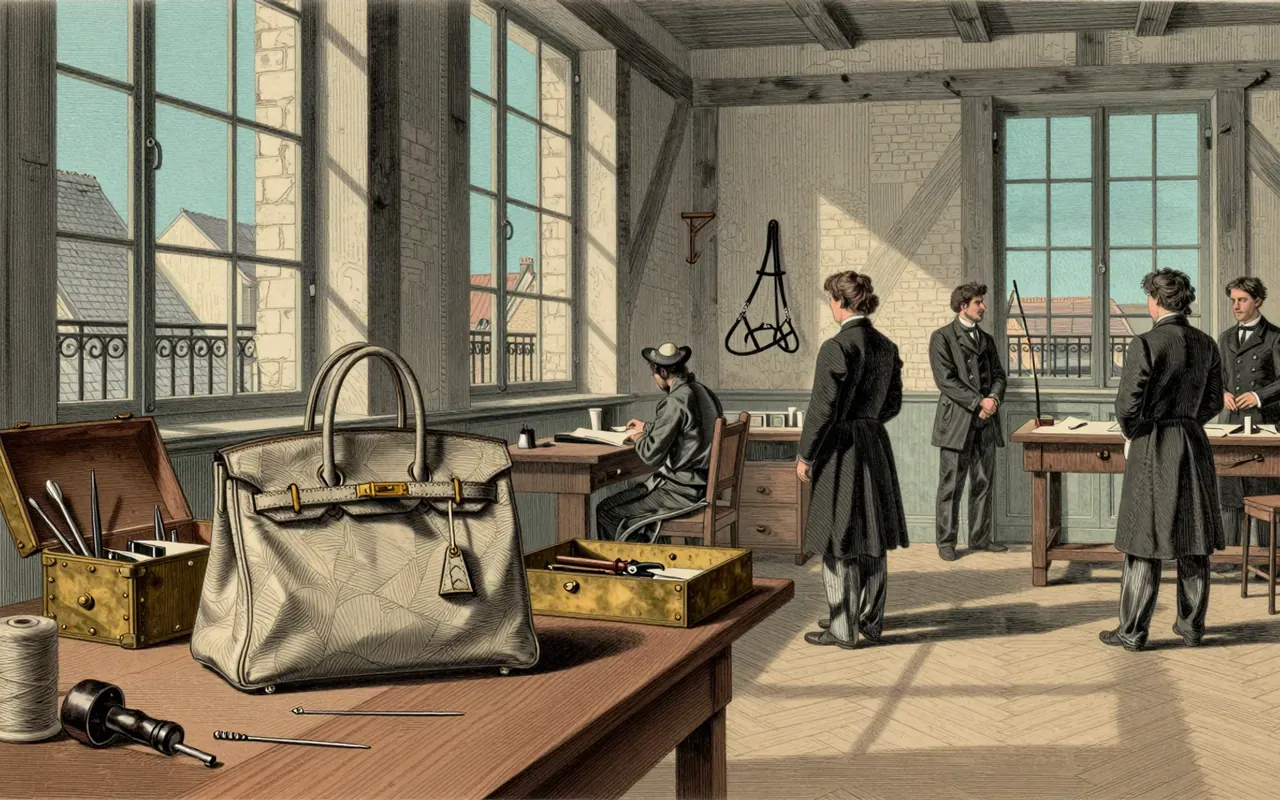
Hermès is a vertically integrated French manufacturing company built on a hand-sewn stitch, sustained by family control, and monetised through scarcity-enforced pricing across 16 product lines.

12:56

Hero MotoCorp

Brijmohan Lall Munjal · 1984

Hero MotoCorp is a case study in state-enabled industrial scaling: it leveraged licences, joint ventures, and low-cost execution—not proprietary tech or global branding—to become India’s dominant two-wheeler maker. Its independence from Honda was real, but its post-2011 growth relies on the same mechanics: volume, distribution, and incremental product iteration.

10:07

Hindustan Unilever

A 90-year-old FMCG giant built on Indian soil — but still answers to London and Rotterdam, not Kodaikanal.
10:24

Hiroshi Yamauchi

Yamauchi didn’t build Nintendo — he repeatedly rebuilt it after near-failures, using distribution, licensing, and factory-floor prototypes as his only reliable tools.
11:10

Hitachi

Namihei Odaira · 1910

Hitachi’s origin was not entrepreneurial mythmaking — it was applied engineering inside a single mine. Its revenue came from selling hardware that replaced steam, muscle, and manual control with electrified motion. It succeeded by staying embedded in physical infrastructure — not by pivoting to services or software. Its independence in 1920 marked a shift in legal structure, not strategy. Odaira’s leadership lasted until 1947, but he never owned the firm he built.

11:42

Huawei

Ren Zhengfei · 1987

Huawei is a Chinese multinational technology conglomerate founded in Shenzhen in 1987 by Ren Zhengfei. Its headquarters are in Longgang, Shenzhen, Guangdong. Its main product lines include telecommunications equipment, consumer electronics, electric vehicle autonomous driving systems, and rooftop solar power products. Telecommunications equipment is its biggest area of business, and its largest customer is the Chinese government. Initially focused on manufacturing phone switches, Huawei expanded to more than 170 countries, building telecom infrastructure, providing equipment and services, and manufacturing consumer communications devices. In 2012, it surpassed Ericsson to become the world's largest telecommunications equipment manufacturer. As of 2025, it is the largest smartphone vendor in China with an 18.1% market share.

12:54

IBM

Thomas J. Watson · 1911

IBM under Thomas J. Watson Sr. was a sales-and-leasing enterprise built on punched card tabulators — not computing. Its dominance relied on vertical control, not technical novelty. That control was dismantled by antitrust action in 1936. Everything else — System/360, AI, PCs — belongs to a later era.

11:22

ICICI Bank

K.V. Kamath · 1994

ICICI Bank’s 1994 formation under K.V. Kamath was not the birth of a startup but the strategic repackaging of a state-backed institution into a private, technology-enabled, acquisitive financial group — with real execution in regulation-constrained conditions.

11:02

Infosys

Narayana Murthy · 1981

Infosys is a textbook example of policy-led scaling: no proprietary tech, no venture funding, no market creation — just disciplined execution on a regulatory opportunity.

9:16

Instagram

Kevin Systrom & Mike Krieger · 2010

Instagram is a photo- and short-video-sharing social networking service launched in October 2010 by Kevin Systrom and Mike Krieger in San Francisco, after pivoting from a check-in app called Burbn.

10:30

ITC Limited

A British tobacco firm founded in Kolkata in 1910 didn’t transform into an Indian conglomerate — it outsourced the transformation to its own subsidiaries.
12:36

Jack Ma

Alibaba isn’t one company — it’s nine regulated bets held together by a founder who walked away to study rice farming.
10:38

JD.com

Richard Liu · 2004

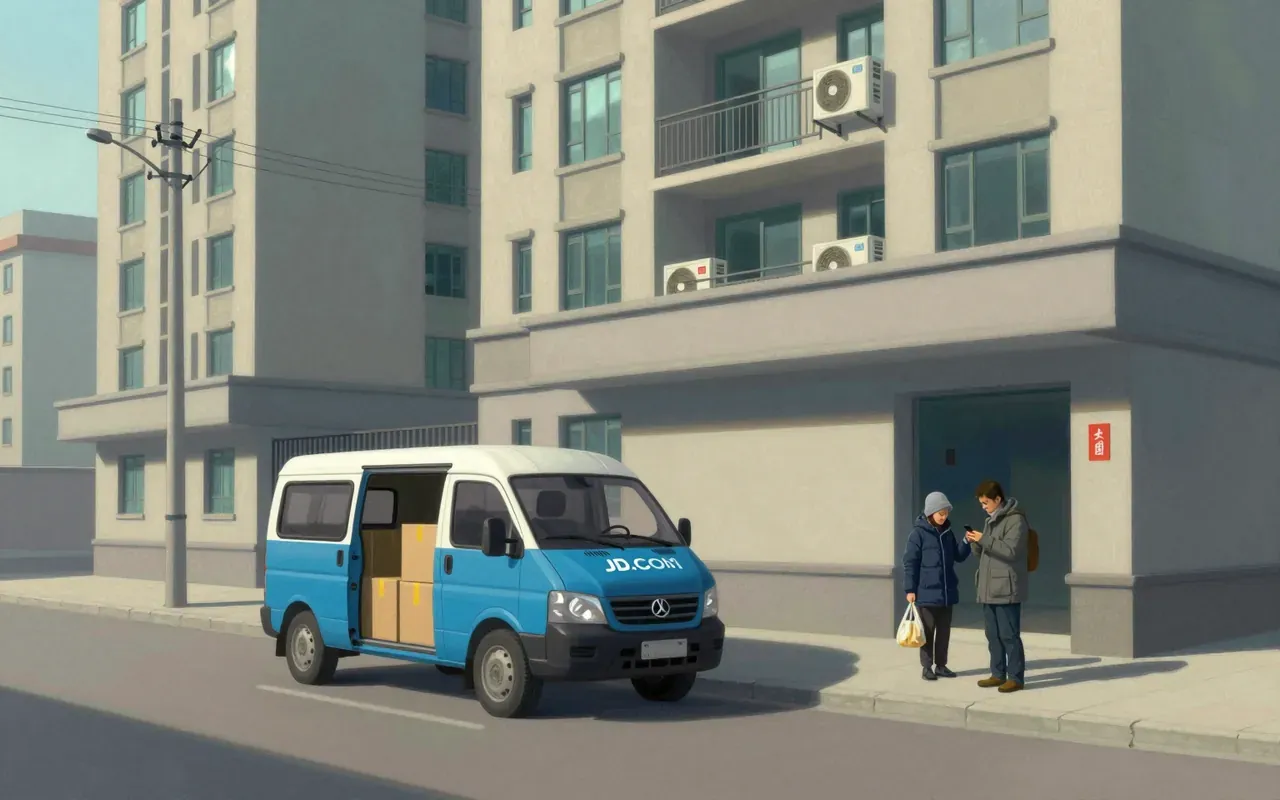
JD.com is not a platform play. It is a logistics-and-service company disguised as an e-commerce site. Its scale comes from owning the last mile — and the first response.

9:58

Jeff Bezos

Bezos didn’t build Amazon by chasing customers — he built it by gaming the alphabet, the tax code, and the growth curve of the web.
10:21

Jensen Huang

Jensen Huang didn’t build an AI company — he built a monopoly on the physics of computation.
10:22

Kawasaki Heavy Industries

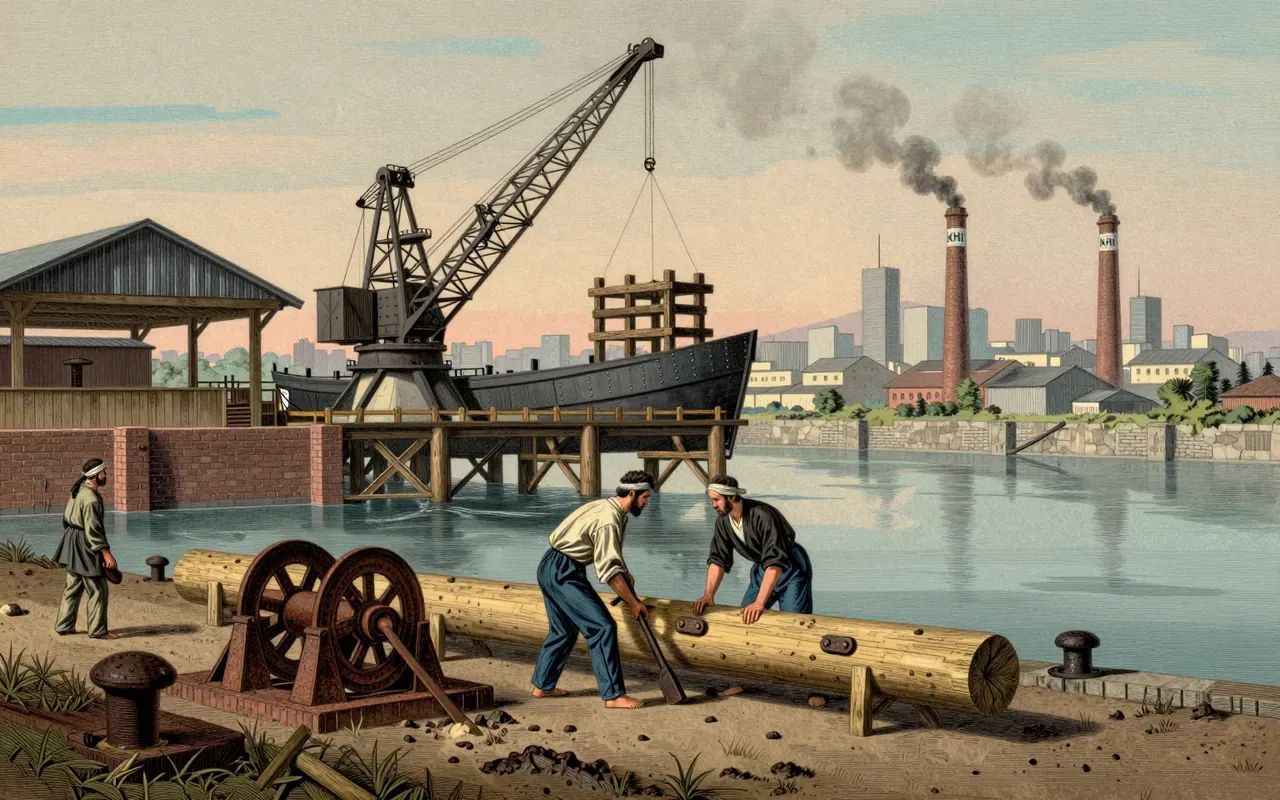
A shipyard founded in 1878 didn’t pivot — it absorbed the Japanese state’s industrial priorities, one sector at a time.
10:20

Kia

Kia isn’t a standalone car company—it’s Hyundai’s second brand, repackaged as a design-led challenger.
9:06

Kobe Steel

Ichiro Uemura · 1905

Kobe Steel is a Japanese industrial conglomerate whose name misleads: steel accounts for the smallest share of its business among major Japanese steelmakers. It grew not through market innovation but via naval technical guidance and orders after the Russo-Japanese War. Its real strengths lie in wire rods, transport aluminium, screw compressors, and wholesale power supply—three distinct divisions operating semi-independently. The gap between its identity (a steel company) and its economics (a diversified industrial group) is structural, not accidental.

10:57

Kodak

George Eastman · 1880

Kodak was not a camera company first — it was a film company that used cameras to distribute its consumable. Its 1888 system created a new market by removing technical barriers. Its dominance came from controlling the film supply chain, not the hardware. No source mentions digital disruption, so the brief stops at peak film-era success.

9:37

Larry Ellison

Oracle didn’t win by building better software — it won by making exit costlier than endurance.
9:53

Lehman Brothers

Henry Lehman · 1850

Lehman Brothers’ origin was material: cotton. Its end was financial: illiquid mortgage assets. The gap between the two is where the real story lives.

9:56

LG Electronics

Koo In-hwoi · 1958

LG Electronics is a vertically integrated South Korean hardware manufacturer whose post-war origins, protected domestic launch, and 1995 rebranding reveal more about industrial policy than innovation mythology.

11:33

L'Oréal

Eugène Schueller · 1909

L'Oréal is the world's largest cosmetics company — not because it invented beauty, but because it industrialised chemistry, controlled distribution, and systematised intellectual property.

10:06

Louis Vuitton

Louis Vuitton · 1854

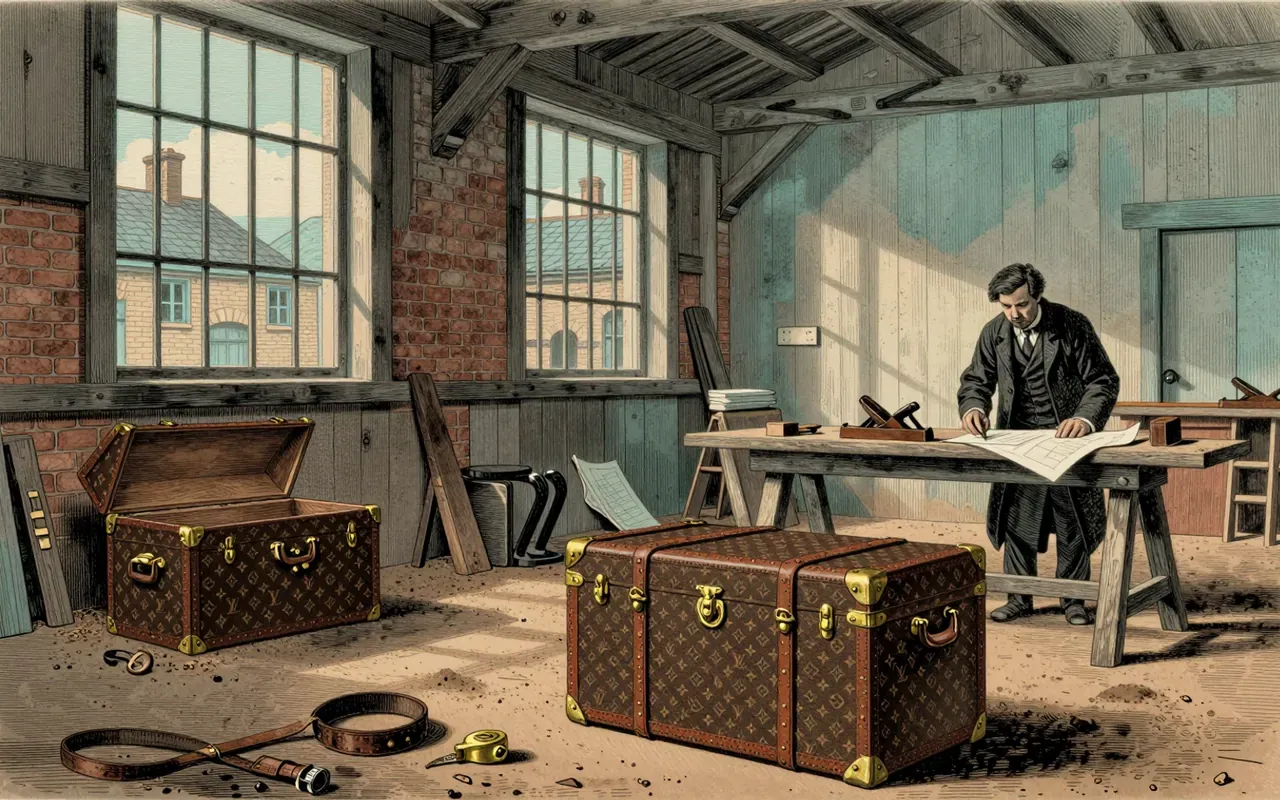
Louis Vuitton is a French luxury fashion house founded in 1854. It merged into LVMH in 1987. It earns revenue from globally distributed, monogrammed luxury goods sold via 460+ owned stores. Its valuation rose from US$25.9bn (2012) to US$28.4bn (2013), alongside US$9.4bn revenue that year. It is repeatedly named the world’s most valuable luxury brand—but never discloses margins, unit costs, or subsidiary-level financials. Legal actions, WWII collaboration, model mistreatment, UNESCO site damage, and cultural appropriation claims are documented—but none appear in its financial reporting or governance disclosures.

10:10

LVMH

Bernard Arnault · 1987

LVMH is a French multinational luxury goods conglomerate formed in 1987 by merger—not founded—of Louis Vuitton and Moët Hennessy. Bernard Arnault assumed control shortly thereafter, not by founding but by outmanoeuvring the initial family owners. The company operates through ~60 subsidiaries managing 75 luxury brands across six branches. Its $500B valuation in April 2023 reflects disciplined acquisition—Boussac Saint-Frères (1984), Tiffany & Co. (2021)—and structural decentralisation that preserves brand identity while centralising financial control. LVMH does not invent luxury; it acquires, integrates, and governs it.

11:44

Mahindra & Mahindra

A steel trader became India’s biggest tractor maker by licensing Jeeps — not by inventing anything.
9:29

Marc Benioff

Salesforce didn’t end software — it rebuilt itself around cost control, using AI not to invent but to downsize.
9:58

Mark Zuckerberg

Zuckerberg built Facebook on code, chaos, and unchecked control—not vision, ethics, or accountability.
9:44

Marks & Spencer

Michael Marks and Tom Spencer · 1884

Marks & Spencer began as a £5 stall with a slogan — not a brand, not a department store, but a refusal to haggle.

11:58

Marubeni

A trading company that outlives empires by never committing to one story—or one balance sheet.
11:26

Maruti Suzuki

India didn’t build a car company — it built Suzuki’s largest global subsidiary.
9:00

Masayoshi Son

Masayoshi Son didn’t build AI — he built a vehicle to bet on whoever claims they will.
9:59

Michelin

André Michelin · 1889

Michelin is a tyre company whose early dominance came from patenting and proving mechanical improvements — detachable, automobile, run-flat, radial, asymmetric — all tested in races or real-world conditions. It monetised mobility itself: first via tyres, then via the Michelin Guide, which existed solely to grow the car-tourism market and thus tyre sales. No evidence supports claims about culture, legacy, or unmeasured influence — only documented innovations, patents, and commercial pivots.

12:20

Mitsubishi Electric

A century-old industrial manufacturer betting 100 billion yen on semiconductors — while still reeling from a Chinese cyberattack.
11:01

Nestlé

Henri Nestlé · 1866

Nestlé is a case study in how industrial food companies scale not through singular genius, but through technical borrowing, wartime procurement, and post-war recalibration. Henri Nestlé invented a product, then exited. The company that bears his name grew via merger, contract, and consolidation — not continuity.

9:32

Netflix, Inc.

Reed Hastings & Marc Randolph · 1997

Netflix is a case study in operational iteration — not technological invention. Its value lies in how it structured incentives, removed friction, and scaled infrastructure — not in what it claimed to be.

11:32

Nippon Steel

Nippon Steel isn’t built on disruption — it’s built on mergers, splits, and name changes that mask continuity.
11:20

Novartis

A merger born of necessity, not vision — Novartis was built to survive, not invent.
10:19

NTPC Limited

State ownership doesn’t mean inefficiency — it means control over scale, timing, and plant utilisation.
10:39

Oracle Corporation

Larry Ellison · 1977

Oracle Corporation is a multinational technology company founded in 1977 in Santa Clara, California, by Larry Ellison, Bob Miner, and Ed Oates. It sells database software (especially Oracle Database), enterprise applications (ERP, HCM, CX, SCM), and cloud infrastructure and hardware. By the mid-2000s, it had become the world's largest enterprise software vendor. Its foundational database design drew from Edgar F. Codd’s relational model paper. IBM’s delay in releasing a relational database for Unix and Windows allowed Oracle to dominate mid-range and microcomputer systems. Oracle acquired Sun Microsystems in 2010 after regulatory approval in the U.S. and EU.

11:47

Panasonic

Konosuke Matsushita · 1918

Panasonic is a Japanese multinational electronics manufacturer founded in 1918 by Kōnosuke Matsushita, headquartered in Kadoma, Osaka. It makes money by manufacturing and selling electronics, batteries, automotive systems, industrial equipment, and home renovation services. Its early innovation in battery-powered bicycle lamps — replacing three-hour candle and oil lamps — established product-market fit. Its 1963 plant produced eight CRT TVs per minute, accounting for 21.8% of Japan’s output — the largest share of any company. It ranked 6th globally in PCT patents in 2025 — down from three decades as the world’s top patent applicant. Its repeated workforce reductions — 40,000 in 2011, 10,000 in 2025 — signal structural strain, not agility. These are reactive cost cuts, not evidence of resilient business design. Patent leadership does not guarantee market dominance; Panasonic held the world’s top patent applicant rank for three decades but lost consumer electronics leadership as CRT TV production collapsed. Yes — its patent intensity, scale of operational recalibration, and sustained market position offer concrete lessons in industrial adaptation.


10:48

POSCO

Park Tae-joon · 1968

POSCO is a state-created steelmaker that achieved scale and productivity through sovereign backing — not market signals or founder vision.

9:08

Reed Hastings

Netflix didn’t sell content — it sold culture as a hiring interface.
10:50

Reliance Industries

Reliance isn’t built on innovation—it’s built on accumulation, arbitrage, and the strategic weight of being India’s largest exporter.
10:36

Rheinmetall

A rejected weapon only succeeded when a rival army proved it worked.
10:19

Richard S. Fuld Jr.

Longest-tenured Wall Street CEO. Last man standing before the fall. His balance sheet was fiction.
10:10

Roche

Roche isn’t a biotech pioneer — it’s a precision acquirer that turns diagnostics and drugs into a single revenue stream.
11:01

Rolex

Hans Wilsdorf · 1905

Rolex is a vertically integrated Swiss luxury watchmaker founded in London in 1905, whose early authority came from technical validation (Kew Observatory, 1914), wartime policy (RAF replacement), and structural control (foundation ownership since 1960). It claimed the first waterproof wristwatch case in 1926 — but Depollier patented a functionally identical design eight years earlier. No financial data appears in the sources.

10:08

Saint-Gobain

A 359-year-old company that stopped making mirrors in the 17th century — and never told anyone.
10:48

Salesforce

Marc Benioff · 1999

Salesforce is a case study in narrative-first SaaS scaling: built on a slogan, funded by subscription growth, extended by platform logic, and recalibrated by AI-driven cost shifts—not disruption, but disciplined iteration.
9:05

Sam Altman

Sam Altman built influence by founding, leading, and exiting institutions — not products.
10:16

SAP

Dietmar Hopp · 1972

SAP is the world's largest vendor of enterprise software. Founded in 1972 in Walldorf by Dietmar Hopp and four former IBM colleagues, it built its first product—the RF financial accounting system—in 1973 for Imperial Chemical Industries in Östringen. Its technical distinction was real-time operation via local electronic storage and a common logical database, eliminating overnight punch card processing. It restructured from GbR to GmbH (1981), to AG (late 1980s), to SE (2014). Hopp led SAP from 1988 to 2005 and retained ~10% equity.

10:20

Sega

David Rosen · 1960

Sega’s story is not about innovation or disruption — it is about sequential exit: from import to manufacture, from coin-op to console, from hardware to software. Its survival post-2001 rests on what it built before it tried to compete with Nintendo and Sony — arcade scale and Sonic.

11:04

Shein

Chris Xu · 2008

Shein is a global fast fashion e-commerce platform founded in 2008 in Nanjing, China, and currently headquartered in Singapore. It began as a drop shipping-style operation sourcing from Guangzhou’s wholesale market, then transformed into a fully integrated retailer starting in 2012. Its product range spans women’s, men’s, and children’s apparel plus accessories and cosmetics, targeting Europe, the Americas, Australia, and the Middle East. Its growth has been tied to popularity among younger Millennials and older Gen Z consumers, enabled by low pricing and rapid trend response.

10:17

Shell plc

Marcus Samuel · 1890

Shell plc is a British multinational oil and gas company formed in April 1907 through the merger of Royal Dutch Petroleum Company and The 'Shell' Transport and Trading Company — founded in 1897 by Marcus Samuel and his brother. It is vertically integrated across exploration, production, refining, transport, distribution, marketing, petrochemicals, power generation, and trading. It was the ninth-largest corporate greenhouse gas emitter (1988–2015). In 2004, it overstated oil reserves, triggering a £17 million fine and leadership change. In 2021, it rebranded from Royal Dutch Shell plc to Shell plc.

10:44

Siemens

Werner von Siemens · 1847

Siemens is a German multinational engineering company founded in 1847 as Telegraphen-Bauanstalt von Siemens & Halske in Berlin. It evolved through mergers into Siemens AG in 1966. It makes money from industrial automation, building automation, rail transport, and health technology. Its early model worked: rapid internationalisation via family agents, vertical integration from invention to installation, and patent-backed standard-setting. It does not sustain leadership in all its historical domains: it no longer builds x-ray tubes, electric trams, or passenger trains as standalone products. The gap between Siemens’s founding logic — applied electromagnetism deployed via owned workshops and international agents — and its present structure — a diversified, publicly listed conglomerate with AI and software at its core — reveals how industrial capability gets recoded as platform strategy over time. Yes — if you are studying how engineering firms scale infrastructure innovation into global revenue without pivoting to venture capital narratives.

11:18

SK Group

Chey Jong-hyon · 1953

SK Group is a South Korean chaebol founded in 1953 through the acquisition of Sunkyong Textiles — Japanese-owned property seized by the South Korean government after the Korean War armistice. It is the second-largest chaebol by revenue, controlled by the estate of Chey Tae-won via SK Inc., and operates 186 subsidiaries under the SKMS management system. Its cornerstone remains energy and chemicals, though it spans AI semiconductors, flash memory, telecommunications, and petrochemicals. The material confirms no revenue figures, margins, valuations, or operational metrics beyond structure, origin, control, and sectoral scope.

11:01

Société Générale

A bank built to serve French industry in 1864 now survives not by reinvention, but by scale, supervision, and systemic weight.
10:53

SoftBank Group

Masayoshi Son · 1981

SoftBank Group is a Japanese investment holding company founded in 1981 as a software distributor, restructured as a holding company in 1999, and renamed SoftBank Group Corp in 2015. It focuses exclusively on investment management — primarily in technology companies across diverse markets. Its Vision Fund, launched in 2017 with $100 billion, was the world’s largest technology-focused venture capital fund at inception. SoftBank went public in 1994 with a $3 billion valuation. In 2016, it announced a $50 billion U.S. investment commitment targeting 50,000 jobs. From 2023, it shifted strategy toward AI infrastructure and semiconductor-related investments — a direction confirmed by Masayoshi Son’s January 2025 chairmanship of Stargate LLC.