businessbriefs
8:29in productionCh. 1 · The Name Was the Strategy/ 8:29 · ceiling 15 min
Companies · Management

Gap Inc.

Gap wasn’t born from style — it was built from stockouts.

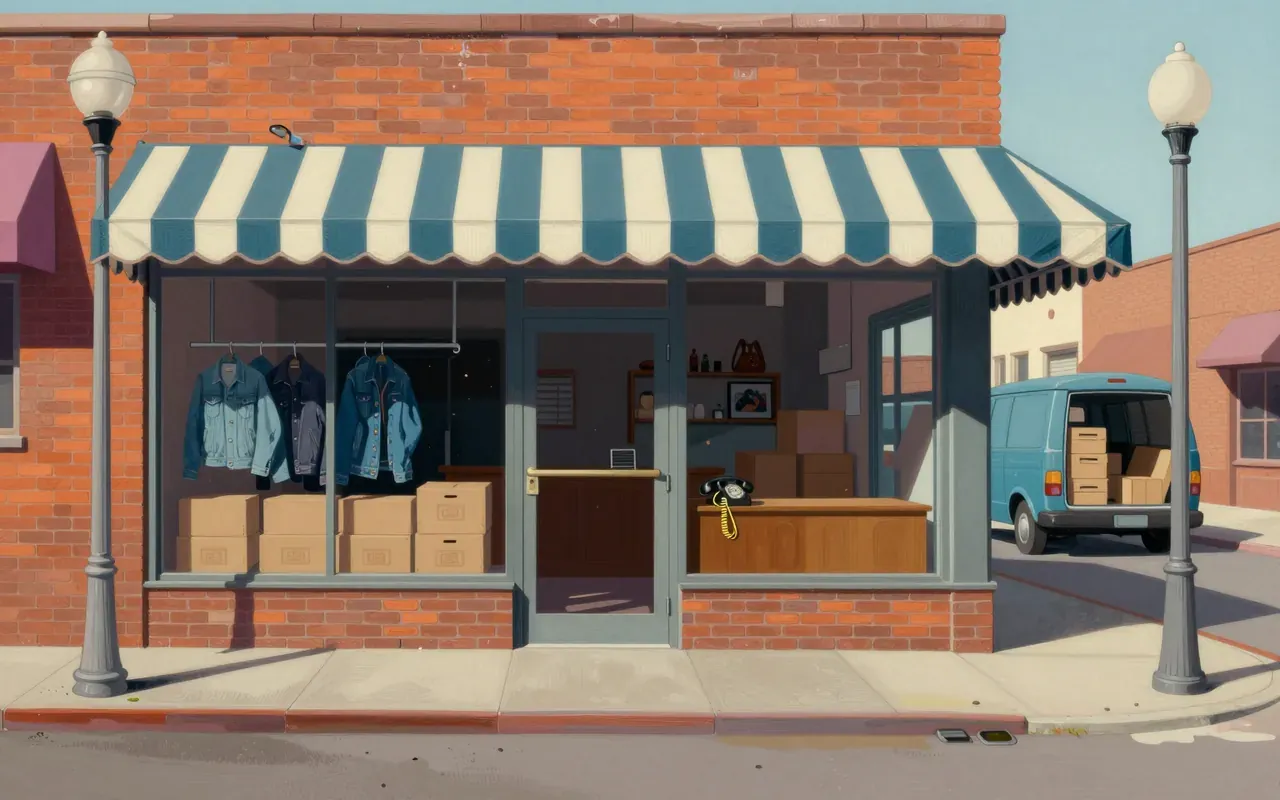
Gap Inc. was a logistics play disguised as youth culture — and its early success came from solving stockouts, not selling identity.

Chapters & takeaways5
  1. 0:59
    The Name Was the Strategy

    The name ‘Gap’ was a direct reference to the generation gap — not an abstract marketing concept, but a demographic bet.

  2. 2:04
    One Store, Two Products

    Its first store sold only Levi’s and LP records — a tight, testable hypothesis about teen spending and inventory control.

  3. 2:59
    How It Avoided Antitrust Trouble

    It bypassed antitrust risk by accepting identical, upfront radio ad support from Levi’s — turning legal constraint into operational advantage.

  4. 4:28
    Private Label Was a Defensive Move

    It started making its own jeans in 1973 — not for authenticity, but to escape department store parity.

  5. 5:24
    The Banana Republic Pivot

    Banana Republic was acquired in 1983 and rebranded upscale in the late 1980s — proof Gap’s expansion relied on acquisition, not organic brand extension.

Worth your time?

Yes. Study the whole thing.

4/ 5
What works
  • as a case study in operational innovation
  • as evidence of how infrastructure precedes ideology in consumer culture
What does not
  • culture/fashion
  • culture/society
Study it if
  • logistics historians
  • retail operators
  • fashion students
Skip it if
  • brand strategists looking for inspiration
  • cultural theorists seeking symbolic rupture
The written brief1 min read

What the thing is

Gap Inc. was a vertically coordinated retail experiment built on guaranteed supply, standardised marketing, and size-first presentation — not a lifestyle brand at launch.

Where it came from

It came from San Francisco in 1969, founded by Donald and Doris Fisher near City College on Ocean Avenue, explicitly named after the ‘generation gap’ and modelled on ‘The Tower of Shoes’.

What it gets right

It solved a real operational problem: chronic stock shortages. Its size-based merchandising and overnight replenishment from Levi’s San Jose warehouse delivered consistency department stores couldn’t match.

What it gets wrong

It assumed teen appeal could be engineered through product selection alone. Selling only Levi’s and LP records in 1969 ignored that teens were already fragmenting culturally — and that exclusivity would soon become a liability.

Why it matters now

It matters now because its supply-chain discipline — not its later branding — became the template for fast fashion, private label scaling, and retailer-manufacturer co-dependency in the US.

Is it worth your time

Yes — if you want to understand how retail infrastructure, not just branding, reshaped American consumer culture.
Same desk · Companies4 of 313
10:34
Airbus1998Airbus in 1998 was a consortium — not a company — sustained by national governments and bound by treaty, not equity. Its money came from airliner sales, but its structure reflected diplomacy more than business logic. It worked because Europe prioritised strategic autonomy over market efficiency. It failed as a unified enterprise until it abandoned the consortium model entirely. The lesson is structural: scale in aerospace is political first, economic second.
12:10
Anglo American plc1917Anglo American plc is a British multinational mining company headquartered in London, founded in 1917 in Johannesburg. It is the world's largest platinum producer (40% of global output) and owns 85% of De Beers. It merged with Minorco in 1999 to become Anglo American plc, and with Teck Resources in 2025 to form Anglo Teck. Between 2015 and 2015, it cut 138,000 jobs. In early 2015, it reported a $3 billion loss. It withdrew from the Pebble Mine in 2013 and partnered with Engie and First Mode in 2019 to develop a hydrogen-powered haul truck.
10:53
ArcelorMittalLakshmi Mittal · 2006ArcelorMittal is the world’s second-largest steelmaker — a $33 billion hostile merger of Mittal Steel and Arcelor in 2007. It operates across mining, smelting, and recycling in 14 countries. In 2025, it produced 55.6 million tons of steel against 74.6 million tons of capacity — 53% in Europe, 40% in the Americas. It sources 72% of its iron ore and 91% of its coke internally. The Mittal family surrendered control to close the deal. It is not a technology company. It is not growing. It is a vertically integrated commodity producer whose scale is structural, not strategic.
11:50
Barrick MiningPeter Munk · 1983Barrick Mining is a gold-and-copper extraction company built through strategic acquisitions — not innovation, not discovery, not vertical integration. Its value lies in scale: 89 million ounces of gold in reserves, 3.91 million ounces produced in 2024, and a history of absorbing rivals like Placer Dome. But its governance fails where operations meet people: in 2008, Peter Munk personally silenced testimony about violence at Porgera. That gap — between reserve size and human accountability — is the real story.
Up next in Business

Geely

Li Shufu · 1986 · 11:31

Geely didn’t disrupt the auto industry — it reverse-engineered China’s industrial policy and applied it abroad.

11:31