businessbriefs
Newest

All briefs

561 briefs · 5965 min · 481–561 on page 6 of 6
10:21

Spotify

Daniel Ek & Martin Lorentzon · 2006

Spotify is a Swedish music streaming service founded in April 2006 by Daniel Ek and Martin Lorentzon. It operates under a freemium model, offering DRM-protected audio content—including over 100 million songs and 7 million podcasts—from record labels and media companies. Royalties are distributed based on stream share rather than fixed per-unit payments, with ~70% of revenue going to rights holders. It became publicly traded on the NYSE in April 2018 and reported its first profitable year in fiscal 2024. As of March 2026, it served over 777 million monthly active users and 300 million paying subscribers.

10:36

Steve Jobs

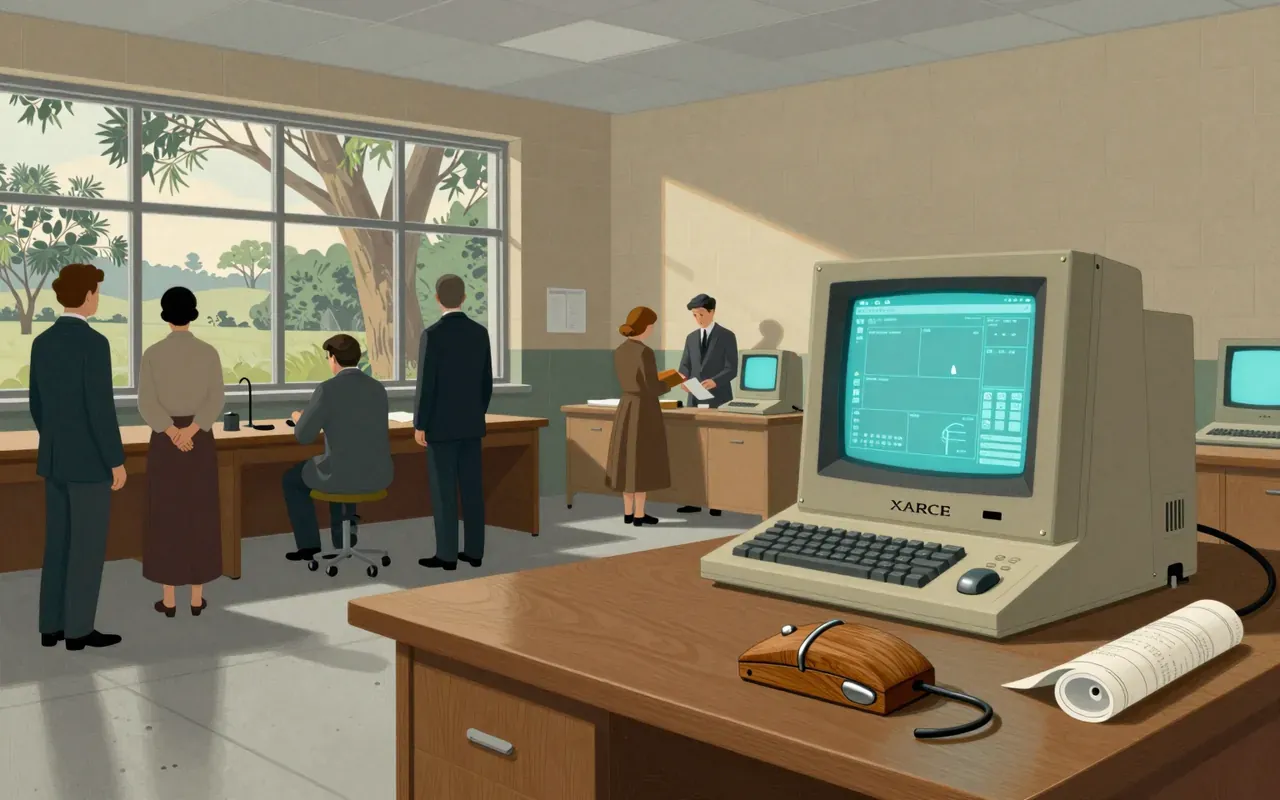
Steve Jobs didn’t invent the Mac — he packaged Xerox’s GUI, Wozniak’s engineering, and Adobe’s PostScript into a profitable system.
11:00

Sumitomo Corporation

A '1919 company' that legally ceased to exist in 1947 — and rebuilt itself not as a startup, but as a sovereign-grade trading apparatus.
9:40

Tadashi Yanai

Uniqlo’s parent did not invent fast fashion — it inherited a tailor shop and scaled it with discipline, not algorithms.
10:32

Tata Group

Jamsetji Tata · 1868

Tata Group is India’s oldest and largest conglomerate — founded in 1868, built on cotton, steel, and infrastructure — not software, algorithms, or venture rounds.

10:15

Theranos

Elizabeth Holmes · 2003

Theranos was a health technology company founded in 2003 in Palo Alto, California, that falsely claimed to perform rapid, accurate blood tests using minimal blood volume via proprietary devices; investigations revealed it relied on conventional machines, produced inaccurate results, voided two years of Edison data, and misrepresented its capabilities to investors, partners, and regulators.

10:12

Thomas J. Watson Jr.

One Air Force contract built IBM’s electronics empire — not foresight, not genius, but scale-through-government.
9:32

ThyssenKrupp

A merger of two centuries-old steel dynasties that bought scale but not coherence.
8:53

Tim Sweeney

A $100-a-day shareware game paid for the Unreal Engine — not venture capital, not a pitch deck, not a founder myth.
9:41

Tobias Lütke

A founder built a shop to sell snowboards, then sold the shop’s software instead—and kept 40% of the votes while owning just 7% of the shares.
10:44

Twitter, Inc.

Jack Dorsey, Noah Glass, Biz Stone & Evan Williams · 2007

Twitter, Inc. was a social media company founded in March 2006 in San Francisco, spun off from Obvious Corporation (formerly Odeo), operating the Twitter platform and other services. It prioritised uptime and design principles over revenue until after 2008, grew to over 100 million users by 2012 and 330 million monthly active users by 2019, went public in November 2013, and was acquired by Elon Musk for $44 billion in April 2022 before merging into X Corp. in April 2023. No source states its revenue model, unit economics, or profitability.

12:26

Uber

Travis Kalanick · 2009

Uber is a platform whose early growth relied on regulatory noncompliance, strategic rebranding, and reactive imitation — not technical invention or user-first design. Its financial mechanics are transparent: high take rates on massive transaction volume. Its story is not about disruption, but about exploiting gaps between law and enforcement.

13:32

Unilever

William Lever · 1929

Unilever is not a modern purpose-led corporation disguised as a legacy firm — it is a legacy firm whose original mechanics (commodity sourcing, unit standardisation, trademark enclosure, paternalistic control) still define its structure, even as its marketing tells a different story.

11:43

Uniqlo

Tadashi Yanai · 1949

Uniqlo is a case study in industrialised apparel: no hype, no heritage theatre, no seasonal spectacle — just a tightly coupled system for making, moving, and refining simple clothes at scale.

13:07

Universal Pictures

Carl Laemmle · 1912

Universal Pictures was a business architecture designed to extract value from every layer of film — from performer contracts to theatre leases — using legal, spatial, and branding levers. Its success was tactical, not mythic.

11:58

Valve Corporation

Gabe Newell & Mike Harrington · 1996

Valve is a rare case where platform ownership fully decouples creative output from financial sustainability. Its flat structure is not a virtue—it is a tax the company pays for avoiding managerial overhead, made bearable only by Steam’s dominance. It does not scale. It does not replicate. It survives.

11:02

Warner Bros.

Warner Brothers

Warner Bros. is a trademarked asset that has outlived every corporate owner since its 1923 founding — surviving mergers, spin-offs, and acquisitions not through creative consistency, but because its library and IP rights remain licensable across shifting distribution models.

12:11

WeChat

Allen Zhang · 2011

WeChat is a product of Tencent’s Guangzhou lab, launched in 2011 by Allen Zhang. It bundles messaging, social, and payments — and dominates China not because it is open or interoperable, but because it is closed, complete, and compliant.

11:54

WeWork

Adam Neumann · 2010

WeWork was a shared-workspace provider founded in 2010 by Adam Neumann and Miguel McKelvey, operating physical and virtual coworking spaces in ~600 buildings across 125 cities. It made money by leasing commercial real estate long-term, then subleasing it short-term to members — a classic mismatch of lease duration and revenue risk. The brand resonated and the format met demand for flexible office space — but only at small scale, with tight lease control and disciplined expansion. The business model failed under scale: fixed long-term lease liabilities could not be offset by volatile, short-term membership revenue — especially when growth relied on subsidising occupancy with investor capital. Neumann’s practice of buying buildings and leasing them back to WeWork exposed a governance vacuum — incompatible with public markets. Bankruptcy in 2023 and restructuring in 2024 confirmed the model collapsed under its own lease obligations — not market timing. A company can raise $12.8 billion and peak at a $47 billion valuation without ever proving unit economics — because investors funded narrative, not margins. Yes — as a case study in how governance failures, misaligned incentives, and financial engineering can override operational reality.

9:58

WhatsApp

Jan Koum & Brian Acton · 2009

WhatsApp is not a messaging app with a business model—it is a telecom identity layer wrapped in an app. Its value lies in what it replaced (SMS, MMS, local calling) and what it enabled (cross-border, zero-cost, asynchronous communication at planetary scale). Its acquisition by Facebook in 2014 for $19.3 billion confirmed its strategic value as infrastructure—not as a consumer product.

10:33

Wipro

Wipro didn’t invent IT in India — it repackaged vegetable oil capital as software services.
10:10

Xerox

Joseph C. Wilson · 1906

Xerox pioneered the photocopier market starting with the Xerox 914 in 1959; Joseph C. Wilson signed an agreement in 1946 to develop Chester Carlson's invention commercially; before the 914, Xerox tested the market with the Flat-plate 1385 prototype, which proved nonviable due to slow speed; the 914—the first plain paper photocopier—was developed by Carlson and John H. Dessauer; researchers at Xerox and PARC invented key personal computing elements including the GUI, mouse, and desktop computing; Xerox opened PARC in 1970; and Gary Starkweather invented the laser printer in 1969 by modifying a Xerox 7000 copier.

10:53

Xiaomi

Lei Jun · 2010

Xiaomi is a Beijing-based Chinese multinational founded in 2010 by Lei Jun and six others. It operates in consumer electronics, software, and electric vehicles. It launched its first smartphone in August 2011 and entered the smart electric vehicle industry in March 2021.
9:50

YouTube

Steve Chen, Chad Hurley & Jawed Karim · 2005

YouTube was a technical execution of a simple idea—upload and share video—with no monetisation strategy. Its founders leveraged prior wealth, network access, and timing to achieve rapid scale, then sold to Google before proving sustainability. The gap between usage and revenue was never closed—it was exited.

9:47

Zara (retailer)

Amancio Ortega · 1975

Zara is a case study in operational rigour, not branding or tech. Its advantage is physical: proximity, control, and repetition — not algorithms or virality.

10:56

Adidas

Adolf Dassler · 1924

Adidas is a German multinational athletic apparel and footwear corporation headquartered in Herzogenaurach. It was founded by Adolf Dassler in 1948, following the breakup of the Dassler Brothers Shoe Factory. Adidas makes money selling athletic apparel and footwear. Its revenue in 2024 was €23 billion. It operated 17 factories and generated one billion Deutschmarks in annual sales by 1978. Dassler’s focus on functional footwear innovation worked: he redesigned spiked running shoes, introduced interchangeable screw-in studs for football boots, and secured high-visibility athlete adoption (Jesse Owens, 1936). The three-stripe logo became a registered trademark in 1949 and a scalable visual identifier. The 1924 Dassler Brothers Shoe Factory was a shared venture — not Adidas — and dissolved in 1948 amid a rift. Post-war material shortages forced rapid reconversion from weapons to shoes — yet Adidas hit one billion Deutschmarks in sales by 1978. Adidas shows how a narrow technical advantage — screw-in studs, canvas-rubber spikes, the three-stripe trademark — can anchor decades of manufacturing expansion when paired with strict control over production, branding, and distribution channels. Yes — as a case study in how technical footwear innovation, trademark discipline, and athlete-led validation built industrial scale in post-war Europe — but only if you treat its origin story as a business reconstitution, not a founding myth.

12:05

Berkshire Hathaway

Warren Buffett · 1955

Berkshire Hathaway is a holding company built on arbitrage, insurance float, and concentrated control — not innovation or disruption.

12:56

ByteDance

Zhang Yiming · 2016

ByteDance is an AI-driven content platform company built on internal competition, strategic acquisition, and rapid global scaling — not organic product leadership or transparent monetisation.

10:00

Goldman Sachs

Marcus Goldman & Samuel Sachs · 1869

Goldman Sachs is a multinational investment bank and financial services company founded in 1869 and headquartered in New York City. It offers investment banking (advisory for mergers and acquisitions and restructuring), securities underwriting, prime brokerage, asset management, and wealth management. It acts as a market maker, operates private-equity and hedge funds, structures complex and tailor-made financial products, owns Goldman Sachs Bank USA (a direct bank), and trades both on behalf of clients and for its own account.

10:33

Intel

Robert Noyce & Gordon Moore · 1968

Intel is a foundational semiconductor company whose business model pivoted from memory to microprocessors—and whose lasting leverage came from controlling the x86 instruction set, not just fabrication.

12:34

JPMorgan Chase

J.P. Morgan

JPMorgan Chase is a vertically integrated financial monopoly whose scale rests on documented historical control — from industrial consolidation to slave-backed credit — not disruption or invention.

11:03

Mastercard

A cooperative turned public company that profits from every swipe — without ever touching the money.
11:01

Morgan Stanley

Henry S. Morgan & Harold Stanley · 2008

Morgan Stanley is a financial institution whose origin story is legally precise, but whose current identity is structurally ambiguous. It began as a Glass–Steagall-mandated spin-off — not a startup, not a rebellion, but a regulatory necessity. Its early market share proves execution mattered more than ideology. Its 1997 merger erased the line between investment banking and mass-market finance — yet the firm still trades on the prestige of 1935. That dissonance is the real story.

9:36

PayPal

Peter Thiel & Max Levchin · 1998

PayPal is a case study in opportunistic infrastructure: built on a dead-end tech idea, it succeeded only after latching onto a specific, messy, high-volume use case — eBay auctions — and charging for reliability in a trust vacuum.

10:48

Tencent

Pony Ma · 1998

Tencent is a Chinese multinational technology conglomerate and holding company, co-founded in 1998 in Shenzhen. It is one of the highest-grossing multimedia companies globally by revenue and the world’s largest company in the video game industry by equity investments. Its first product, OICQ, launched in February 1999 and reached over one million registered users by year-end 1999. In 2000, Tencent secured $2.2 million in venture capital funding and adapted its platform for mobile messaging — generating 80% of revenue via telecom operator fee-sharing deals. After losing a U.S. arbitration case over domain names, it renamed OICQ to QQ in December 2000. By 2004, it held 74% of China’s instant messaging market and listed on the Hong Kong Stock Exchange.

11:19

TSMC

Morris Chang · 1987

TSMC is the world’s largest and most advanced contract chipmaker — a state-enabled, capital-intensive factory system that executes Moore’s Law with industrial rigour. Its dominance comes not from vision or branding, but from delivering real chips, on schedule, at scale.

10:49

Visa Inc.

Dee Hock · 1958

Visa is a payment infrastructure built on delegation: banks issue cards, Visa provides the rails and branding, and consumers pay fees embedded in every transaction. Its 1970 restructuring into a member-owned, decentralised association — conceived and led by Dee Hock — was a deliberate rejection of hierarchy. Yet its 2025 volume ($14.2 trillion) reflects not distributed decision-making but tightly coordinated standards enforcement. The ‘chaordic’ ideal remains descriptive, not operational.

9:52

Adam Neumann

Adam Neumann didn’t pivot — he rebranded failure as infrastructure.
11:50

Amazon (company)

Jeff Bezos · 1994

Amazon is a vertically integrated infrastructure company disguised as a retailer. Its founding was opportunistic, its growth funded by reinvestment, not profit. Its dominance rests on owning the pipes — logistics, compute, storage, and distribution — not the content or brands moving through them.

10:55

Anthropic

Dario Amodei & Daniela Amodei · 2021

Anthropic positions itself as a safety-first AI builder—but its business runs on proprietary models trained with legally contested data, sold under restrictive partnerships, and governed by self-declared public benefit terms that do not prevent mass-scale book scanning or billion-dollar copyright liability.

10:25

Apple Inc.

Steve Jobs · 1976

Apple Inc. was founded in 1976 to market Wozniak’s Apple I. It achieved early success with the mass-produced Apple II. It pioneered graphical user interfaces via the Lisa (1983) and Macintosh (1984), launching desktop publishing in 1985 with the LaserWriter. Internal conflict led to Jobs’s 1985 departure. By 1997, Apple was losing money and failing to deliver a modern OS — prompting acquisition of NeXT and Jobs’s return as CEO. NeXTSTEP became the foundation of Mac OS X. Apple’s revival was structural, not inspirational.

11:00

BlackBerry Limited

Mike Lazaridis & Douglas Fregin · 1984

BlackBerry Limited is a Canadian software company specialising in secure communications and IoT. It was founded in 1984 as Research In Motion (RIM) and developed the BlackBerry brand of wireless mobile devices from 1999 to 2016. After spinning off its mobile division into BlackBerry Mobile in 2016 — discontinued in 2020 — the company transitioned to providing software and services and holds critical software application patents. RIM was the first wireless data technology developer in North America and the first outside the Nordic countries to develop Mobitex connectivity products. In 1996, RIM introduced the Interactive Pager, the first two-way messaging pager. In 1999, RIM introduced the BlackBerry 850 pager, the first device to use the BlackBerry OS, which received push email from Microsoft Exchange Server using BlackBerry Enterprise Server (BES). Its introduction set the stage for enterprise-oriented products, such as the BlackBerry 957 in April 2000, the first BlackBerry smartphone.

11:01

The Coca-Cola Company

Asa Griggs Candler · 1892

The Coca-Cola Company was founded in 1892 by Asa Griggs Candler in Atlanta after he purchased the formula from John Stith Pemberton in 1888. It generated revenue by manufacturing and selling syrup to soda fountains, then licensing bottling rights for $1 per territory — a contract that transferred capital and operational risk to third parties while preserving brand control. By 1895 it achieved nationwide US distribution; exports began in 1899 (Cuba) and 1901 (Europe). Candler trademarked the brand and paid dividends in 1893, proving early financial viability. The model worked because it scaled without infrastructure — but failed to ensure product consistency across bottlers. This is a masterclass in leveraging intellectual property through contractual design, not product innovation.

9:59

Costco

Jim Sinegal & Jeffrey Brotman · 1983

Costco is a membership-first retail system whose financial mechanics are transparent: fees fund operations, low margins enforce discipline, and private label locks in loyalty. It works where density, income, and culture permit bulk buying — and fails where they don’t. No hype. No exceptions.

11:08

Ford Motor Company

Henry Ford · 1903

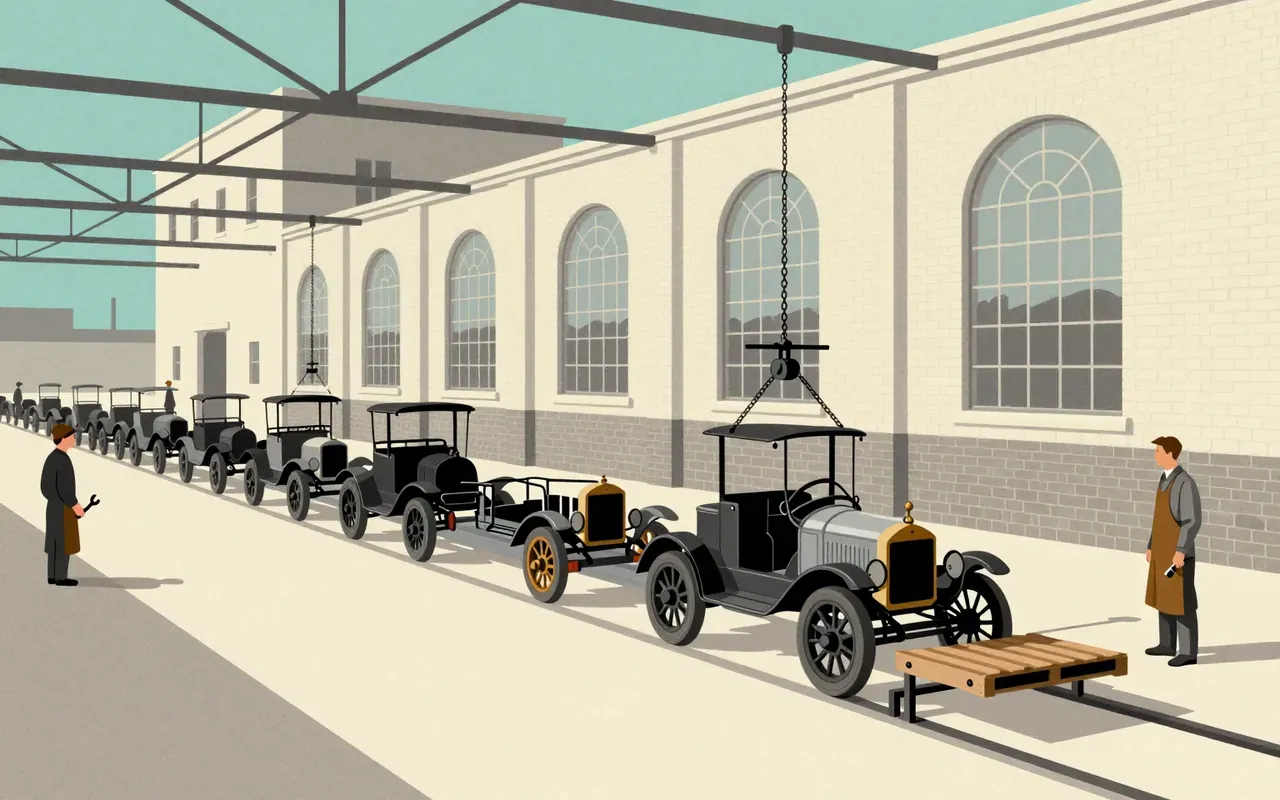
Ford Motor Company was not an idea about mobility—it was a financial and mechanical system for turning $28,000 into 15 million cars. Its power came from eliminating variability: in parts, in process, in price, and eventually in design. It succeeded by making everything repeatable—including authority.

10:23

General Electric

Thomas Edison

General Electric was a financial construct, not an inventive one. Its formation marked the moment capital overrode authorship — and Edison became a brand, not a boss.

9:57

General Motors

William C. Durant · 1908

General Motors was founded in 1908 as a holding company, not a manufacturer. It made money by acquiring brands and suppliers, issuing stock to secure alignment, and franchising dealerships — all before building a single integrated factory. Its early success came from financial engineering, not product innovation. Durant was removed twice — in 1910 and 1920 — exposing the fragility of growth without operational discipline. Sloan’s later reforms codified what Durant had improvised: a scalable, tiered brand architecture. The real innovation was not the car, but the corporation.

10:19

Howard Schultz

Schultz didn’t build a coffee brand — he built a vertically owned cultural tollbooth.
10:38

IKEA

Ingvar Kamprad · 1943

IKEA is a case study in disciplined execution — not innovation. Its success rests on replicating a single operating model globally, enforced by geographic and legal separation between brand and retail. Nothing in the source material supports claims about culture, sustainability, or digital transformation — only cost, control, and structure.

9:41

Ingvar Kamprad

Ingvar Kamprad didn’t build IKEA with design or disruption—he built it with arithmetic, austerity, and an uncle’s kitchen table.
10:47

Lisa Su

Lisa Su’s authority comes from solving physics problems on the wafer — not from vision statements or funding rounds.
12:52

Lotte Corporation

Shin Kyuk-ho · 1967

Lotte is a textbook case of chaebol formation through sequential anchoring — first in Japan, then decisively in Korea — but its financial mechanics remain unreported.

10:48

McDonald's

Ray Kroc · 1940

McDonald's is not a restaurant chain but a replication system — built on enforceable standardisation and deliberately constrained franchising. Its economics rely on control, not volume, and its origin story is a legal rebranding of a hostile acquisition.

10:18

Meta Platforms

Mark Zuckerberg · 2004

Meta Platforms is a vertically integrated advertising monopoly masquerading as a metaverse infrastructure company. Its business model is simple and brittle: monetise attention at scale. Its strategy is contradictory: spend billions on speculative futures while refusing to decouple from surveillance-based ads. Its governance is absolute: Zuckerberg controls votes, vision, and compensation.

10:22

Microsoft

Bill Gates · 1975

Microsoft’s founding was not about building the best software first — it was about controlling the terms of distribution before the market existed. Its early success came from timing, contractual foresight, and treating software as licensable intellectual property — not a service or craft. The company established the template for platform leverage in computing: own the interface, not the hardware.

9:36

Myspace

Tom Anderson & Chris DeWolfe · 2003

Myspace was the first globally reaching social network. It grew fast, peaked at 115 million monthly visitors, and was acquired for $580 million. But it never built infrastructure, governance, or trust to match its scale — and collapsed when attention shifted to platforms that treated users as people, not pageviews.

12:03

Nike, Inc.

Phil Knight · 1964

Nike’s origin is a textbook case of a startup succeeding not by inventing a category, but by reengineering a supply chain — then iterating relentlessly on one functional detail: traction.

10:47

Nintendo

Fusajiro Yamauchi · 1889

Nintendo’s origin is a case study in operational discipline over narrative ambition. It succeeded by controlling production hardware, exploiting regulatory shifts, and locking in high-frequency buyers — not by inventing games or chasing culture.

11:40

Nokia

Fredrik Idestam · 1865

Nokia's origin is industrial infrastructure, not digital ambition. Its longevity stems from disciplined capital management — not visionary foresight.

11:24

Nvidia

Jensen Huang · 1993

Nvidia is a fabless semiconductor company whose business model depends on external demand shocks, not internal cost control or manufacturing leverage.

9:58

OpenAI

Sam Altman & others · 2015

OpenAI is a public benefit corporation whose legal structure separates nominal mission stewardship (26% nonprofit ownership) from actual control and value capture. Its market impact is real—ChatGPT became the fifth-most-visited site globally—but its $852bn valuation reflects investor appetite for AI infrastructure access, not verified unit economics, revenue, or margin discipline. Microsoft’s $13bn investment funds development but does not constitute revenue. The gap between OpenAI’s self-description as a public benefit entity and its operational reality is structural—not incidental.

9:34

Patreon

Jack Conte & Sam Yam · 2013

Patreon is not a creator empowerment tool — it is a monetisation layer that captures value at the point of transaction, enforces terms unilaterally, and scales through volume, not trust.

10:28

PepsiCo

Caleb Bradham · 1961

PepsiCo is a post-1965 corporate construct. Its name recalls, but does not continue, Caleb Bradham’s 1893 pharmacy invention — a digestive soda that failed because of commodity price risk, not brand weakness.

11:07

Phil Knight

Nike began not with a shoe, but with a handshake and a regional distribution licence.
10:55

Porsche

Ferdinand Porsche · 1931

Porsche began as a contract engineering firm — not a carmaker. Its first product was the Volkswagen Beetle, designed for the German government in 1931. It earned royalties on every Beetle built. Only in 1948 did it sell its first car under its own name: the 356, built by hand in a Gmünd sawmill using Beetle-sourced components due to post-war scarcity. Over 78,000 356s were made across 17 years — but the company’s revenue came first from consulting, then royalties, not car sales.

9:08

Reddit

Steve Huffman & Alexis Ohanian · 2005

Reddit is a community platform whose founding mechanics—Lisp prototype, Swartz-led rewrite, rapid acquisition, deferred monetisation, and founder re-entry—reveal how infrastructure survives without a clear business model.

9:34

Sam Walton

Walton didn’t disrupt retail — he re-routed it, one small town and one warehouse at a time.
9:10

Samsung

Lee Byung-chul · 1938

Samsung’s origin contradicts its current identity: it was a trading and transport firm, not a tech innovator. Its electronics entry was late, small-scale, and licence-dependent — a strategic pivot enabled by infrastructure, not invention.

10:54

Shopify

Tobias Lütke · 2006

Shopify is a Canadian multinational cloud e-commerce management platform for retail point-of-sale systems, founded in 2006 by Tobias Lütke, Daniel Weinand, and Scott Lake. In 2024, it processed US$292.3 billion in transactions, with 5 million customers. Its software is praised for ease of use and reasonable fee structure, and it is described as the 'go-to e-commerce platform for startups'. Shopify went public in 2015 and uses a two-class voting structure that grants disproportionate voting control to Lütke despite his minority economic stake.

9:59

Sony

Akio Morita & Masaru Ibuka · 1946

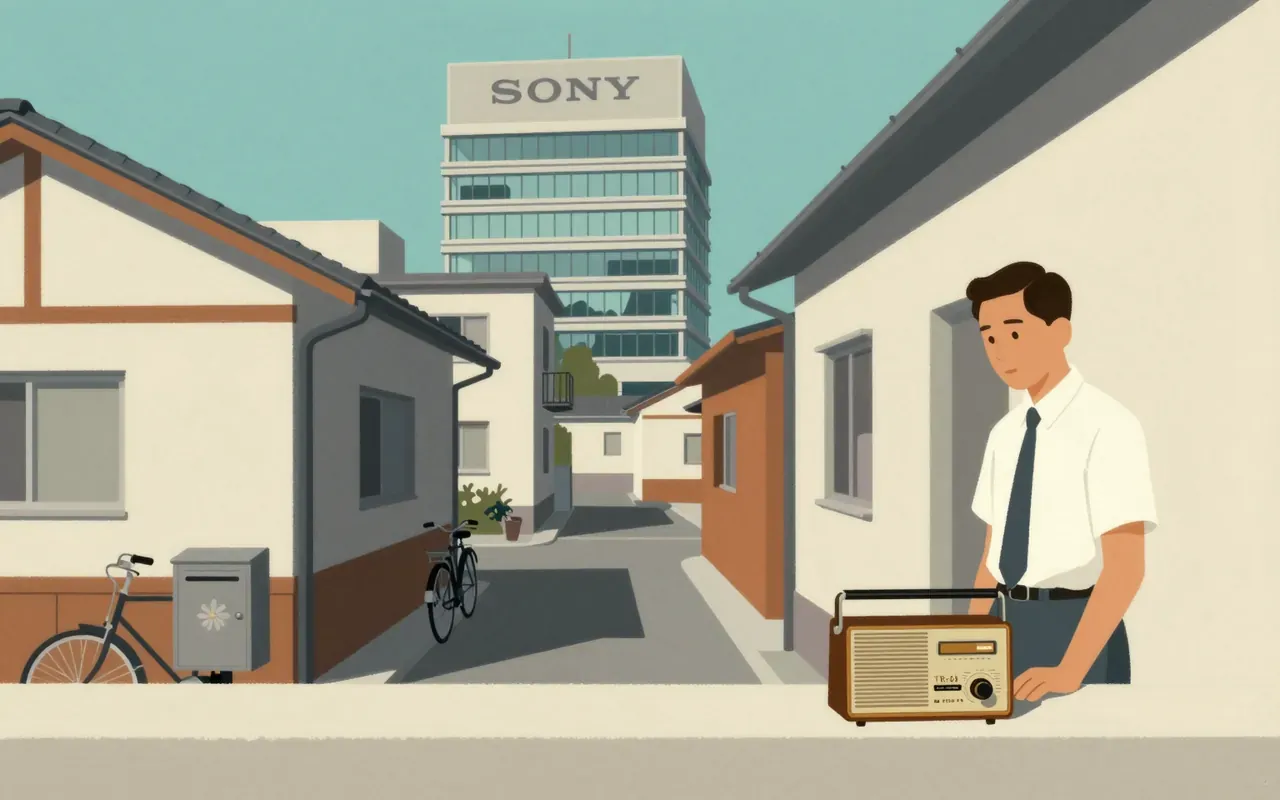
Sony’s early business model was hardware-first, export-first, and name-first — built on tangible, shipable, patentable devices that redefined category boundaries in foreign markets.

13:23

SpaceX

Elon Musk · 2002

SpaceX is a government-contract-powered aerospace manufacturer whose reusable launch system succeeded where others failed — not because of vision alone, but because NASA paid for development, testing, and flight operations while Starlink created a parallel revenue stream. Its Mars and Starship ambitions remain outside this economic reality.

10:29

Starbucks

Howard Schultz · 1971

Starbucks is the world’s largest coffeehouse chain. It was founded in 1971 in Seattle as a coffee bean wholesaler. Howard Schultz transformed it into a company-owned coffeehouse chain serving espresso-based drinks. As of November 2022, it operated 35,711 stores in 80 countries. It held an IPO on June 26, 1992, raising $271 million to double its store count. It credits its growth to rejecting domestic franchising and positioning stores as social hubs — driving the second wave of coffee culture.

10:28

Stripe, Inc.

Patrick & John Collison · 2010

Stripe is infrastructure, not finance. It sells developer convenience — not banking services. Its $159bn valuation rests entirely on volume processed, not revenue disclosed, margins proven, or ownership of capital.

11:32

Tesla, Inc.

Elon Musk · 2003

Tesla is not a software or AI company—it is a vertically integrated hardware manufacturer whose valuation rests on future scale, not current unit economics. Its founders were Eberhard and Tarpenning. Musk joined in 2004, led funding, took control, and shaped its public narrative. It sells cars, batteries, and solar—but publishes no per-product margin data. Its market dominance is financial, not operational.

10:55

TikTok

Zhang Yiming · 2016

TikTok is a Chinese-origin short-form video platform launched internationally by ByteDance in September 2017 as the overseas counterpart to Douyin. It uses AI-driven recommendation algorithms to connect creators with audiences. It surpassed two billion mobile downloads by April 2020. Its corporate entity, TikTok Ltd, is incorporated in the Cayman Islands and headquartered in Singapore and Los Angeles. Zhang Yiming founded ByteDance in 2012 and explicitly framed global expansion as essential because China accounts for only one-fifth of global internet users. ByteDance acquired Musical.ly for US$800 million in August 2018 and integrated it into TikTok.

11:07

Toyota

Kiichiro Toyoda · 1937

Toyota’s founding was a licensed, capital-backed industrial pivot — not a startup story.

10:16

Volkswagen

Ferdinand Porsche · 1937

Volkswagen was a Nazi state project designed by Ferdinand Porsche, funded by coerced public savings, and diverted entirely to military production. Its 'people’s car' promise was broken before delivery — yet its engineering outlived its ideology.

10:14

Walmart

Sam Walton · 1962

Walmart’s early success was mechanical, not magical. It used known levers — location, transport, procurement — with unusual discipline. Its story is not about disruption but about execution fidelity.

9:16

Warren Buffett

Buffett didn’t build Berkshire by spotting winners—he seized control, revalued assets on his terms, and walked away from the original business without apology.
10:02

Yahoo Inc. (2017–present)

Jerry Yang & David Filo · 2006

Yahoo Inc. (2017–present) is not the original Yahoo!. It is a Delaware-incorporated media entity formed in 2006, acquired by Verizon in 2017 for $4.48 billion — reduced from $4.8 billion after two breaches affecting over a billion users. Verizon wrote down its combined AOL-Yahoo value by $4.6 billion in 2018 and rebranded it Verizon Media in 2019. In 2021, Apollo Global Management acquired 90% for $5 billion, reinstating the Yahoo name and appointing Jim Lanzone CEO. Its $7.4 billion 2020 revenue comes from advertising across vertically focused, high-traffic properties — but it has shed Tumblr, HuffPost, and AOL without replacing their scale or influence.