businessbriefs
10:02in productionCh. 1 · The Breach Discount/ 10:02 · ceiling 15 min
Rise & fall

Yahoo Inc. (2017–present)

Yahoo isn’t being revived — it’s being recycled.

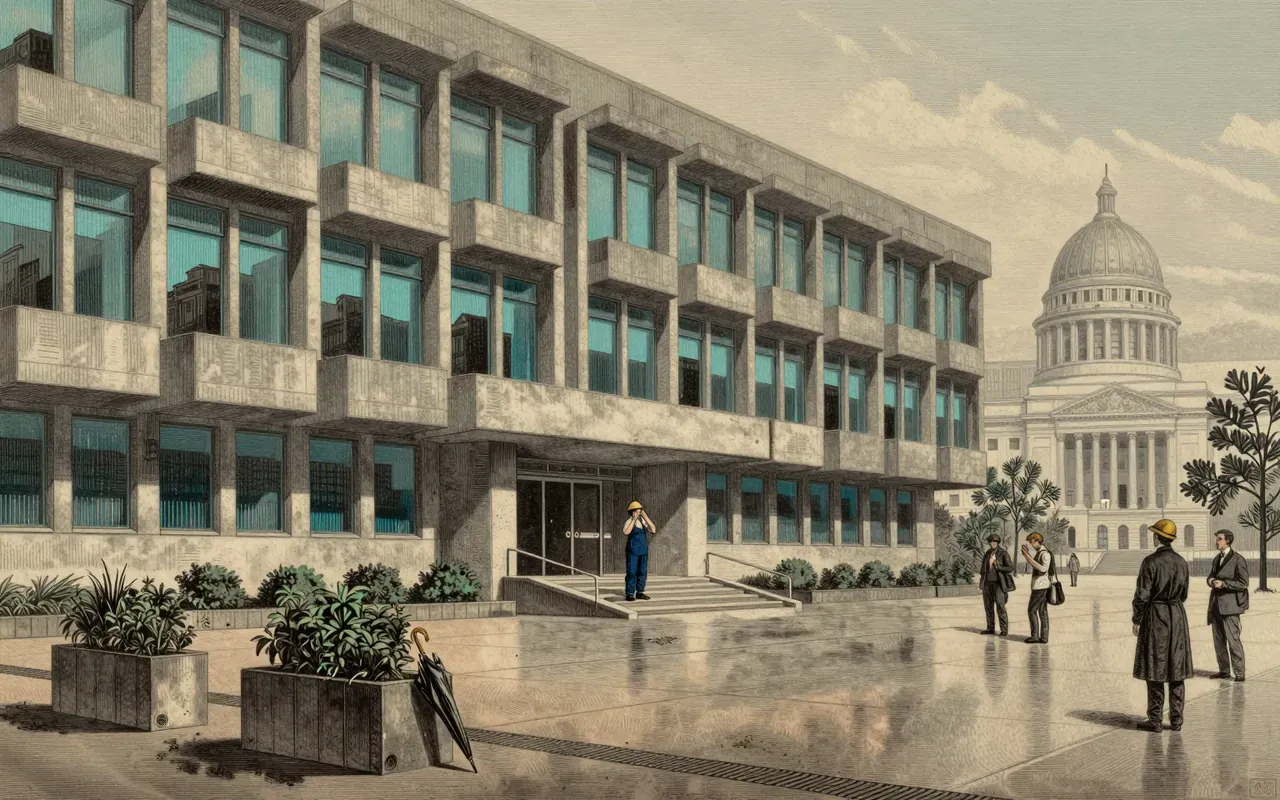
Yahoo Inc. (2017–present) is not the original Yahoo!. It is a Delaware-incorporated media entity formed in 2006, acquired by Verizon in 2017 for $4.48 billion — reduced from $4.8 billion after two breaches affecting over a billion users. Verizon wrote down its combined AOL-Yahoo value by $4.6 billion in 2018 and rebranded it Verizon Media in 2019. In 2021, Apollo Global Management acquired 90% for $5 billion, reinstating the Yahoo name and appointing Jim Lanzone CEO. Its $7.4 billion 2020 revenue comes from advertising across vertically focused, high-traffic properties — but it has shed Tumblr, HuffPost, and AOL without replacing their scale or influence.

Chapters & takeaways4
  1. 1:01
    The Breach Discount

    Verizon bought Yahoo for $4.48 billion after slashing its offer by $350 million due to two billion-user security breaches.

  2. 2:32
    The $4.6B Write-Down

    Verizon wrote down Yahoo and AOL by $4.6 billion — half their combined value — and renamed the unit Verizon Media within a year.

  3. 4:12
    The Apollo Reset

    Apollo bought 90% of Yahoo for $5 billion in 2021, installing Jim Lanzone as CEO and reverting to the Yahoo name.

  4. 5:46
    The 2006 Entity

    Yahoo Inc. is legally distinct from the original Yahoo! — incorporated in 2006, headquartered in Manhattan, focused on media and online business.

Worth your time?

Yes. Study the whole thing.

3.5/ 5
What works
  • business/rise-and-fall
  • business/deals-and-ipos
  • business/finance
What does not
  • business/companies
  • business/company-stories
  • business/management
  • business/strategy
Study it if
  • business/rise-and-fall
  • business/deals-and-ipos
  • business/finance
Skip it if
  • business/founders
  • business/startups-and-venture
  • business/ideas
The written brief1 min read

What the company or idea is

Yahoo Inc. (2017–present) is a media and online business formed in 2006, headquartered in Manhattan, New York, and restructured three times since 2017: first by Verizon, then by write-down and renaming, then by Apollo Global Management’s $5 billion acquisition.

How it actually makes money

Yahoo Inc. (2017–present) makes money from digital advertising across its owned-and-operated properties — news, finance, sports, email, and search — with revenue reported at $7.4 billion in 2020.

What works

Its core traffic — finance, sports, and news verticals — retains high-intent user engagement, supporting stable ad yield; acquisitions like Taboola stake and The Factual aim to layer data and recommendation tech atop that base.

What does not

Its repeated rebranding — Oath, Verizon Media, Yahoo — fails to restore scale or pricing power in digital advertising; it has divested Tumblr, HuffPost, and AOL while failing to grow audience share meaningfully.

What to take from it

The gap between Yahoo’s self-presentation as a creator- and AI-enabled media platform and its actual position — a fragmented ad-tech inventory aggregator with declining leverage — reveals how private equity repackages legacy assets without altering their structural weaknesses.

Is it worth your time

Yes — as a case study in asset stripping, brand erosion, and the financial mechanics of media consolidation under private equity ownership.
Same desk · Rise & fall4 of 21
9:32
Alfa RomeoNicola Romeo · 1910Alfa Romeo was not founded by Nicola Romeo. It was founded in 1910 as A.L.F.A. to acquire the assets of the failing Italian Darracq subsidiary. Romeo acquired it in 1915, took full ownership by 1918, renamed it in 1920, launched the first Alfa Romeo-branded car in 1921, won the inaugural 1925 World Manufacturers’ Championship, faced near-liquidation in 1927 due to poor investments, departed formally in 1928, and was taken over by the Italian state in 1933.
11:47
CitroënAndré-Gustave Citroën · 1919Citroën was a French automobile manufacturer founded in 1919 in Saint-Ouen-sur-Seine. It pioneered four world-first production car technologies: front-wheel drive with unibody construction (1934), hydropneumatic self-levelling suspension (1954), modern disc brakes (1955), and swiveling headlights (1967). It also launched the 2CV in 1948, pioneering soft interconnected suspension. Citroën gained international reputation mass-producing armaments in WWI. It became the fourth-largest carmaker in the world in the 1930s, peaking in 1932 with the Traction Avant. Cost struggles aggravated by the Great Depression led to bankruptcy in 1934 and takeover by Michelin. Its double-chevron logo derived from André Citroën’s application of double helical gears, which he acquired after seeing them used by a Polish carpenter around 1900.
10:38
Eskom1923Eskom is not a case study in innovation or reform. It is a ledger of deferred costs—technical, financial, environmental—written across a national grid.
9:53
GlencoreMarc Rich · 1974Glencore is a vertically integrated commodity trader and miner whose power rests on controlling physical flows — especially zinc and copper — across jurisdictions. It emerged from Marc Rich + Co AG in 1994 after Rich was forced out following a failed zinc market corner. Its structure splits legal registration (Jersey), operational HQ (Baar), and oil-and-gas command (London). It holds no disclosed valuation or margin, but its 2010 market shares — 60% in zinc, 50% in copper — show where its leverage lies: not in brands or code, but in tons moved, stored, and priced across borders.
Up next in Business

ABB

Charles Eugene Lancelot Brown · 1988 · 10:56

ABB isn’t a tech disruptor — it’s a merger-built infrastructure steward that sells fire-safe circuit breakers and ship propulsion systems.

10:56