businessbriefs
11:00in productionCh. 1 · Harbour Contractor, Not Trader/ 11:00 · ceiling 15 min
Companies

Sumitomo Corporation

1919

A '1919 company' that legally ceased to exist in 1947 — and rebuilt itself not as a startup, but as a sovereign-grade trading apparatus.

Sumitomo Corporation is not a century-old trading firm — it is a post-occupation reconstruction that leverages group affiliation, regulatory tolerance, and scale to operate across markets where others require equity, IP, or technology. Its durability lies in its fungibility.

Chapters & takeaways6
  1. 1:12
    Harbour Contractor, Not Trader

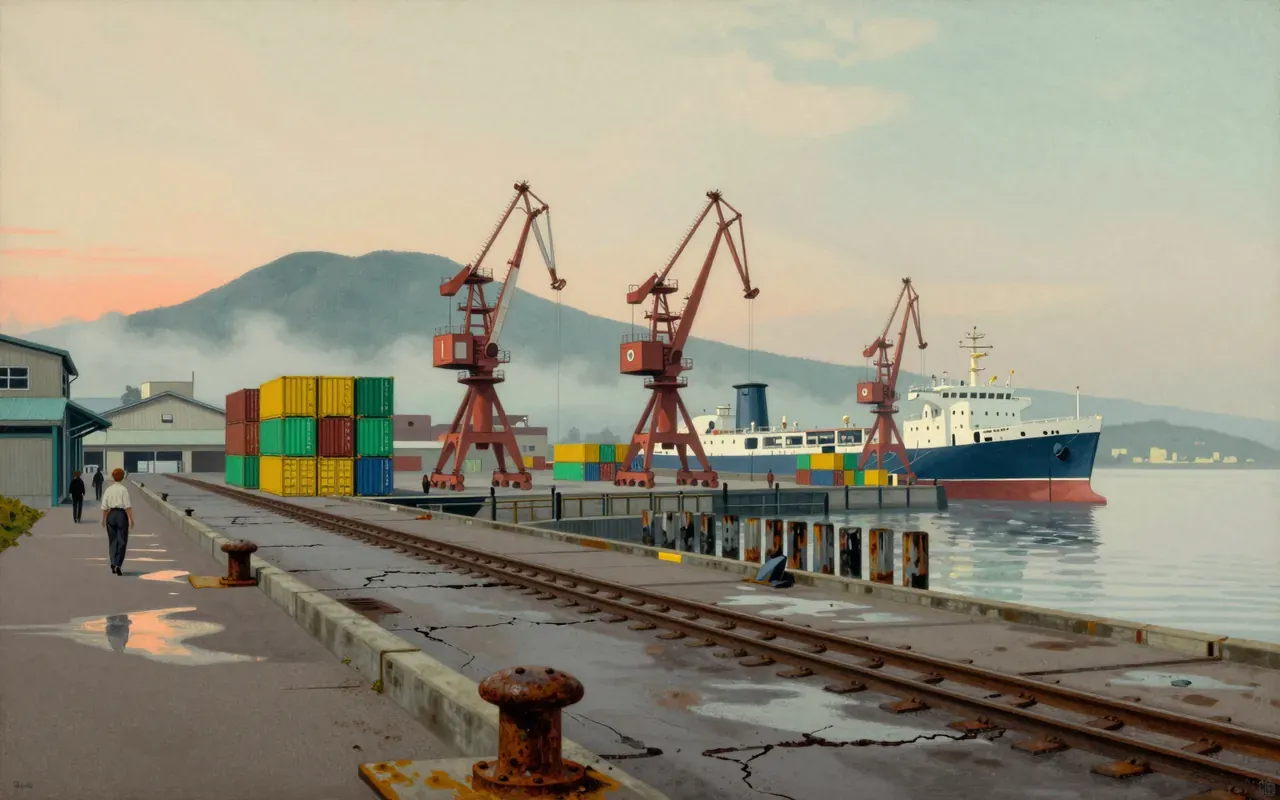
    It began not as a trader, but as a municipal contractor building harbours in Osaka.

  2. 2:27
    War Machine, Then Wreckage

    It merged into wartime industry and helped arm Imperial Japan — then lost nearly all its domestic infrastructure.

  3. 3:38
    Legally Erased in 1947

    Allied occupation dissolved it entirely — no continuity, no succession, no grandfather clause.

  4. 4:36
    Rebuilt as Trading Infrastructure

    It re-emerged as a sōgō shōsha — not by founding, but by repurposing networks, relationships, and group affiliation.

  5. 6:07
    Listed, Not Legible

    Its stock exchange listings and index inclusions signal market acceptance — not operational transparency.

  6. 7:10
    Group-Embedded, Not Standalone

    Its membership in the Sumitomo Group is its real operating system — not its brand or charter.

Worth your time?

Yes. Study the whole thing.

4.5/ 5
What works
  • It demonstrates how institutional memory survives legal extinction.
  • It shows how trading firms monetise coordination, not just goods.
  • It reveals how group affiliation substitutes for balance sheet strength.
What does not
  • It does not rely on venture capital.
  • It does not have a founder-led origin story.
  • It does not claim disruption or innovation as a value proposition.
  • It does not disclose financial performance beyond what exchanges require.
Study it if
  • Students of corporate longevity.
  • Analysts of non-Western capital formation.
  • Historians of postwar economic reconstruction.
Skip it if
  • Startup founders seeking role models.
  • Investors looking for growth metrics.
  • Marketers studying brand storytelling.
The written brief1 min read

What the company or idea is

Sumitomo Corporation is a sōgō shōsha: a Japanese general trading company, incorporated in 1919, dissolved by Allied occupation in 1947, and re-established as a new entity that evolved into one of the world’s top three such firms.

How it actually makes money

It makes money through diversified trading, investment, and project execution across energy, metals, infrastructure, food, healthcare, and digital sectors — acting as intermediary, financier, risk-taker, and operator in global supply chains.

What works

Its scale and embeddedness in the Sumitomo Group give it privileged access to capital, industrial partners, and policy channels — enabling it to absorb losses (e.g., energy investments in 2014–2015) and redirect strategy without existential threat.

What does not

Its self-presentation as a continuous 1919 entity obscures its legal erasure in 1947 and reconstitution from scratch — the postwar firm bears no legal continuity with the prewar Osaka North Harbour Co., Ltd.

What to take from it

Its resilience comes not from ideology or innovation but from structural adaptability: absorbing state mandates, surviving forced breakup, and pivoting from harbour construction to global commodity arbitrage without fixed assets or proprietary technology.

Is it worth your time

Yes — if you want to understand how capital, state power, and industrial logistics cohere in a non-Western corporate form that survived war, dissolution, and strategic reversal without relying on venture narratives or founder mythmaking.

Same desk · Companies4 of 217
12:57
MeituanWang Xing · 2010Meituan is a Chinese technology company headquartered in Beijing that operates a platform for local services, including on‑demand food delivery, in‑store services, consumer reviews under Dazhong Dianping, hotel and travel bookings, and instant retail. It monetises through fees on its platform, taking a commission on food delivery orders and charging merchants for booking and in‑store services. Meituan’s rapid user growth is driven by its extensive coverage of local services, its integration of food delivery, in‑store services, and hotel bookings creating a one‑stop shop, and its large merchant base of 14.5 million active merchants providing network effects. Meituan faces regulatory scrutiny in China, its 2021 post by Wang Xing triggered a 7.1 % share plunge and anti‑monopoly investigation, and the company has been subject to scrutiny by Beijing Municipal Human Resources and Social Security Bureau. Meituan demonstrates the power of a diversified local‑services platform, its ability to scale across cities and internationally shows the importance of network effects, and its regulatory challenges highlight the need for compliance awareness. Meituan offers a case study in rapid scaling and diversification, but its regulatory risks caution investors.
10:56
ABBCharles Eugene Lancelot Brown · 1988ABB is a post-merger industrial incumbent whose value lies in proven, regulated, physical infrastructure — not software, platforms, or scalability stories.
10:50
AbbVie2012AbbVie is a textbook example of post-innovation pharmaceutical value extraction — built on a single blockbuster, sustained by patent thickets and pricing, checked only by biosimilars and congressional scrutiny.
11:08
Abu Dhabi National Oil Company1971ADNOC is the state-owned oil company of Abu Dhabi, UAE — founded by concession in 1939, ranked 12th globally by production, and expanding output to 5 million barrels per day by 2027. It is the UAE’s largest oil company. Output rose from ~2.5 mbpd in the 1990s to 2.9 mbpd in 2008 and 4.85 mbpd in 2024. It is described as efficient and well managed, but financially opaque. It is one of few oil companies increasing production amid climate pressure.
Up next in Business

Tadashi Yanai

· 9:40

Uniqlo’s parent did not invent fast fashion — it inherited a tailor shop and scaled it with discipline, not algorithms.

9:40