businessbriefs
9:41in productionCh. 1 · The Kitchen Table/ 9:41 · ceiling 15 min
Management · Strategy

Ingvar Kamprad

Ingvar Kamprad didn’t build IKEA with design or disruption—he built it with arithmetic, austerity, and an uncle’s kitchen table.

IKEA is not a story about design genius or Scandinavian cool. It is a case study in cost engineering: a mail-order business that added furniture in 1948, codified austerity in writing, and delivered measurable, sustained price reductions by treating every component—from packaging to supplier contracts—as a variable to be optimised.

Chapters & takeaways4
  1. 1:08
    The Kitchen Table

    IKEA began not in a garage or lab—but at an uncle’s kitchen table in 1943.

  2. 3:03
    The Name Is a Map

    IKEA’s name is a personal cipher: Ingvar Kamprad, Elmtaryd farm, Agunnaryd village.

  3. 4:58
    Furniture Was an Afterthought

    Furniture entered the business only in 1948—five years after founding, and only after mail-order was established.

  4. 5:54
    The Arithmetic of Affordability

    Price cuts were mechanical, not rhetorical: 2–3% per year for ten years, driven by process—not PR.

Worth your time?

Yes. Study the whole thing.

4.5/ 5
What works
  • business/management
  • business/strategy
  • business/retail
What does not
  • business/scandals
  • business/founders
  • business/startups-and-venture
Study it if
  • operators
  • procurement specialists
  • product managers
Skip it if
  • investors seeking growth metrics
  • design students looking for aesthetic theory
  • founders chasing 'disruption'
The written brief1 min read

What the company or idea is

IKEA is a furniture retailer founded in 1943 as a mail-order business, built on cost discipline, product standardisation, and relentless price reduction.

How it actually makes money

IKEA makes money by selling flat-pack furniture at scale, using tight cost control, global supply chains, and a self-assembly model that shifts assembly labour to the customer.

What works

The 2–3% average annual price reduction over the decade to 2010 was achieved through granular cost control, continuous product development, and a vertically aligned supply chain—not marketing or technology.

What does not

The company’s stated rejection of status symbols does not extend to its own brand, which has become a global marker of aspirational minimalism—contradicting Kamprad’s stated philosophy.

What to take from it

Operational rigour—not vision or charisma—is what enabled sustained annual price cuts while expanding globally.

Is it worth your time

Yes—if you are studying how operational discipline, not branding or innovation, sustains price leadership across decades.

Same desk · Management4 of 9
11:36
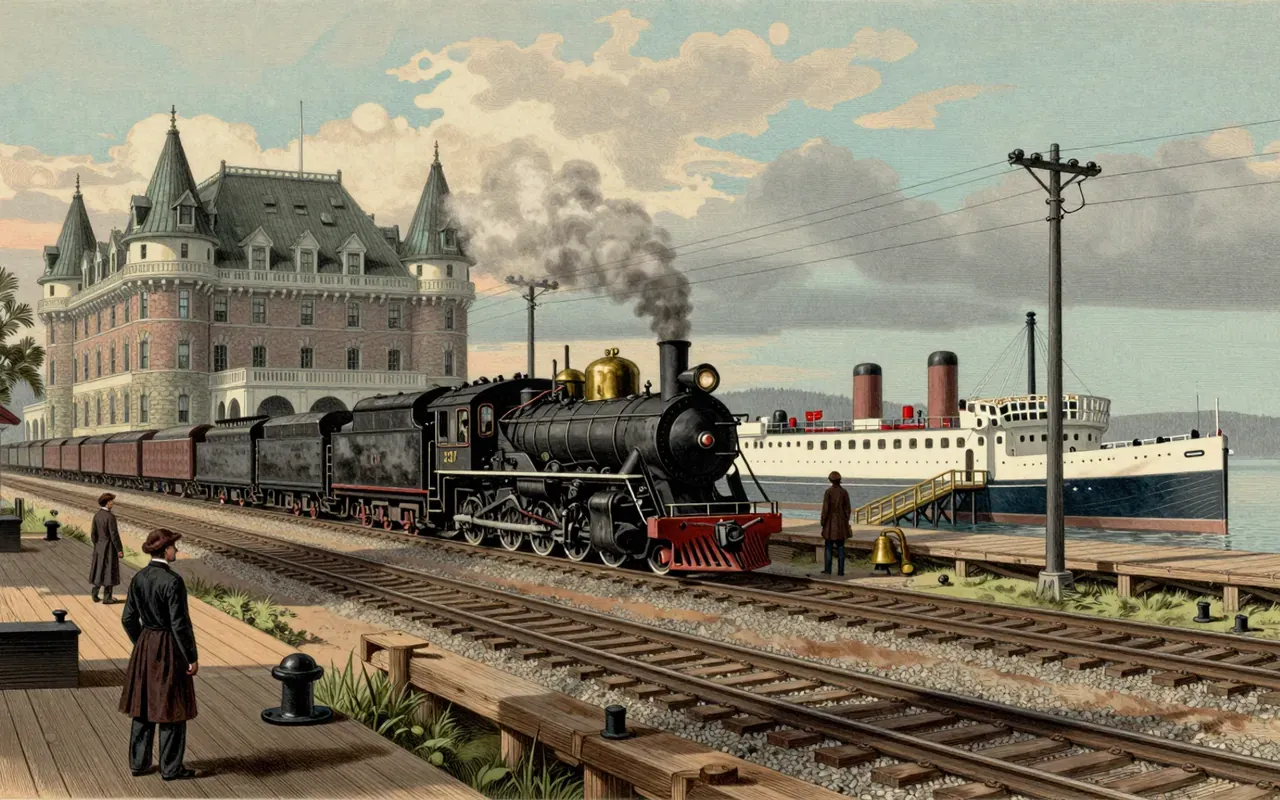
Canadian Pacific RailwayWilliam Cornelius Van Horne · 1881The Canadian Pacific Railway was not a startup, nor a disruptor — it was a state-contracted infrastructure monopoly, executed under tight political deadline and scaled through vertical integration. Van Horne’s genius lay not in invention but in orchestration: he turned a rail line into a self-reinforcing system of movement, messaging, lodging, and shipping — all funded by federal land grants, bonds, and tariffs, not market demand. Its success was geopolitical, not financial; its durability came from control of geography, not innovation.
11:46
Soros Fund ManagementGeorge SorosSoros Fund Management is a case study in regulatory adaptation: a firm that built its reputation on transparency of idea (macro thesis) and opacity of structure (family office), where the numbers remain impressive but uncheckable.
10:22
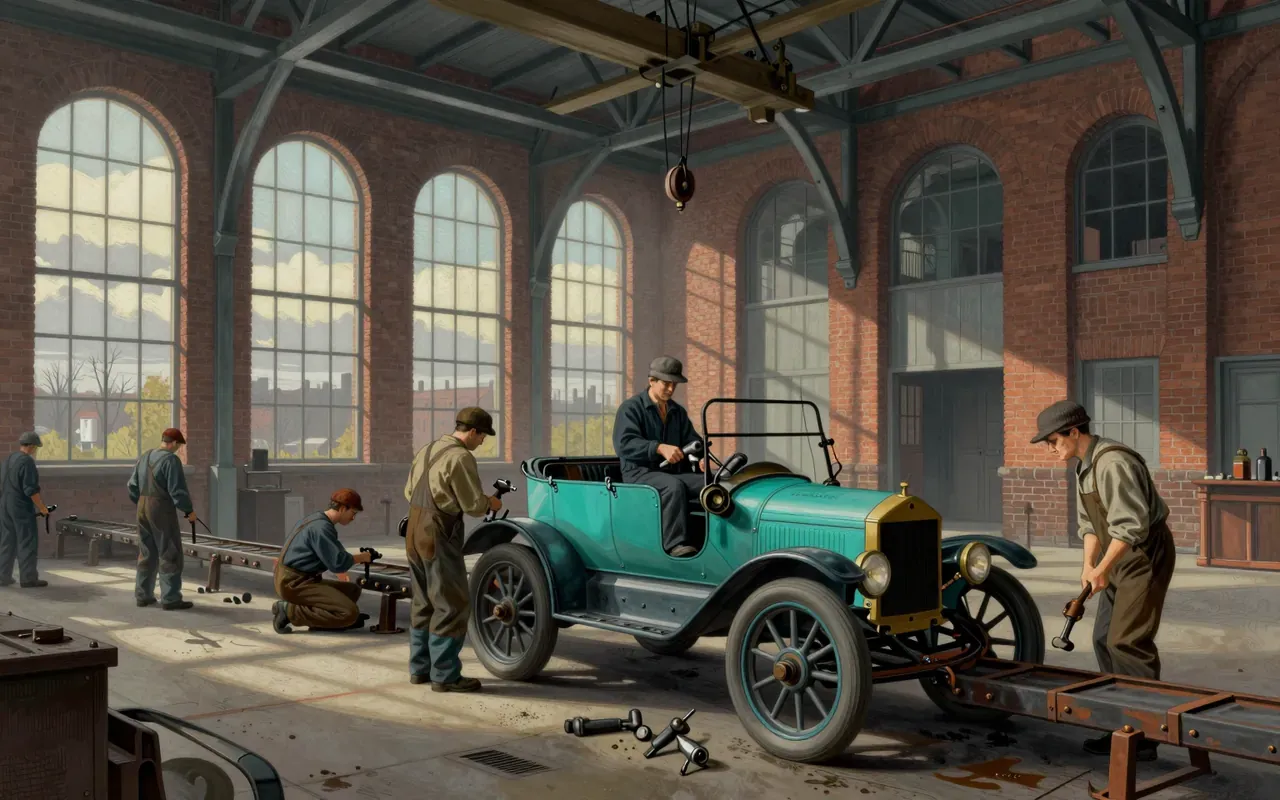
Henry FordFord Motor Company pioneered Fordism: a vertically integrated, assembly-belt-driven system to mass-produce affordable cars. It made money by controlling costs, scaling output, and franchising distribution — not by innovation in vehicle design or customer experience. Its success was real (half of US cars were Model Ts by 1918; 15 million built), but its ideological claims — like consumerism enabling world peace — were ornamental. The business worked because it eliminated variation, not because it inspired loyalty or vision. It remains instructive — not as a model to copy, but as a warning about how tightly engineered systems can obscure their own assumptions.
9:08
Reed HastingsNetflix is not defined by its content library or streaming tech — it is defined by how it engineered human behaviour: through severance, time-off, and culture-as-filter. Its business model remains opaque on revenue mechanics, but its operational choices are unusually explicit and scalable.
Up next in Business

Lisa Su

· 10:47

Lisa Su’s authority comes from solving physics problems on the wafer — not from vision statements or funding rounds.

10:47