11:21in productionCh. 1 · Not a power company. A grid company./ 11:21 · ceiling 15 min
Companies · Strategy
State Grid Corporation of China
2002
A monopoly grid operator that doesn’t generate power — and never meant to.
State Grid is not a power company — it is the physical and administrative backbone of China’s electricity system. Its scale, revenue, and reach are functions of state assignment, not market performance. It works where central coordination delivers efficiency — but its structure deliberately avoids generation, competition, or price discovery.
It is a state-owned grid operator, not a generator — created in 2002 by splitting the old State Power Corporation into separate transmission and generation entities.
3:15
Scale by decree, not design
It controls 80% of China’s grid and is the largest government-owned company by revenue — but its dominance comes from territorial mandate, not competition.
4:58
Generation was outsourced on day one
Its 6.47 GW generation capacity at founding was negligible next to the five dedicated state power generation groups — confirming its remit was transmission, not production.
6:54
Ultra-high voltage as policy infrastructure
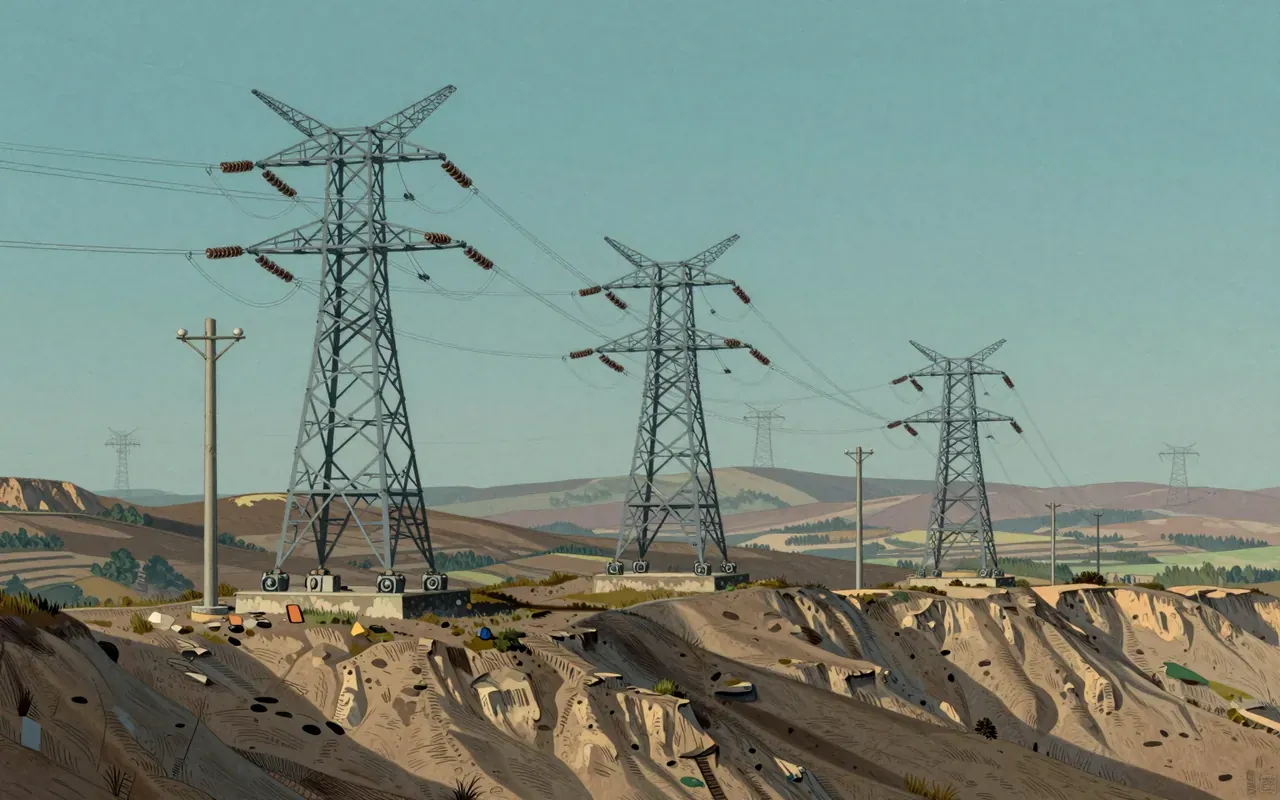
Its 2009 1,000-kV AC line wasn’t just engineering — it locked in long-distance transmission as the core technical strategy for national grid integration.
Worth your time?
Yes. Study the whole thing.
4/ 5
What works
centralised grid management at continental scale
ultra-high-voltage transmission deployment
integration of geographically dispersed generation sources
State Grid Corporation of China is a Chinese state-owned electric utility, created in 2002 to own and operate the majority of China’s transmission and distribution grid.
How it actually makes money
It makes money by transmitting and distributing electricity across 26 provinces, municipalities, and autonomous regions — charging fees for grid access and usage, regulated by the Chinese government.
What works
It reliably moves electricity across continental distances: its 2009 deployment of the world’s first 1,000-kilovolt AC line proved ultra-high-voltage transmission at scale — enabling long-haul power transfer from resource-rich inland regions to coastal demand centres.
What does not
It does not generate significant power itself: at founding, its generation capacity was only 6.47 gigawatts — a fraction of China’s total, and dwarfed by the five independent power generation groups spun off alongside it.
What to take from it
It shows how vertical separation (plant-grid) can concentrate control over infrastructure while deliberately ceding generation to competing state-owned firms — a structural choice, not a market outcome.
Is it worth your time
Yes, if you study state-directed infrastructure scale, monopoly pricing in regulated utilities, or how grid ownership shapes energy transition — not if you seek market-led innovation or financial transparency.