businessbriefs
Newest

All briefs

561 briefs · 5965 min · 97–192 on page 2 of 6
11:12

Ahold Delhaize

A Dutch-Belgian holding company whose identity is anchored in Europe but whose revenue is anchored in America.
10:12

Albert Heijn

Albert Heijn’s dominance isn’t built on novelty — it’s built on succession, standardisation, and scale.
10:18

Aldi

Karl Albrecht · 1946

Aldi is not a single company. It is two legally and financially separate firms — Aldi Nord and Aldi Süd — born from a 1960 split triggered by a disagreement over cigarettes. They share a name, a cost-cutting method, and a lineage, but no ownership, no shared board, and no central strategy. Their model works because it eliminates variables: no fresh produce, no advertising, no unsold stock, no large stores, no rebates beyond the legal 3%. By 1960, that method had scaled to 300 stores. Family control ended by 2002. The business survives not through narrative, but through subtraction.

10:44

Arla Foods

A co-operative did not need venture capital or a pivot to become the world’s fifth-largest dairy company — it just needed 119 years of farmer-led consolidation.
11:40

Baowu

Baowu isn’t a company that grew — it was assigned volume.
10:33

Biocon

Kiran Mazumdar-Shaw · 1978

Biocon is a rare case of a biotech company built without VC, without US incorporation, and without founder exit—its growth was constrained and enabled by Indian law, not Silicon Valley logic.

11:17

Bonduelle

Bonduelle didn’t build a vegetable empire—it built a preservation empire, one can, freezer, and salad kit at a time.
10:20

Bouygues Telecom

Third place wasn’t a disadvantage — it was the only position that let Bouygues Telecom skip the past and build for the city.
11:34

BT Group

General Post Office · 1969

BT Group is a British multinational telecommunications holding company headquartered in London, England. It operates in around 180 countries and is the largest provider of fixed-line, broadband and mobile services in the UK. Its origins date back to the founding in 1846 of the Electric Telegraph Company. BT Group as it came to be started in 1912, when the General Post Office, a government department, took over the system of the National Telephone Company, becoming the monopoly telecoms supplier in the UK. The Post Office Act of 1969 led to the GPO becoming a public corporation, Post Office Telecommunications. The British Telecom brand was introduced in 1980, and became independent of the Post Office in 1981. British Telecom was privatised in 1984, becoming British Telecommunications plc, with some 50 percent of its shares sold to investors. BT runs the telephone exchanges, trunk network and local loop connections for the vast majority of British fixed-line telephones. The General Post Office (GPO) was the state postal system and telecommunications carrier of the United Kingdom until 1969. Established in England in the 17th century, the GPO was a state monopoly covering the dispatch of items from a specific sender to a specific receiver; it was overseen by a Government minister, the Postmaster General. The GPO was abolished by the Post Office Act 1969, which transferred its assets to the Post Office, so changing it from a Department of State to a statutory corporation. Responsibility for telecommunications was given to Post Office Telecommunications, the successor of the GPO Telegraph and Telephones department. In 1980, the telecommunications and postal sides were split prior to British Telecommunications' conversion into a totally separate publicly owned corporation the following year as a result of the British Telecommunications Act 1981. When new forms of communication came into existence in the 19th and early 20th centuries the GPO claimed monopoly rights on the basis that like the postal service they involved delivery from a sender and to a receiver. The Telegraph Act 1869 conferred on the Postmaster General a monopoly in telegraphic communication in the UK. The Wireless Telegraphy Act 1904, which granted control of radio waves to the General Post Office, who licensed all senders and receivers.

9:48

Carrefour

Marcel Fournier · 1959

Carrefour is a foundational case in retail format design — not technology, not branding, not finance — but physical integration, location logic, and incremental scaling.

10:49

Coop (Switzerland)

A cooperative in name, a conglomerate in practice — Coop proves membership doesn’t mean control.
9:57

Coop (Sweden)

A co-operative built to resist corporate power spent a decade losing billions — then rebranded in 2001 and kept losing.
11:18

Corteva

Corteva is not a startup—it’s DowDuPont’s agriculture division, spun off to sell more chemicals while pretending to pivot away from them.
9:14

Jack Dorsey

Dorsey built a reliable machine that refused to charge—until investors insisted.
10:25

E-Plus

Third place wasn’t enough: E-Plus had 25 million customers, but no defensible spectrum position.
10:16

Edeka

A century-old co-op owns no stores—but controls a quarter of Germany’s grocery market.
9:21

Elisa (company)

A telecom built by Finland, for Finland—and quietly exported as software to 100 countries.
10:46

Emirates (airline)

Mohammad Al Maktoum · 1985

Emirates is a state-owned UAE flag carrier founded in 1985 after Gulf Air reduced Dubai services. It operates over 3,600 weekly flights from Dubai International Airport’s Terminal 3, serves 150+ cities across six continents, and ranks third globally by passenger volume and second by freight volume. Its ownership lies with Dubai’s Investment Corporation of Dubai, and its cargo arm is Emirates SkyCargo. It is not part of any global airline alliance.

11:37

FrieslandCampina

A royal cooperative built on mergers, not milk — and approved by Brussels only after it agreed to cut itself apart.
10:14

Gazprom Neft

A state-engineered oil company disguised as a startup — founded with ready-made assets, not a business plan.
11:42

Globe Telecom

Globe Telecom isn’t defined by its 5G rollout—it’s defined by who owns it and who pays for it.
10:16

GLOBUS

A Norwegian radar system that answers to Oslo on paper — and to Vandenberg on the circuit board.
10:58

Godrej & Boyce

Ardeshir Godrej · 1897

Godrej & Boyce is not a story of disruption but of continuity — sustained by refusing to outsource precision, testing claims in fire, and anchoring engineering to national need. Its business model has never been about scaling a single product, but about retaining sovereign capability across generations.

9:08

Auchan

Auchan did not invent retail — it alphabetised its way into dominance.
10:01

Bel Group

A 159-year-old cheese business didn’t scale with disruption—it scaled with Swiss processing, a cartoon cow, and a UK subsidiary in 1929.
10:50

Hyundai Motor Company

Chung Ju-yung · 1967

Hyundai Motor is a state-facilitated, scale-first automaker whose power lies in integration — not invention. It controls the largest single auto plant on earth, ranks third globally by output, and sells more hybrids than EVs. Its origin story is contested across sources. Its value is in execution, not narrative.

12:18

ICA Gruppen

A retailer-owned co-op that became a bank-owning, pharmacy-running, real-estate-holding conglomerate — without ever leaving Sweden’s grocery aisles.
12:24

Itochu

A sogo shosha is not a conglomerate — it’s a trading nervous system with balance-sheet muscle.
10:56

ITV plc

A merger designed to dominate UK TV instead built too many studios and closed too many offices — proving scale without synergy is just overhead with a press release.
10:20

Lean manufacturing

Lean manufacturing is not about cutting waste — it’s about who gets to define what waste is.
12:39

Kaufland

Dieter Schwarz · 1968

Kaufland is a German hypermarket chain founded in 1984 in Neckarsulm, part of the Schwarz Gruppe, and developed by Dieter Schwarz as a full-range alternative to Lidl’s discount format. It makes money by selling groceries and general merchandise from hypermarkets averaging over 10,000 m², operating under vertical integration — running in-house bakeries since 1994, meat processing facilities, and organic product lines launched in November 2018. Its strategy of acquiring competitor assets (e.g., 12 famila stores and a Cash-&-Carry-Markt in January 2010) and rebranding existing Handelshof locations gave it rapid scale. It dominates eastern Germany today — a result of opening its first East German store in Meißen in 1990, immediately after reunification. Its Australian expansion failed within a year (2019–2020), exposing limits to its model outside culturally and logistically aligned markets. It does not operate outside Europe. The gap between Kaufland’s self-presentation as a sustainability- and quality-driven retailer (e.g., 2021 decarbonisation strategy, organic range) and its operational reality — acquisitions, rebranding, and regional dominance built on post-reunification timing and antitrust-cleared takeovers — reveals how legacy retail power consolidates without innovation.

11:21

Lactalis

Lactalis didn’t build a dairy empire — it bought one, piece by piece, while its factories kept poisoning babies.
9:07

Lenta (retail)

A Russian hypermarket chain built on Soviet-era infrastructure, scaled with Western capital, and run without public financials.
10:10

Lidl

Lidl didn’t disrupt retail—it reverse-engineered Aldi and scaled the blueprint with German precision.
9:40

Robert Maxwell

Robert Maxwell didn’t build a publishing empire — he built a financial shell around one.
12:57

Meituan

Wang Xing · 2010

Meituan is a Chinese technology company headquartered in Beijing that operates a platform for local services, including on‑demand food delivery, in‑store services, consumer reviews under Dazhong Dianping, hotel and travel bookings, and instant retail. It monetises through fees on its platform, taking a commission on food delivery orders and charging merchants for booking and in‑store services. Meituan’s rapid user growth is driven by its extensive coverage of local services, its integration of food delivery, in‑store services, and hotel bookings creating a one‑stop shop, and its large merchant base of 14.5 million active merchants providing network effects. Meituan faces regulatory scrutiny in China, its 2021 post by Wang Xing triggered a 7.1 % share plunge and anti‑monopoly investigation, and the company has been subject to scrutiny by Beijing Municipal Human Resources and Social Security Bureau. Meituan demonstrates the power of a diversified local‑services platform, its ability to scale across cities and internationally shows the importance of network effects, and its regulatory challenges highlight the need for compliance awareness. Meituan offers a case study in rapid scaling and diversification, but its regulatory risks caution investors.

10:19

Andrew Mellon

Mellon didn’t build a business — he built a fiscal infrastructure, and then rewrote the tax code to protect it.
9:14

Migros

Gottlieb Duttweiler · 1925

Migros is a Swiss retail cooperative founded in 1925 in Zurich by Gottlieb Duttweiler as a private enterprise delivering six staple goods via five lorries to households with limited market access.


10:01

MOL (company)

MOL is not a disruptor—it’s a post-state apparatus that learned to trade, refine, and retreat when necessary.
10:24

Morrisons

William Morrison · 1899

Morrisons is a UK supermarket chain founded in 1899 as an egg and butter stall in Rawson Market, Bradford. It grew regionally until the 2004 Safeway acquisition gave it national reach across Great Britain and one store in Gibraltar. As of 2021, it operated 497 stores, employed 110,000 people, and served ~11 million customers weekly. It was listed on the London Stock Exchange until its October 2021 acquisition by Clayton, Dubilier & Rice. Since then, it has struggled financially and fallen to fifth place in UK market share (8.6%), overtaken by Aldi in September 2022.

10:22

Rupert Murdoch

Murdoch didn’t build a media empire — he hacked national media regulations, one citizenship and one tabloid at a time.
10:05

Netto (Denmark)

Netto didn’t disrupt discount retail — it absorbed it, funded by Salling Group while keeping its own books opaque.
10:44

Nutrien

A merger sold as a fix for low fertilizer prices delivered cost cuts — but no proof it could raise prices.
10:13

Telefónica Germany

A German telco that trades under a British brand, answers to Spanish shareholders, and owns more cell towers than any rival — but no longer answers to German investors.
11:02

Orange Group

Orange didn’t build its brand — it bought it, then renamed itself after it.
10:49

Paramount Global

A 2019 merger of two broken parts—not a reinvention, but a rearrangement under old ownership.
11:20

Orlen

A state-directed oil giant masquerading as a multinational — its scale is real, its independence is not.
10:19

PLDT

PLDT isn’t a tech disruptor — it’s a legal and infrastructural vessel that carried Philippine telecom across empire, war and independence.
10:18

QatarEnergy

QatarEnergy isn’t a company — it’s the Qatari state’s hydrocarbon treasury, fused with its policymaking apparatus.
10:39

Sumner Redstone

He didn’t build media. He bought the keys to the vaults — and kept the doors locked.
11:21

REWE Group

A co-operative that won a landmark EU case and spun off software — but still answers to its grocers, not its investors.
10:23

RTL Group

Bertelsmann · 2000

RTL Group is a broadcast-first European media operator built through merger, not innovation. Its structure reflects regulatory fragmentation, not technological ambition.


9:50

Russian Railways

A state monopoly disguised as reform — Russian Railways inherited the Ministry’s assets, debts, and power, but none of its accountability.
10:59

SFR

SFR built scale without building infrastructure — a telecom that wins by renting, not owning.
10:51

Singtel

Singtel isn’t a tech innovator — it’s a state-backed infrastructure gatekeeper that profits from scarcity, not speed.
11:18

Sky UK

Sky UK isn’t a tech disruptor — it’s a licensed gatekeeper that built scale by merging distribution, content and connectivity under one bill.
11:07

Spark New Zealand

Spark isn’t a digital disruptor — it’s a privatised utility that outsourced its wires and kept the brand.
10:44

Biz Stone

A creative director who co-patented Twitter but never ran its business — and whose second act at the company changed nothing.
10:42

Swisscom

A state-owned telecom that kept control by changing its name — not its structure.
9:49

Syngenta

Swiss chemical-agricultural · 2000

Syngenta is a global agricultural technology company headquartered in Basel, Switzerland, operating primarily in crop protection and seeds for farmers. It was founded in 2000 by the merger of the agrichemical businesses of Novartis and AstraZeneca. In 2004, Syngenta Seeds purchased Garst and Golden Harvest Seeds. In February 2016, ChemChina offered to purchase Syngenta for $43 billion, a deal Syngenta unanimously recommended to shareholders. In April 2017, U.S. and European antitrust authorities approved ChemChina's acquisition of Syngenta. To secure regulatory approval, ChemChina agreed to divest pesticide production of paraquat, abamectin, and chlorothalonil.

9:48

Takeda

Chobei Takeda

Takeda’s origin story is misaligned with its present identity: it began as a repackaging merchant, not a drug developer. Its longevity reflects adaptability, not continuity.
10:07

Tatneft

A Soviet oil giant built on one field, one republic, and one decree—and still running on that logic sixty years later.
9:08

Tele2

Tele2 isn’t built on disruption — it’s built on divestment, rebranding, and regulatory arbitrage.
10:41

TIM Group

A state monopoly reborn as a binational telco—with all the strategic rigidity that implies.
9:56

Telemadrid

A public broadcaster that swapped editorial independence for political utility—and paid for it in audience, credibility, and legality.
10:46

Telenor

A state telegraph monopoly didn’t become a telecom giant by disrupting — it became one by outlasting.
11:18

Telia Company

The largest Nordic telecom operator sold its media division because the math didn’t lie — and the scandal still did.
10:22

Telkom Indonesia

A colonial telegraph line reborn as Indonesia’s largest telecom by subscriber count—without revealing how much it earns, spends, or keeps.
11:00

Telstra

Telstra isn’t a telecom company that went private — it’s a government department that kept the billing system.
10:41

Tengelmann Group

A 157-year-old family firm stopped selling coffee and started selling equity — but never tells you how much it earns from either.
11:07

Assembly line

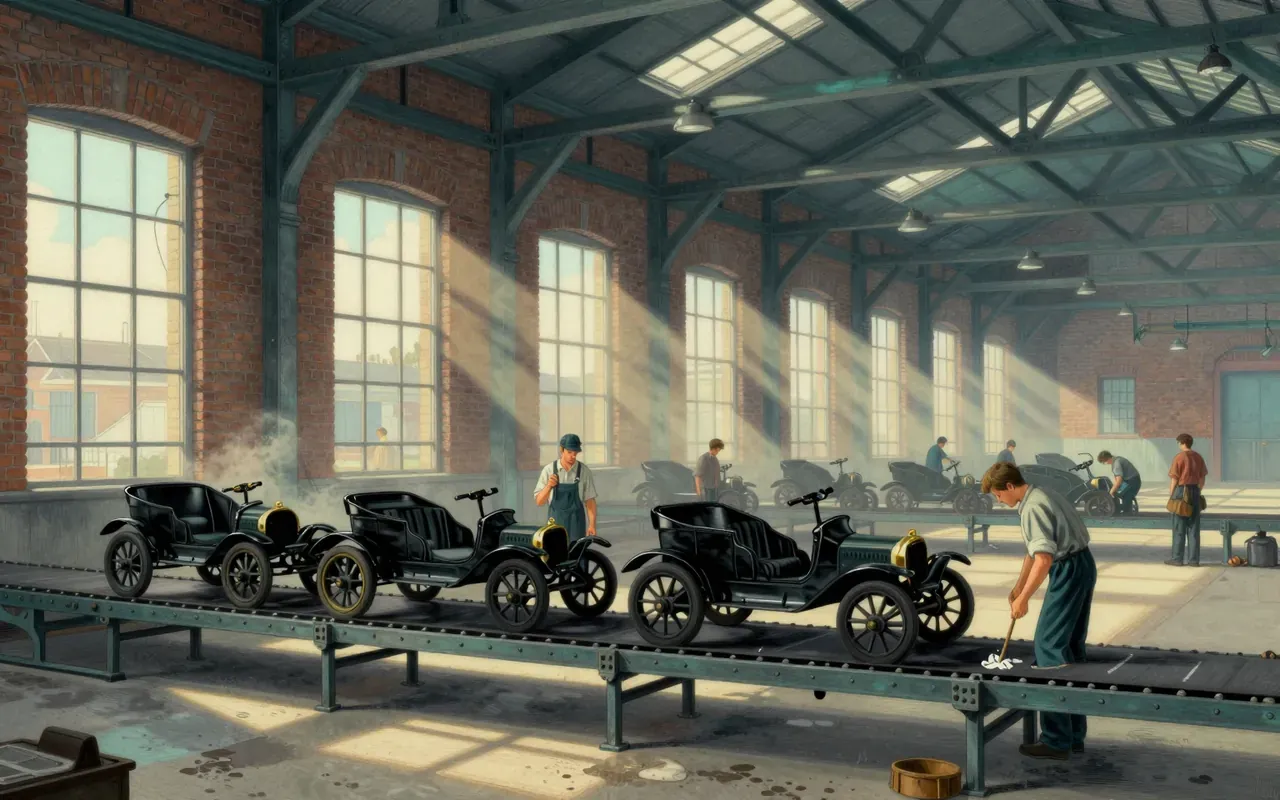
The assembly line is not innovation — it is enforced discipline disguised as progress.
10:02

Peter Thiel

Thiel sells liberation from inflation—but builds everything in dollars.
10:50

Three UK

Three UK proved that regulatory compliance can substitute for scale — but only until the network shuts down.
11:02

TPG Telecom

A telco built on access, not ownership—and listed on the ASX only after winning a court battle against competition regulators.
10:48

Transneft

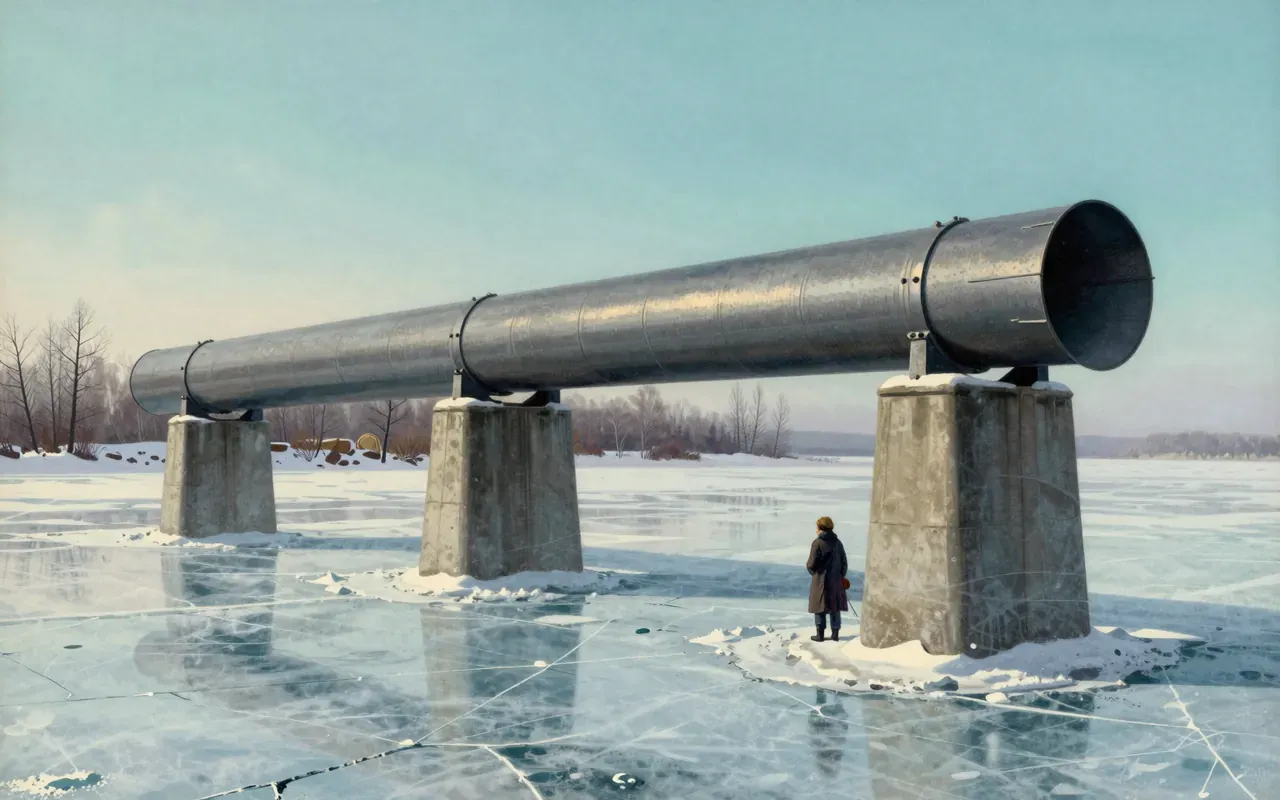
Transneft isn’t a pipeline company — it’s Russia’s oil circulatory system, state-built, state-run, and state-priced.
12:35

True Corporation

A merger built on infrastructure ownership, not integration — where equal partnership papers over unequal control.
11:01

Virgin Media

Virgin Media isn’t a telecoms brand — it’s a cable infrastructure play disguised as a consumer service.
9:36

Vivendi

Jean-Marie Messier · 1987

Vivendi is a French investment company headquartered in Paris, founded in 1853 as Compagnie générale des eaux. It evolved through mergers and diversification — notably becoming Vivendi Universal in 2000 via merger with Groupe Canal+ and Seagram — before reverting to Vivendi in 2006. From 2021, it executed a strategic spin-off of its core assets, culminating in 2024 with the separation of Canal+, Havas, and Louis Hachette Group, transforming itself into a focused investment company holding stakes in media and entertainment firms.
11:10

Vodafone Australia

A national telecom brand that never owned its fixed infrastructure—and survived only by merging out of independence.
9:55

Vodafone

Vodafone is not a tech innovator—it’s a licensing and balance-sheet play on mobile ubiquity.
12:50

Vodafone Italy

A €8 billion acquisition erased Vodafone Italy — but the brand lives on, licensed, for five years.
9:32

Walton Family Foundation

A private foundation funded by Walmart wealth isn’t civic infrastructure—it’s inherited influence made permanent.
9:44

Willys

Willys didn’t invent the jeep — it weaponised the word.
10:22

X5 Group

Russia’s biggest grocer didn’t build a platform — it bought, merged, and listed three legacy chains.
9:10

Yara International

A state-owned fertilizer maker spun off from Norway’s national industrial champion — not a startup, not a disruptor, but a continuation of century-old state-backed chemistry.
10:01

Yoigo

Yoigo spent six years pretending to be a telecom company while running a licence-holding shell.