businessbriefs
9:44in productionCh. 1 · 1908: The acquisition/ 9:44 · ceiling 15 min
Company stories · Marketing

Willys

1908

Willys didn’t invent the jeep — it weaponised the word.

Willys is a story of industrial opportunism — not invention, but absorption; not origin, but ownership.

Chapters & takeaways4
  1. 0:55
    1908: The acquisition

    Willys began not in 1912, but in 1908 — with a purchase, not a founding.

  2. 2:27
    Second only to Ford

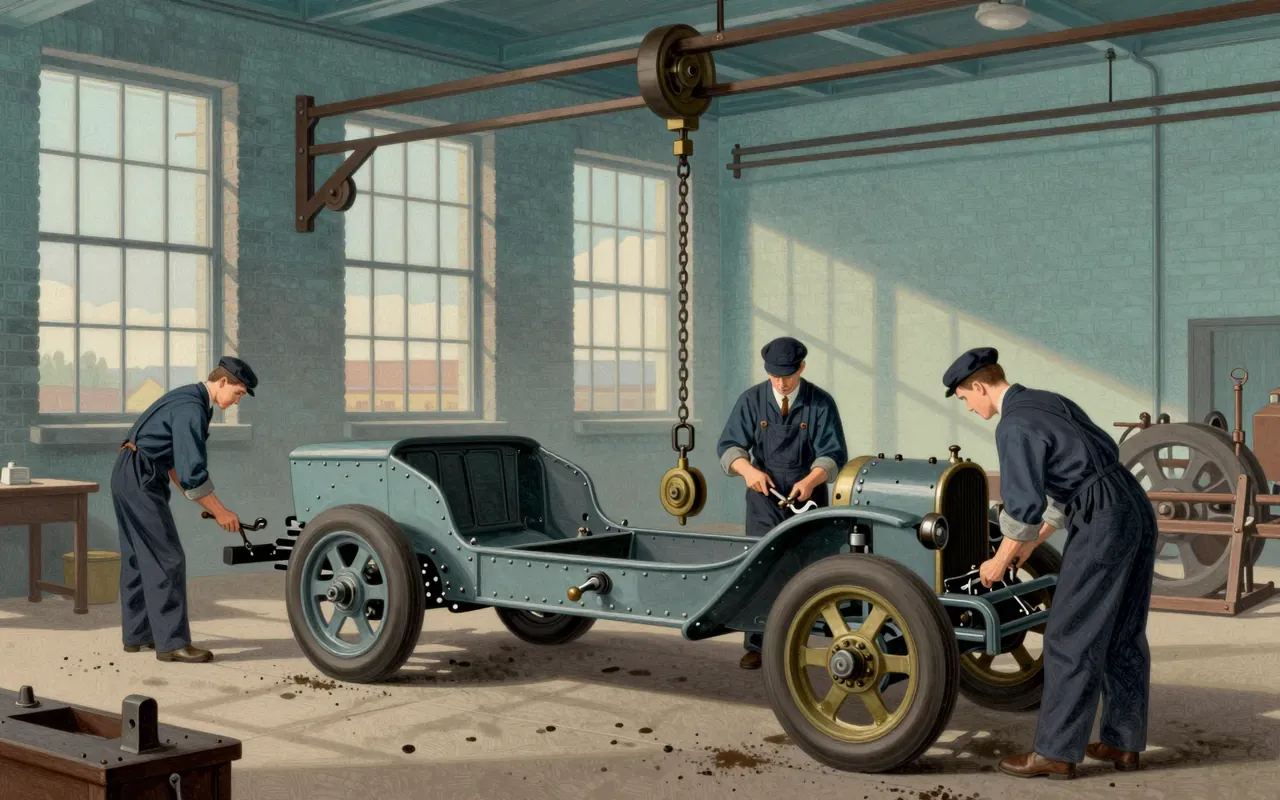
    For six years, Willys was America’s second-largest carmaker — a scale built on volume, not innovation.

  3. 4:16
    The bid, not the blueprint

    Willys won the jeep contract by promising rapid production — not by designing the first version.

  4. 5:51
    February 13, 1943

    Willys trademarked 'Jeep' before the war ended — turning soldiers’ slang into owned property.

Worth your time?

Yes. Study the whole thing.

4/ 5
What works
  • branding through timing
  • contract execution over design authorship
  • linguistic appropriation as asset
What does not
  • invention
  • origin
  • founder-hero narrative
Study it if
  • industrial historians
  • trademark strategists
  • product managers studying category capture
Skip it if
  • entrepreneurial myth-builders
  • innovation theorists
The written brief1 min read

What the company or idea is

Willys was a brand used by Willys–Overland Motors, an American automobile company founded by John North Willys after he bought the Overland Automotive Division in 1908.

How it actually makes money

Willys–Overland made money by manufacturing and selling automobiles, first mass-market passenger cars, then military vehicles under U.S. government contracts.

What works

Willys leveraged its pre-war manufacturing capacity to become the largest producer of military jeeps, secured exclusive trademark rights to ‘Jeep’, and pivoted that military identity into a civilian vehicle lineage.

What does not

Willys did not invent the jeep concept. American Bantam designed the original prototype. Willys won the contract on speed and scale, not novelty.

What to take from it

A company can dominate a category it did not create — by executing faster, scaling harder, and claiming language before competitors do.

Is it worth your time

Yes — as a case study in how wartime demand reshaped industrial identity, and how trademarking slang can cement brand control without owning the origin.
Same desk · Company stories4 of 25
Up next in Business

X5 Group

2006 · 10:22

Russia’s biggest grocer didn’t build a platform — it bought, merged, and listed three legacy chains.

10:22