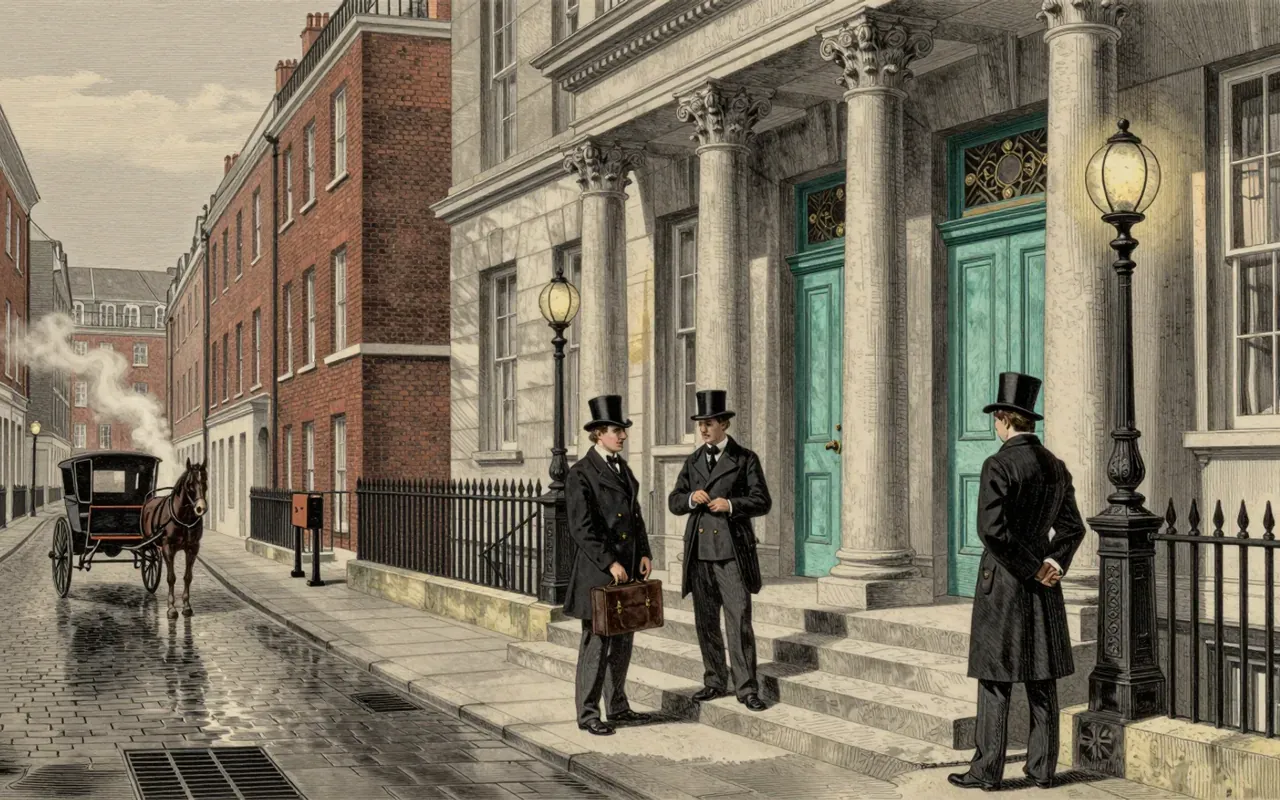
Universal didn’t invent Hollywood — it weaponised antitrust law, star names, and studio real estate to seize it.
Universal Pictures was a business architecture designed to extract value from every layer of film — from performer contracts to theatre leases — using legal, spatial, and branding levers. Its success was tactical, not mythic.
Universal was born from legal warfare — not innovation — using the Sherman Act to dismantle Edison’s monopoly.
2:52
Star Names as Leverage
Laemmle turned anonymous actors into marketable assets, then bundled them into a vertically integrated pipeline.
4:19
Real Estate as Production Engine
Universal City Studios wasn’t symbolic — it was infrastructure: 230 acres of controlled land enabling volume, speed, and cost discipline.
5:35
Branding as Distribution Logic
Branding wasn’t about prestige — it was a pricing and selection tool for theatre owners and audiences alike.
7:03
Global Reach, Local Control
International expansion began not with cultural ambition but with local production units — Deutsche Universal-Film AG in 1926 was a licensing and cost-shifting play.
8:44
The Ceiling of the Little Three
Universal’s position as one of the 'Little Three' reveals its structural limit: vertical integration alone couldn’t overcome capital or talent gaps at the top tier.
Worth your time?
Yes. Study the whole thing.
4.5/ 5
What works
Its merger structure bypassed patent control.
Its star naming created performer leverage.
Its studio size enabled output discipline.
Its branding reduced decision cost for exhibitors and audiences.
What does not
It did not create the star system single-handedly — it exploited and amplified an emerging trend.
It did not operate internationally before 1926.
It did not dominate the golden age — it ranked third-tier among majors.
Study it if
Historians of industrial organisation
Students of antitrust enforcement
Marketers studying tiered product architecture
Skip it if
Those seeking origin myths of Hollywood stardom
Investors looking for growth metrics
Film aesthetes analysing narrative innovation
The written brief1 min read
What the company or idea is
Universal Pictures was a vertically integrated film company founded in 1912 by Carl Laemmle through merger, headquartered first in Fort Lee then at Universal City Studios, built to bypass Edison’s patent cartel.
How it actually makes money
Universal made money by controlling production, distribution, and exhibition in one corporate entity — leasing films to theatres it owned or influenced, and charging for access to branded tiers like ‘Super-Jewel’.
What works
Naming stars like Mary Pickford and Florence Lawrence weakened Edison’s cartel by increasing performers’ leverage; opening the world’s largest studio in 1915 gave Universal scale and control over physical production.
What does not
It did not achieve long-term dominance among the majors: it remained one of the ‘Little Three’, never matching the scale or profitability of MGM or Paramount.
What to take from it
Vertical integration only works when paired with deliberate audience segmentation and enforceable branding — Universal’s three-tier system and ‘Super-Jewel’ label were operational tools, not marketing slogans.
Is it worth your time
Yes — as a case study in how vertical integration, antitrust litigation, and star branding were deployed simultaneously to break a monopoly and build a studio system.