
businessbriefs
10:49in productionCh. 1 · Not New, Just Rejoined/ 10:49 · ceiling 15 min
Companies

Paramount Global

2019

A 2019 merger of two broken parts—not a reinvention, but a rearrangement under old ownership.

Paramount Global was a 2019 merger—not a new company, not a new model. It inherited legacy assets, debt, and control by National Amusements. Its renaming in 2022 and merger in 2024 were administrative endpoints, not evidence of viability.

Chapters & takeaways4
  1. 1:14
    Not New, Just Rejoined

    Paramount Global began as ViacomCBS—a merger of two post-2005 spinoffs, not a startup or platform.

  2. 2:56
    Old-World Media Architecture

    It operated as a vertically integrated media conglomerate—controlling production, distribution, and licensing across TV, film, and streaming.

  3. 5:20
    Regulatory Exit, Not Market Success

    Its final act was a three-way merger with Skydance and National Amusements—approved by the FCC, not markets or subscribers.

  4. 6:40
    Same Owner, New Name

    National Amusements controlled it from inception—making 'Paramount Global' a corporate name, not a governance shift.

Worth your time?

Yes. Study the whole thing.

3/ 5
What works
  • IP consolidation
  • cost rationalisation
  • regulatory navigation
What does not
  • solve subscriber decline
  • redefine content economics
  • break from linear TV dependency
Study it if
  • media investors
  • regulatory analysts
  • corporate historians
Skip it if
  • streaming innovators
  • ad-tech developers
  • independent creators
The written brief1 min read

What the company or idea is

Paramount Global was an American multinational mass media and entertainment conglomerate formed on December 4, 2019, as ViacomCBS through the merger of the second incarnations of Viacom and CBS Corporation.

How it actually makes money

Paramount Global made money from mass media and entertainment: television broadcasting, film production, streaming, publishing, and licensing. It did not generate revenue from sources outside this sector.

What works

It consolidated distribution scale and IP libraries—CBS’s broadcast reach and Viacom’s cable brands (MTV, Nickelodeon)—under one balance sheet. That enabled cost rationalisation and unified licensing.

What does not

It did not establish a new business model. Its 2019 formation was a merger of two legacy entities, not a response to market demand or technological shift. It did not solve fragmentation, subscriber churn, or content ROI.

What to take from it

The 2019 merger was a defensive realignment—not a strategic pivot. Its value lies in exposing how ownership (National Amusements), regulation (FCC), and timing (post-2005 split) constrain what ‘transformation’ means in media.

Is it worth your time

Yes—if you are tracking consolidation in legacy media, the role of controlling shareholders like National Amusements, or how regulatory approval (FCC, July 24, 2024) enables structural reconfiguration—not innovation.

Same desk · Companies4 of 297
10:34
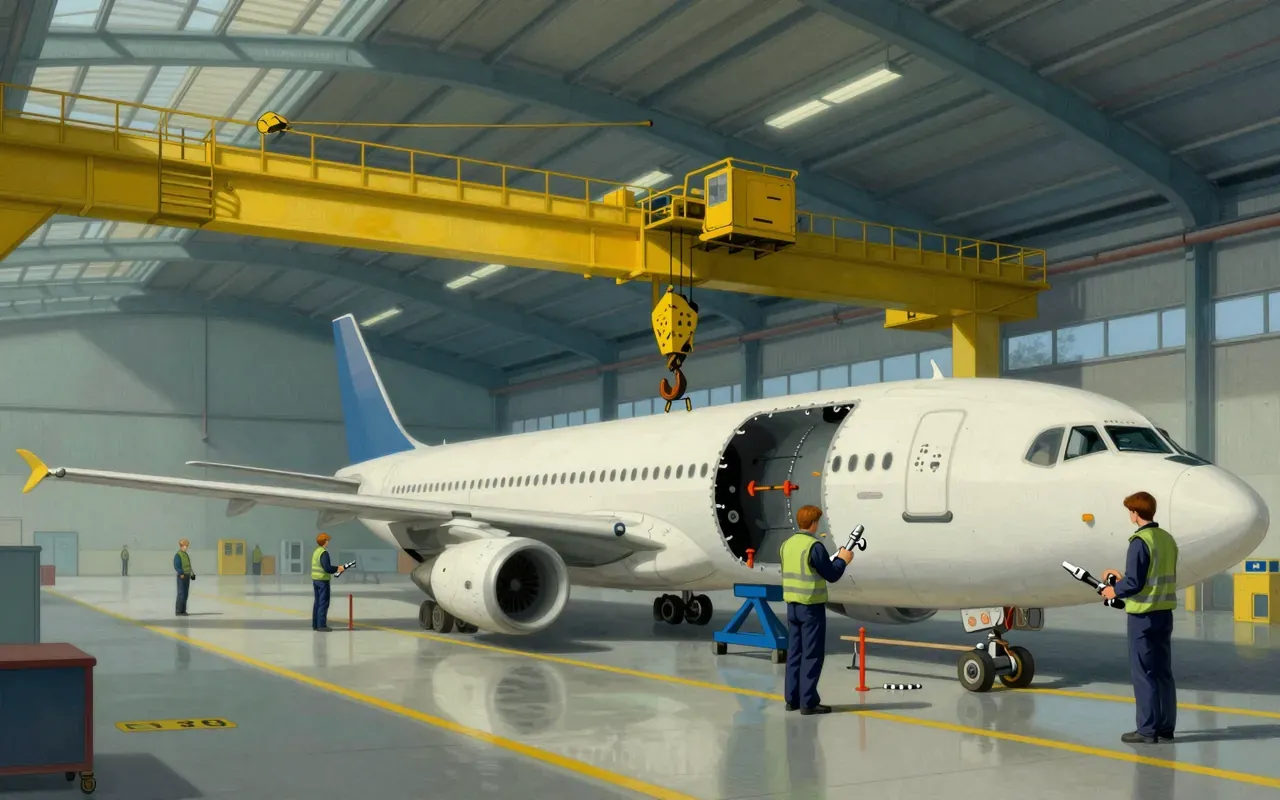
Airbus1998Airbus in 1998 was a consortium — not a company — sustained by national governments and bound by treaty, not equity. Its money came from airliner sales, but its structure reflected diplomacy more than business logic. It worked because Europe prioritised strategic autonomy over market efficiency. It failed as a unified enterprise until it abandoned the consortium model entirely. The lesson is structural: scale in aerospace is political first, economic second.
12:10
Anglo American plc1917Anglo American plc is a British multinational mining company headquartered in London, founded in 1917 in Johannesburg. It is the world's largest platinum producer (40% of global output) and owns 85% of De Beers. It merged with Minorco in 1999 to become Anglo American plc, and with Teck Resources in 2025 to form Anglo Teck. Between 2015 and 2015, it cut 138,000 jobs. In early 2015, it reported a $3 billion loss. It withdrew from the Pebble Mine in 2013 and partnered with Engie and First Mode in 2019 to develop a hydrogen-powered haul truck.
12:01
Birks GroupHenry Birks · 2005Birks Group is the legal successor to Henry Birks and Sons — a Canadian jeweller founded in 1879, vertically integrated from design to retail, with manufacturing roots in Roden Bros. and national reach built through owned stores and co-branded acquisitions. Its 2005 merger with Mayors was a structural consolidation, not a new beginning.
11:34
Chorus Limited2011Chorus is a state-shaped infrastructure monopoly built from a 2011 demerger. It controls the physical layer of New Zealand’s internet — but not the customer relationship, pricing, or service design. Its success is measured in coverage and uptake, not profit per user or innovation. It works because regulation forces openness — not because it competes.
Up next in Business

Orlen

1999 · 11:20

A state-directed oil giant masquerading as a multinational — its scale is real, its independence is not.

11:20