11:40in productionCh. 1 · Origin: One Default, Systemic Shock/ 11:40 · ceiling 15 min
Finance
Chinese real estate crisis (2020–present)
2021
Evergrande didn’t fail because it was greedy — it failed because its entire business model depended on never repaying anything.
The Chinese real estate crisis is a case study in how regulatory intervention can expose the fragility of a debt-funded, pre-sale–dependent business model — not through malice or fraud, but through arithmetic.
The crisis began with Evergrande’s 2021 default — not as an outlier, but as the first visible crack in a system-wide structure.
2:48
Cause: Leverage, Not Liquidity
Overbuilding and new debt-limit rules didn’t just constrain Evergrande — they invalidated the financial logic every major developer relied on.
4:09
Catalyst: The Cash Crunch Letter
A leaked August 2021 letter confirmed what investors feared: no cash, no runway, and no credible path to repayment.
5:18
Mechanics: How Default Actually Happened
Asset sales failed. Debt payments were missed. Ratings agencies downgraded. Then came restricted default — not bankruptcy, but admission of irreversible failure.
6:29
Scale: Who Actually Lost Money
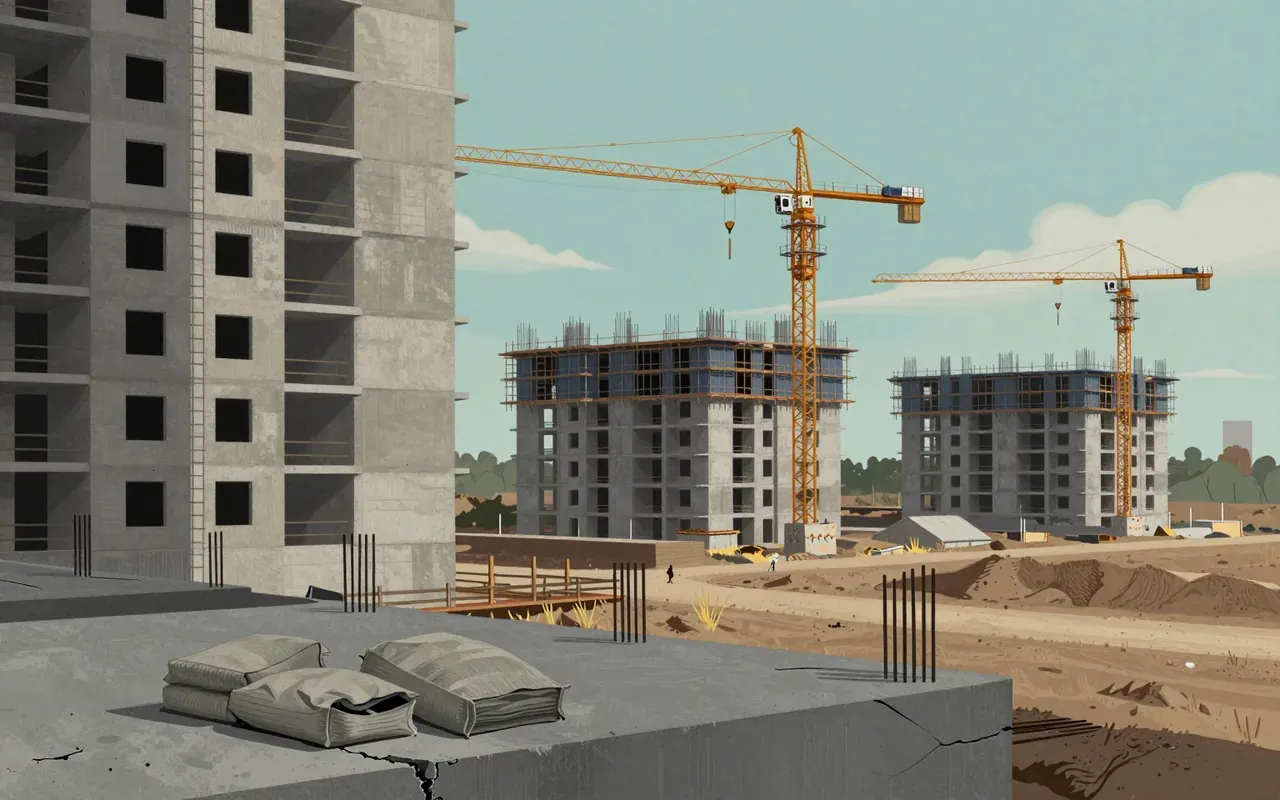
Two trillion RMB in debt wasn’t abstract — it was owed to banks, suppliers, foreign investors, and thousands of retail buyers who owned unfinished apartments.
7:43
Outcome: Liquidation, Not Recovery
Liquidation in January 2024 wasn’t resolution — it was confirmation that restructuring had collapsed under its own contradictions.
Worth your time?
Yes. Study the whole thing.
4.5/ 5
What works
business/finance
business/rise-and-fall
business/company-stories
What does not
business/startups-and-venture
business/founders
business/marketing
Study it if
investors
policy-makers
real-estate-professionals
Skip it if
consumers
students-of-literature
designers
The written brief1 min read
What the company or idea is
Evergrande Group was a Chinese property developer whose collapse in 2021 triggered a systemic crisis across the sector.
How it actually makes money
Chinese property developers made money by selling pre-sold apartments, borrowing against land and unsold inventory, and rolling over short-term debt to fund long-term construction.
What works
The pre-sale model worked while demand and credit were infinite. Debt recycling worked while ratings agencies deferred downgrades. Asset sales worked only if buyers existed.
What does not
Pre-sale financing did not work when buyers stopped buying. Offshore bond markets did not absorb losses. Restructuring did not restore solvency.
What to take from it
A crisis that began with one company’s default became structural because the entire industry shared its funding mechanics, risk profile, and regulatory exposure.
Is it worth your time
Yes — it reveals how regulatory tightening on leverage exposed a business model built on perpetual refinancing, not cash flow.