10:07in productionCh. 1 · Born from decree, not demand/ 10:07 · ceiling 15 min
Companies
Tatneft
1950
A Soviet oil giant built on one field, one republic, and one decree—and still running on that logic sixty years later.
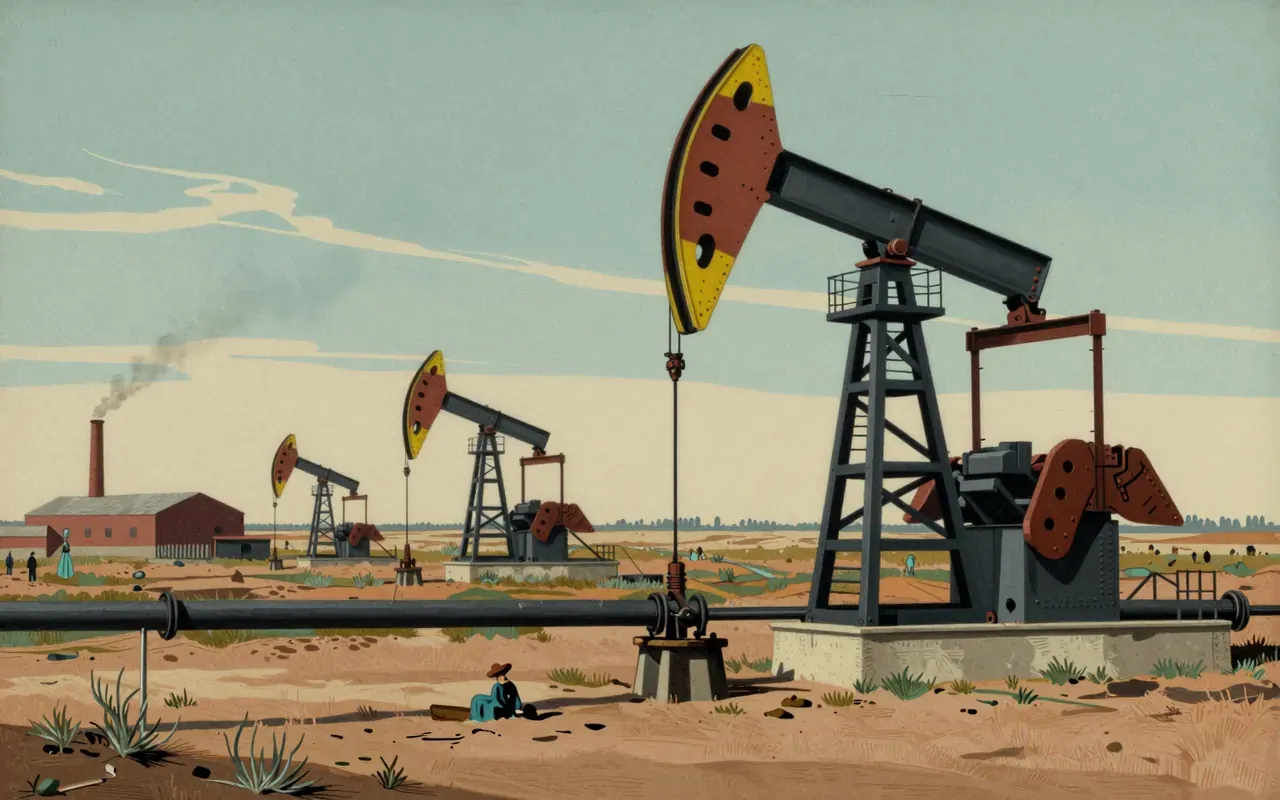
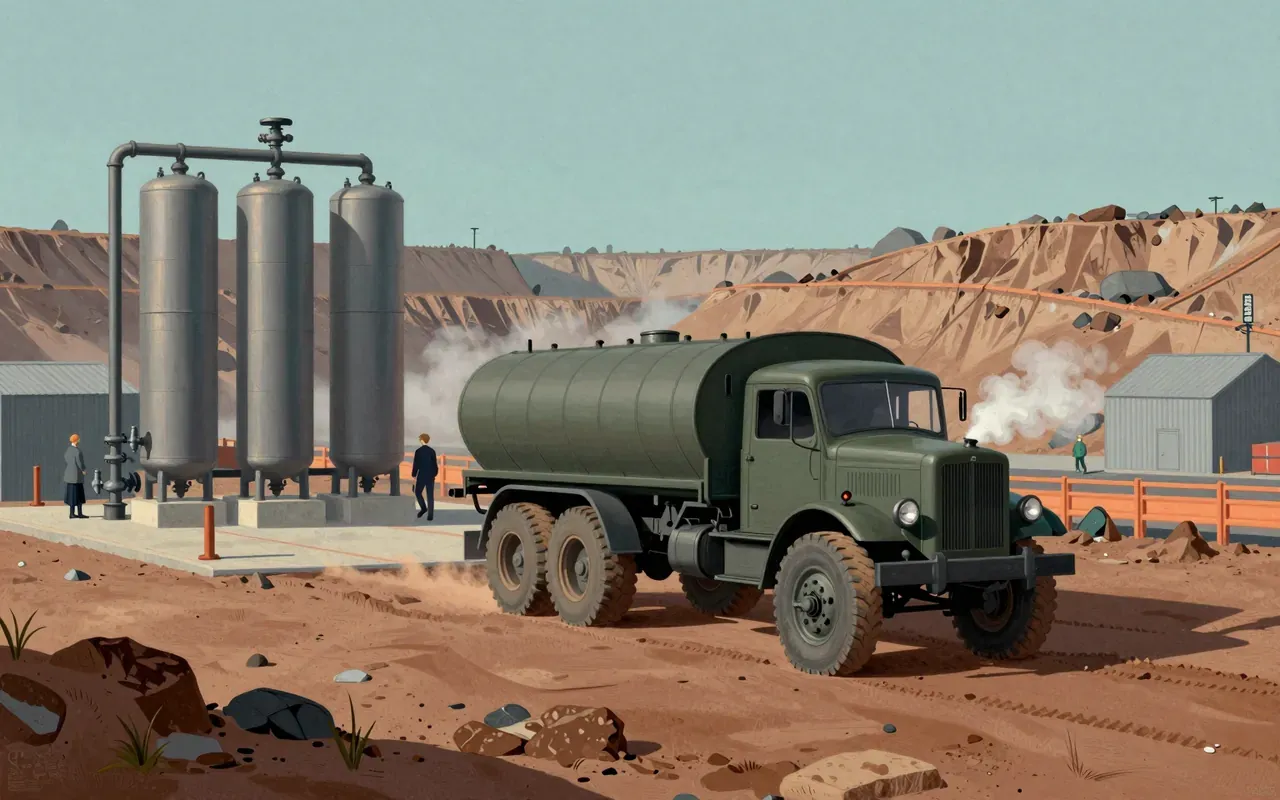
Tatneft is a vertically integrated oil and gas company founded in 1950 in Almetyevsk, Russian Federation. It holds most exploration and production licenses in Tatarstan and began production from the Romashkino super-giant field upon establishment. By 1956, it was the largest crude oil producer in the USSR and extracted its first billionth tonne of crude oil in 1971. It refines 35.5% of its daily oil production at its TANECO refinery and has been involved in banking activities since the fourth quarter of 2016 via control over Bank ZENIT.
Tatneft was not founded as a commercial venture but as a state production association—immediately tasked with extracting oil from Romashkino.
2:24
Local monopoly, national scale
It dominates Tatarstan’s oil sector so completely that it became the USSR’s top crude producer within six years.
4:21
Refining is optional. Extraction is everything.
Only 35.5% of its oil is refined internally—and its billion-tonne milestone came in 1971, not via growth but sheer extraction volume.
5:57
Banking is bolted on, not built in
Bank ZENIT is a post-2016 addition—not an evolution of core capability, but an expansion of balance sheet control.
Worth your time?
Yes. Study the whole thing.
3.5/ 5
What works
Geographic concentration delivers scale without diversification.
State origin enabled rapid licensing and infrastructure build-out.
Vertical integration covers upstream and partial midstream—but stops before retail or global logistics.
What does not
It does not operate internationally.
It does not produce or sell branded consumer fuels.
It does not disclose revenue, valuation, or margins in the source material.
It does not claim innovation in extraction technology or decarbonisation.
Study it if
Students of Soviet industrial policy.
Analysts tracking regional resource control in Russia.
Researchers comparing vertically integrated national oil companies.
Skip it if
Start-up founders seeking operational models.
Investors assessing financial performance.
Marketers studying brand-led energy transitions.
The written brief1 min read
What the company or idea is
Tatneft is a Russian vertically integrated oil and gas company founded in April 1950 by USSR decree to exploit Tatarstan’s oil fields, especially Romashkino.
How it actually makes money
Tatneft makes money from extracting crude oil in Tatarstan, refining 35.5% of its daily production at its TANECO refinery, and operating Bank ZENIT since late 2016.
What works
Holding most exploration and production licenses in Tatarstan gives it dominant local control. Its early focus on Romashkino delivered rapid scale: it became the USSR’s largest crude oil producer by 1956 and extracted its first billion tonnes by 1971.
What does not
Its vertical integration stops short of meaningful downstream retail or international market access. It does not export refined products at scale. Its banking activity is a controlled subsidiary, not a strategic pivot.
What to take from it
Tatneft demonstrates how resource sovereignty, geographic concentration, and state-backed scale can create enduring industrial power—without requiring global branding, private equity, or digital transformation.
Is it worth your time
Yes—if you are studying how Soviet-era state production associations evolved into diversified, vertically integrated energy conglomerates with financial arms under regional control.