Aldi isn’t one company — it’s two rival firms sharing a name, a method, and a mother’s grocery store.
Aldi is not a single company. It is two legally and financially separate firms — Aldi Nord and Aldi Süd — born from a 1960 split triggered by a disagreement over cigarettes. They share a name, a cost-cutting method, and a lineage, but no ownership, no shared board, and no central strategy. Their model works because it eliminates variables: no fresh produce, no advertising, no unsold stock, no large stores, no rebates beyond the legal 3%. By 1960, that method had scaled to 300 stores. Family control ended by 2002. The business survives not through narrative, but through subtraction.
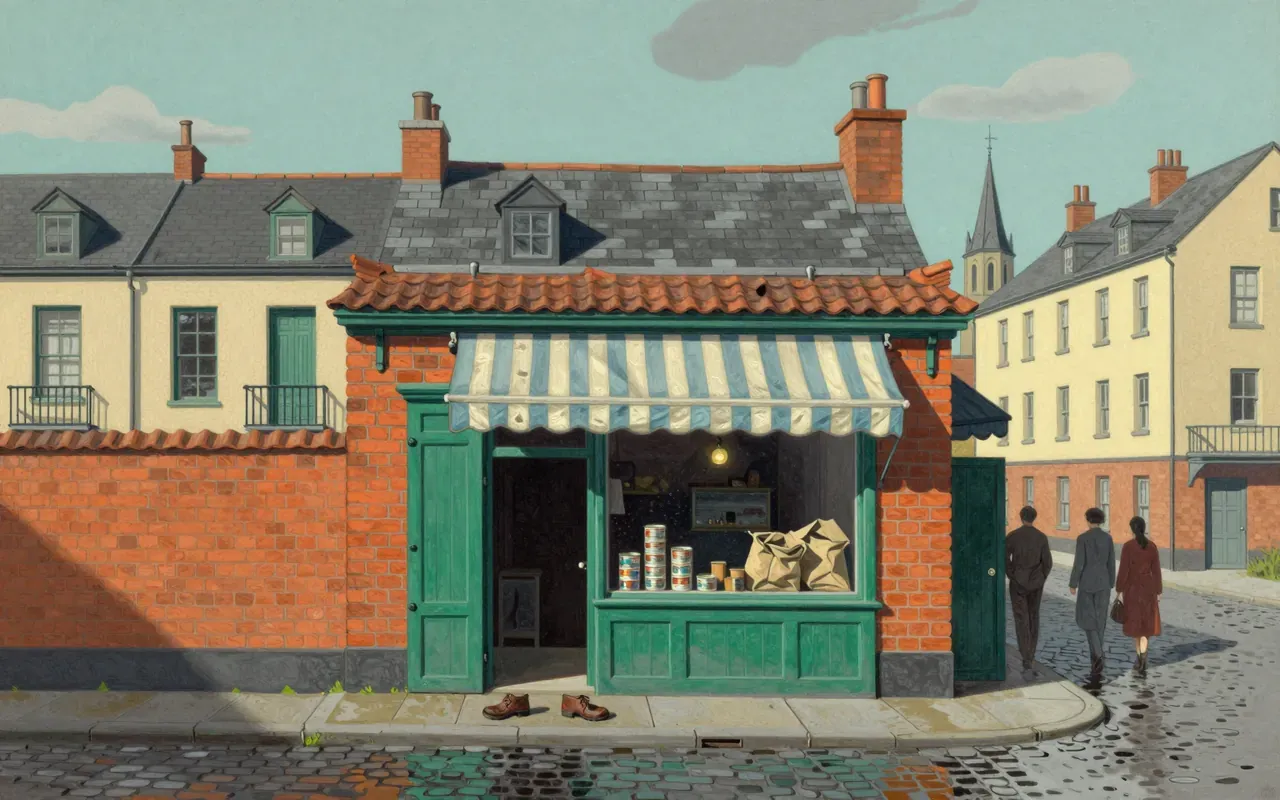
Aldi began not as a concept but as a handover: two brothers taking over their mother’s small grocery in Schonnebeck, a workers’ quarter of Essen.
2:25
The Ruhr line
The 1960 cigarette dispute forced a geographic split — north and south of the Ruhr — creating Aldi Nord and Aldi Süd as legally separate firms.
3:43
The 3% rule
By 1960, 300 stores ran on a fixed formula: subtract 3% rebate pre-sale, purge slow stock, ban ads and fresh produce, shrink footprint.
5:11
No Albrechts left
Family control ended by 2002; by the 2010s, no Albrecht remained in charge — yet both firms still operate the same way.
6:18
Two Aldis, one name
Aldi Nord and Aldi Süd compete separately with Lidl in most markets — despite sharing a name coined in 1962.
Worth your time?
Yes. Study the whole thing.
4.5/ 5
What works
rigid cost discipline
geographic separation enabling parallel execution
standardised store format
What does not
advertising
fresh produce
large stores
family leadership beyond 2002
Study it if
operators
retail strategists
cost engineers
Skip it if
brand storytellers
venture investors
marketing theorists
The written brief1 min read
What the company or idea is
Aldi is a German discount supermarket chain founded in 1946 by Karl and Theo Albrecht in Essen, split in 1960 into two legally and financially separate entities: Aldi Nord (Essen) and Aldi Süd (Mülheim).
How it actually makes money
Aldi makes money by subtracting the legal maximum rebate of 3% before sale, removing unsold merchandise, avoiding advertising and fresh produce, and keeping store sizes small to cut costs.
What works
The split along the Ruhr river in 1960 enabled parallel, low-overhead expansion; by 1960 it operated 300 stores in Germany using rigid cost controls.
What does not
It does not rely on fresh produce, advertising, large stores, or family leadership beyond the 1990s.
What to take from it
The gap between Aldi’s self-presentation as a unified brand and its actual structure — two independent firms operating under shared naming and methods — is where its real strategy lives.
Is it worth your time
Yes — its mechanics reveal how extreme cost discipline, not branding or scale, built a global retail template.
A co-operative did not need venture capital or a pivot to become the world’s fifth-largest dairy company — it just needed 119 years of farmer-led consolidation.