businessbriefs
9:50in productionCh. 1 · Not a startup. A ministry rebranded./ 9:50 · ceiling 15 min
Companies

Russian Railways

2003

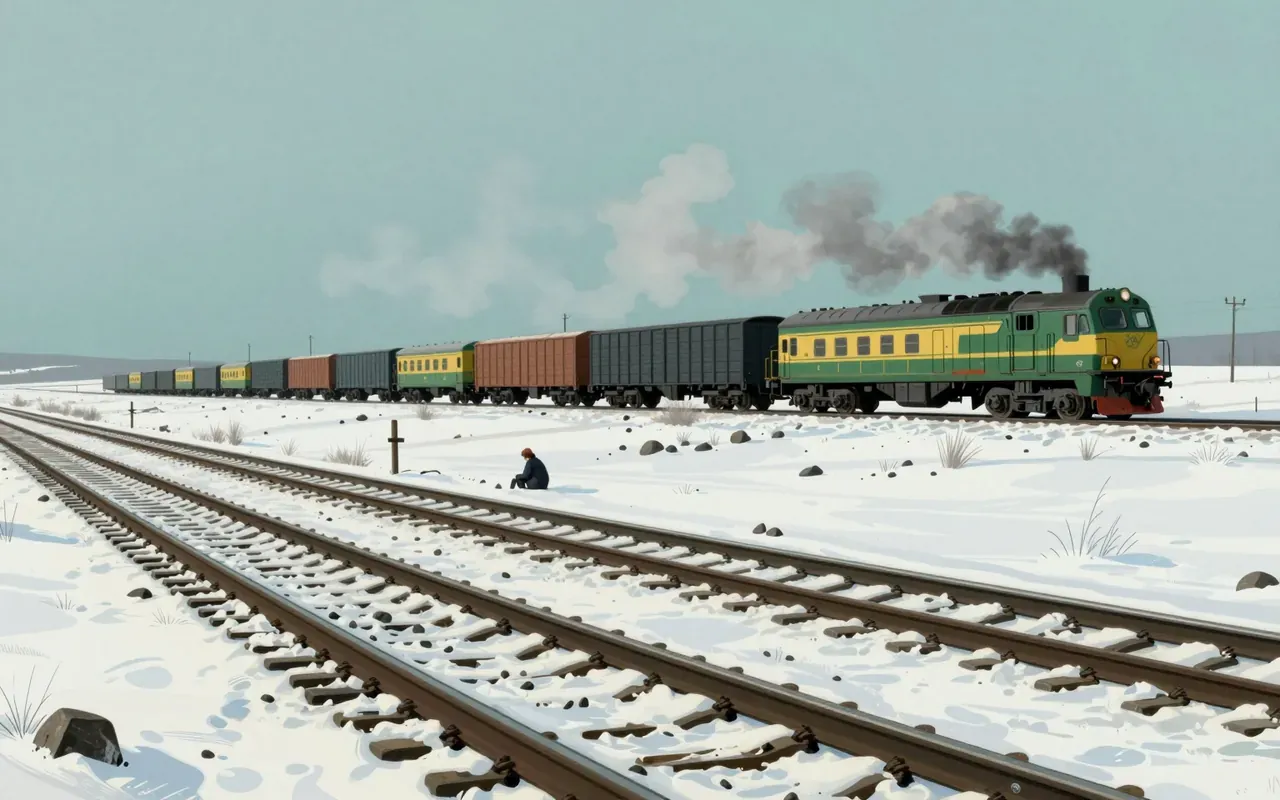
A state monopoly disguised as reform — Russian Railways inherited the Ministry’s assets, debts, and power, but none of its accountability.

Russian Railways is a textbook case of administrative corporatisation: same assets, same geography, same monopoly, new letterhead. It works as a logistical backbone because the state insists it must — not because it competes, innovates, or balances books.

Chapters & takeaways4
  1. 1:04
    Not a startup. A ministry rebranded.

    RZD was not founded by entrepreneurs but by decree — a legal transfer, not a market entry.

  2. 2:41
    Monopoly with a mandate to share

    It holds a near-monopoly on long-distance travel while legally required to grant infrastructure access — a contradiction with no evidence of resolution.

  3. 4:15
    95% of the old system, repackaged

    It absorbed 95% of the Ministry’s asset value — scale without competition, integration without innovation.

  4. 5:50
    Debt is the default setting

    $45 billion in debt by 2026 shows capital discipline is absent — not a symptom of crisis, but of structure.

Worth your time?

Yes. Study the whole thing.

2.5/ 5
What works
  • centralising legacy assets
  • maintaining national rail continuity
  • enforcing de jure infrastructure access
What does not
  • deliver competitive service
  • demonstrate financial sustainability
  • enable meaningful third-party access
Study it if
  • students of state capitalism
  • infrastructure policy analysts
  • monopoly regulation researchers
Skip it if
  • investors seeking transparency
  • entrepreneurs looking for market signals
  • reformers expecting structural change
The written brief1 min read

What the company or idea is

Russian Railways is a fully state-owned, vertically integrated railway company founded on 18 September 2003 to replace the Ministry of Railways, managing infrastructure and operating freight and passenger services while holding a near-monopoly on long-distance rail travel in Russia.

How it actually makes money

Russian Railways makes money from freight and passenger services, infrastructure access fees, and state funding — but the sources do not specify revenue streams, pricing, or subsidy levels.

What works

It consolidated over 95% of the former Ministry’s assets and 987 companies into a single entity, establishing operational continuity and centralised control over Russia’s rail network.

What does not

It does not meaningfully open infrastructure to competitors: the reform mandated access, but the sources give no evidence of actual third-party usage, enforcement, or commercial terms.

What to take from it

Vertical integration under state ownership does not guarantee efficiency — it transfers bureaucratic inertia from ministry to corporation while preserving monopoly control and deferring financial accountability.

Is it worth your time

Yes — as a case study in state-owned vertical integration, monopoly maintenance, and debt accumulation without market discipline.
Same desk · Companies4 of 297
10:34
Airbus1998Airbus in 1998 was a consortium — not a company — sustained by national governments and bound by treaty, not equity. Its money came from airliner sales, but its structure reflected diplomacy more than business logic. It worked because Europe prioritised strategic autonomy over market efficiency. It failed as a unified enterprise until it abandoned the consortium model entirely. The lesson is structural: scale in aerospace is political first, economic second.
12:10
Anglo American plc1917Anglo American plc is a British multinational mining company headquartered in London, founded in 1917 in Johannesburg. It is the world's largest platinum producer (40% of global output) and owns 85% of De Beers. It merged with Minorco in 1999 to become Anglo American plc, and with Teck Resources in 2025 to form Anglo Teck. Between 2015 and 2015, it cut 138,000 jobs. In early 2015, it reported a $3 billion loss. It withdrew from the Pebble Mine in 2013 and partnered with Engie and First Mode in 2019 to develop a hydrogen-powered haul truck.
12:01
Birks GroupHenry Birks · 2005Birks Group is the legal successor to Henry Birks and Sons — a Canadian jeweller founded in 1879, vertically integrated from design to retail, with manufacturing roots in Roden Bros. and national reach built through owned stores and co-branded acquisitions. Its 2005 merger with Mayors was a structural consolidation, not a new beginning.
11:34
Chorus Limited2011Chorus is a state-shaped infrastructure monopoly built from a 2011 demerger. It controls the physical layer of New Zealand’s internet — but not the customer relationship, pricing, or service design. Its success is measured in coverage and uptake, not profit per user or innovation. It works because regulation forces openness — not because it competes.
Up next in Business

SFR

1987 · 10:59

SFR built scale without building infrastructure — a telecom that wins by renting, not owning.

10:59