What the company or idea is
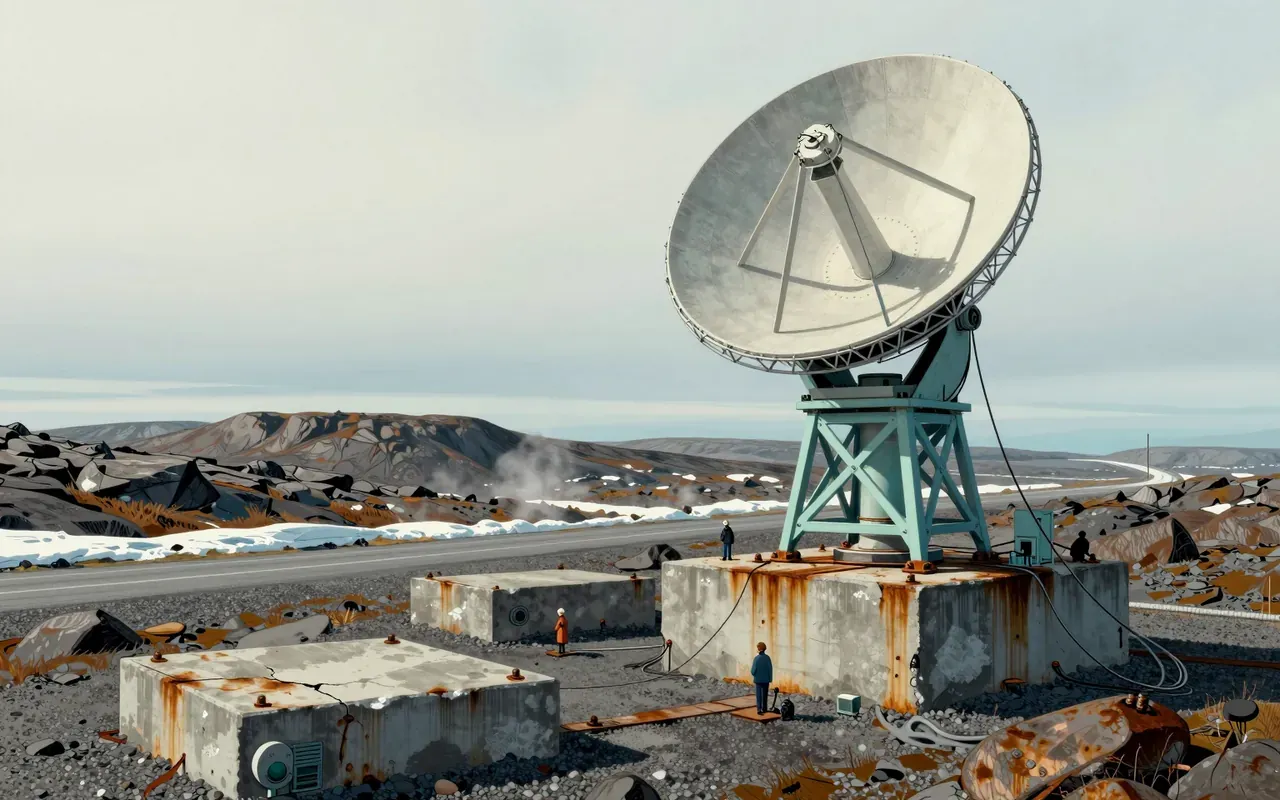
GLOBUS is not a company. It is a Norwegian-operated radar installation in Vardø, consisting of three phased arrays (Globus I–III) built between 1988 and 2016, jointly shaped by Norwegian intelligence and U.S. defence priorities.
How it actually makes money
GLOBUS does not make money. It is a state-run radar system funded by the Norwegian government and the U.S. Department of Defense — notably US$23.5 million for relocating Globus II in 1999.
What works
Its location — 50 km from the Soviet border, within visible range of the Kola Peninsula’s Russian naval bases — delivers persistent surveillance value for both Arctic airspace monitoring and space object tracking, validated by inclusion in the U.S. Space Surveillance Network.
What does not
Its official purpose does not align with its operational reality: it is formally described as serving Norway’s national interest, yet functions as a dedicated sensor in the U.S. Space Surveillance Network and bears a U.S. military equipment designation.
What to take from it
GLOBUS reveals how sovereign infrastructure can become functionally indistinguishable from foreign military systems — not through treaty or admission, but through design, designation, funding, and placement.
Is it worth your time
Yes, if you are assessing how national infrastructure becomes entangled with foreign intelligence architecture — especially where official mandates (space observation, Arctic airspace monitoring) diverge from technical integration (U.S. Space Surveillance Network, AN/FPS-129 designation) and geopolitical reaction (repeated Russian military responses).