businessbriefs
10:56in productionCh. 1 · The Spin-Off Was the Strategy/ 10:56 · ceiling 15 min
Rise & fall · Scandals

Tronox

2005

A spin-off designed to dump toxic debt — not disrupt an industry.

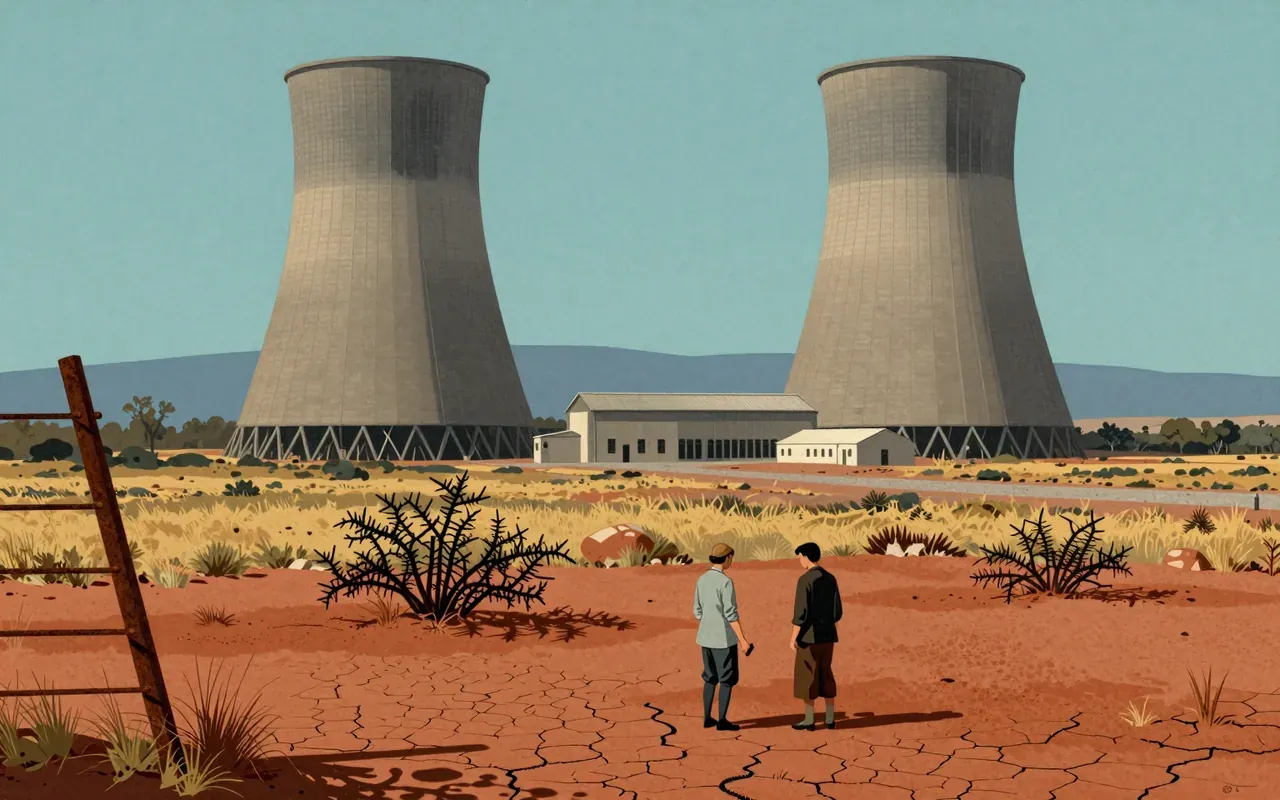
Tronox is a cautionary example of financial engineering masquerading as industrial strategy. Its 2005 spin-off transferred environmental risk without resolving it — leading to bankruptcy in 2009 and a $5 billion federal settlement in 2014. It dominates upstream titanium and zircon supply, but its 'integration' is partial, its margins unreported, and its value proposition rooted in scale, not innovation or control.

Chapters & takeaways6
  1. 1:19
    The Spin-Off Was the Strategy

    Tronox was created not to build a business, but to shed Kerr-McGee’s environmental liabilities across 22 states.

  2. 2:18
    Mining, Not Just Mixing

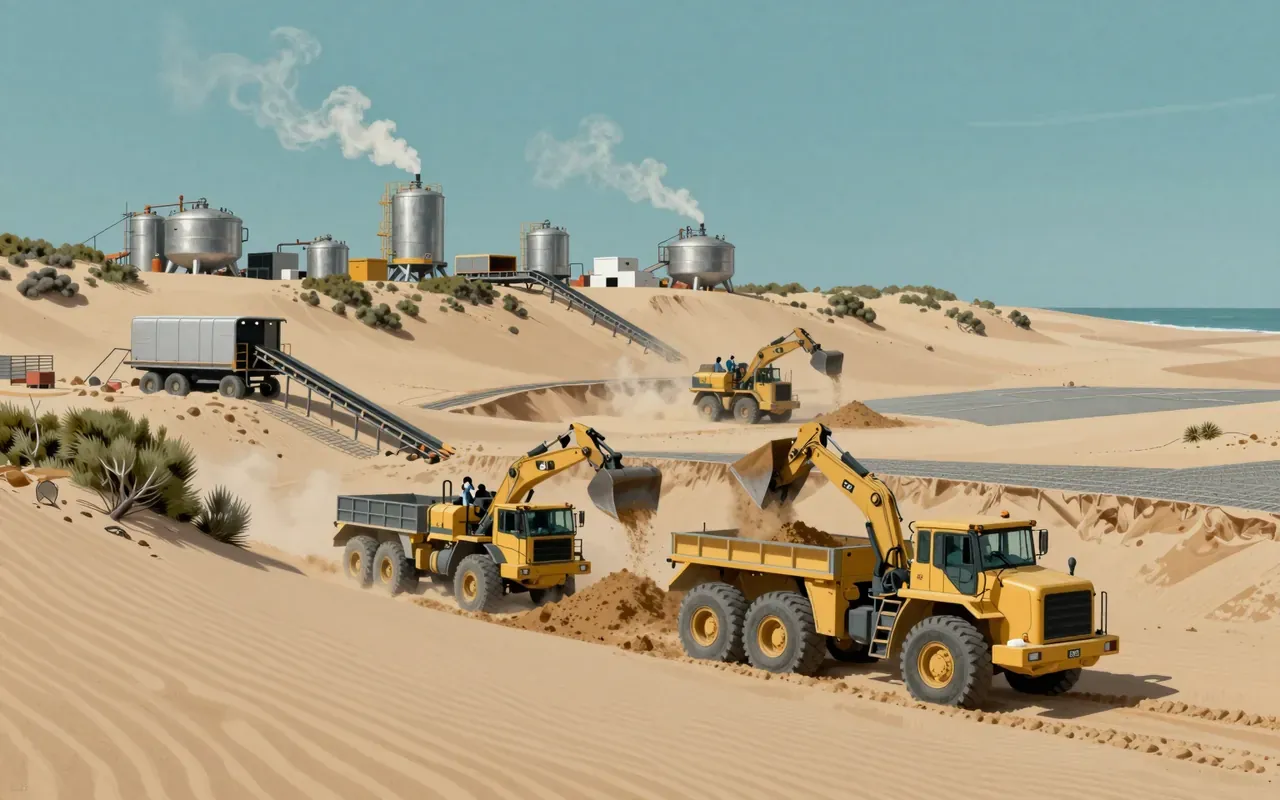
    Tronox controls the front end of the titanium chain: it mines, upgrades, and sells titanium ore, zircon, and feedstock — not just pigment.

  3. 3:23
    Integrated — Up to a Point

    Acquiring Exxaro’s mineral sands business made Tronox the largest fully integrated TiO2 seller — but integration stops before final pigment synthesis.

  4. 4:44
    Chemicals on the Side

    Its electrolytic and specialty chemicals business serves paper and battery markets — a small, non-core stream amid heavy commodity exposure.

  5. 5:57
    From Oklahoma to Stamford

    Tronox moved headquarters from Oklahoma City to Stamford in 2012 — a symbolic shift from industrial roots to financial oversight.

  6. 7:16
    Commodity Scale, Not Premium Pricing

    It is third-largest titanium feedstock producer and second-largest zircon producer — scale built on volume, not margin or IP.

Worth your time?

Yes. Study the whole thing.

3.5/ 5
What works
  • exposes how spin-offs embed off-balance-sheet risk
  • demonstrates concentration in critical mineral supply chains
  • shows regulatory settlements as de facto valuation anchors
What does not
  • trades on NYSE
  • has disclosed EBITDA
  • reports titanium dioxide production volume
  • owns smelting facilities
Study it if
  • investors assessing liability-transfer structures
  • regulators studying environmental accountability
  • commodity strategists evaluating zircon concentration
Skip it if
  • startups seeking operational models
  • marketers looking for brand-building examples
  • tech investors evaluating scalability
The written brief1 min read

What the company or idea is

Tronox is a global titanium products company spun off from Kerr-McGee in 2005 to isolate and transfer legacy environmental liabilities — including toxic waste dumping across 22 states — while retaining mineral sands assets and downstream chemical operations.

How it actually makes money

Tronox makes money by mining titanium-bearing mineral sands, upgrading them into titanium feedstock and zircon, and selling those commodities directly to customers — plus titanium dioxide pigment, pig iron, monazite, and electrolytic and specialty chemicals for paper and battery industries.

What works

Its vertical position — from mineral sands mining to feedstock upgrading to pigment marketing — gives it pricing leverage across multiple tiers of the titanium supply chain. It holds ~10% of global titanium ore production and ~20% of global zircon production, making it a top-three player in both.

What does not

Its claim to integration is undermined by its dependence on third-party smelting for TiO2 pigment production — it mines and upgrades, but does not fully control the final pigment manufacturing step. Its ‘fully integrated’ label applies only after the Exxaro acquisition, and even then excludes key downstream conversion capacity.

What to take from it

Tronox reveals how corporate restructuring can externalise cost while preserving revenue streams: it inherited Kerr-McGee’s mines and markets, but also its $5 billion federal settlement liability — a debt borne by shareholders and creditors, not the original polluter.

Is it worth your time

Yes — as a case study in how environmental liability can be structurally embedded in corporate spin-offs, and how scale in commodity production coexists with legal and financial fragility.
Same desk · Rise & fall4 of 34
9:32
Alfa RomeoNicola Romeo · 1910Alfa Romeo was not founded by Nicola Romeo. It was founded in 1910 as A.L.F.A. to acquire the assets of the failing Italian Darracq subsidiary. Romeo acquired it in 1915, took full ownership by 1918, renamed it in 1920, launched the first Alfa Romeo-branded car in 1921, won the inaugural 1925 World Manufacturers’ Championship, faced near-liquidation in 1927 due to poor investments, departed formally in 1928, and was taken over by the Italian state in 1933.
9:47
Merger of AOL and Time WarnerThe AOL–Time Warner merger was a $180 billion acquisition led by AOL — the smaller, less profitable company — based solely on its inflated market valuation. It closed on 11 January 2001 after regulatory approval but generated no meaningful synergy. It produced a $99 billion loss in 2003, triggered debt-driven divestitures, abandoned the AOL brand by late 2003, and culminated in AOL’s spin-off in December 2009. It stands as a definitive case of valuation masquerading as strategy.
9:47
Bombardier Inc.1942Bombardier Inc. is a Canadian manufacturer founded in 1942 in Valcourt by Joseph-Armand Bombardier to market his snowmobiles. It diversified into public transport vehicles and commercial jets during the 1970s and 1980s. Its turnover multiplied sixfold within six years at the end of the 1980s. At that time, it was North America's most important producer of railway vehicles, Canada's most important aerospace manufacturer, and the worldwide leading snowmobile maker. It is headquartered in Montreal.
11:47
CitroënAndré-Gustave Citroën · 1919Citroën was a French automobile manufacturer founded in 1919 in Saint-Ouen-sur-Seine. It pioneered four world-first production car technologies: front-wheel drive with unibody construction (1934), hydropneumatic self-levelling suspension (1954), modern disc brakes (1955), and swiveling headlights (1967). It also launched the 2CV in 1948, pioneering soft interconnected suspension. Citroën gained international reputation mass-producing armaments in WWI. It became the fourth-largest carmaker in the world in the 1930s, peaking in 1932 with the Traction Avant. Cost struggles aggravated by the Great Depression led to bankruptcy in 1934 and takeover by Michelin. Its double-chevron logo derived from André Citroën’s application of double helical gears, which he acquired after seeing them used by a Polish carpenter around 1900.
Up next in Business

Turkish Airlines

1933 · 9:55

It flies to more countries than any airline — but no source says who pays, or how much.

9:55