businessbriefs
9:55in productionCh. 1 · Where it sits/ 9:55 · ceiling 15 min
Companies

Turkish Airlines

1933

It flies to more countries than any airline — but no source says who pays, or how much.

Turkish Airlines is a geographically dominant flag carrier whose verified scale — 131 countries, 352 destinations, Star Alliance since 2008 — masks a complete absence of financial or operational metrics in the source material.

Chapters & takeaways4
  1. 0:50
    Where it sits

    It is Turkey’s state-backed flag carrier, physically anchored at two Istanbul airports: headquarters at Atatürk, operations at Istanbul Airport.

  2. 2:38
    How far it reaches

    Its scale is unmatched: 352 destinations and 131 countries served — both records verified as of June 2024.

  3. 4:20
    How it splits the work

    It runs cargo separately — 24 planes, 82 destinations — and owns AJet, a low-cost subsidiary.

  4. 5:39
    Where it plugs in

    It joined Star Alliance in 2008, embedding itself in a global alliance without evidence of commercial impact.

Worth your time?

Yes. Study the whole thing.

3.5/ 5
What works
  • route network scale
  • geopolitical positioning
  • alliance integration date
  • cargo fleet size
What does not
  • revenue
  • profit
  • subsidiy level
  • unit cost per seat-kilometre
Study it if
  • airline strategists
  • infrastructure policy analysts
  • emerging-market investors
Skip it if
  • financial modellers
  • cost-accounting practitioners
  • commercial aviation investors
The written brief1 min read

What the company or idea is

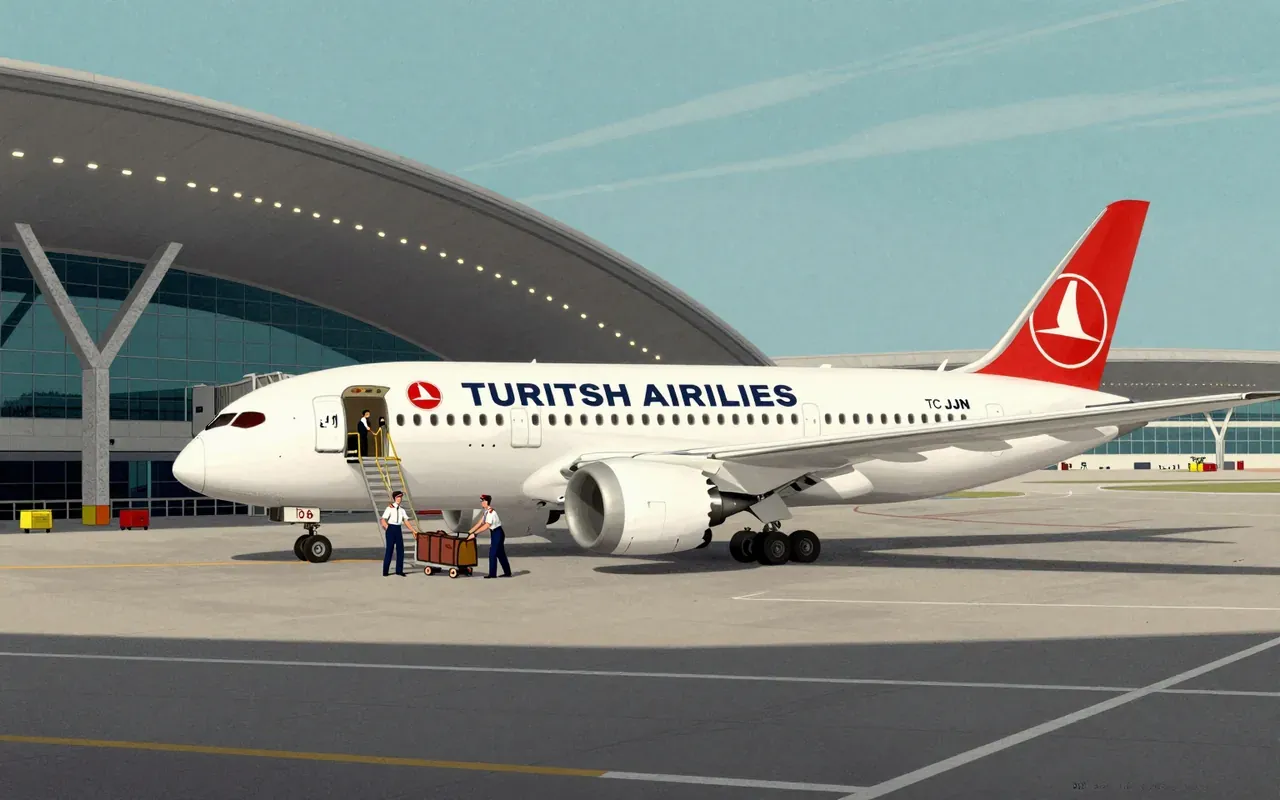
Turkish Airlines is Turkey’s flag carrier, founded in 1933, headquartered at Atatürk Airport in Istanbul, and operating from Istanbul Airport as its main base.

How it actually makes money

Turkish Airlines makes money from scheduled passenger and cargo flights, and through its low-cost subsidiary AJet.

What works

It serves 352 destinations across five continents, more countries (131) and more non-stop destinations from a single airport than any other airline, and operates a dedicated cargo division serving 82 destinations with 24 aircraft.

What does not

The material says nothing about revenue, profit, fleet costs, load factors, ticket pricing, fuel hedging, or government subsidies. It does not establish financial sustainability or competitive advantage beyond reach.

What to take from it

Its global route count and country coverage reflect deliberate infrastructure and diplomatic leverage — not organic market demand — and its Star Alliance membership since 2008 anchors it in global distribution without revealing integration depth.

Is it worth your time

Yes — it is a rare case study in state-backed network expansion where scale is verifiable, but profitability, cost structure, and unit economics are absent from the material.

Same desk · Companies4 of 208
Up next in Business

Ted Turner

· 10:43

Turner didn’t build a media company — he built a regulatory arbitrage engine disguised as a broadcaster.

10:43