businessbriefs
10:41in productionCh. 1 · Not Tengelmann at first/ 10:41 · ceiling 15 min
Companies · Strategy

Tengelmann Group

1867

A 157-year-old family firm stopped selling coffee and started selling equity — but never tells you how much it earns from either.

Tengelmann Group is a 157-year-old German family holding company that evolved from a colonial goods store into a diversified investor. It holds stakes in retailers, real estate, energy, insurance, and venture funds — but discloses no financial metrics, ownership stakes, or performance data. Its longevity is structural, not financial; its opacity is total.

Chapters & takeaways4
  1. 1:09
    Not Tengelmann at first

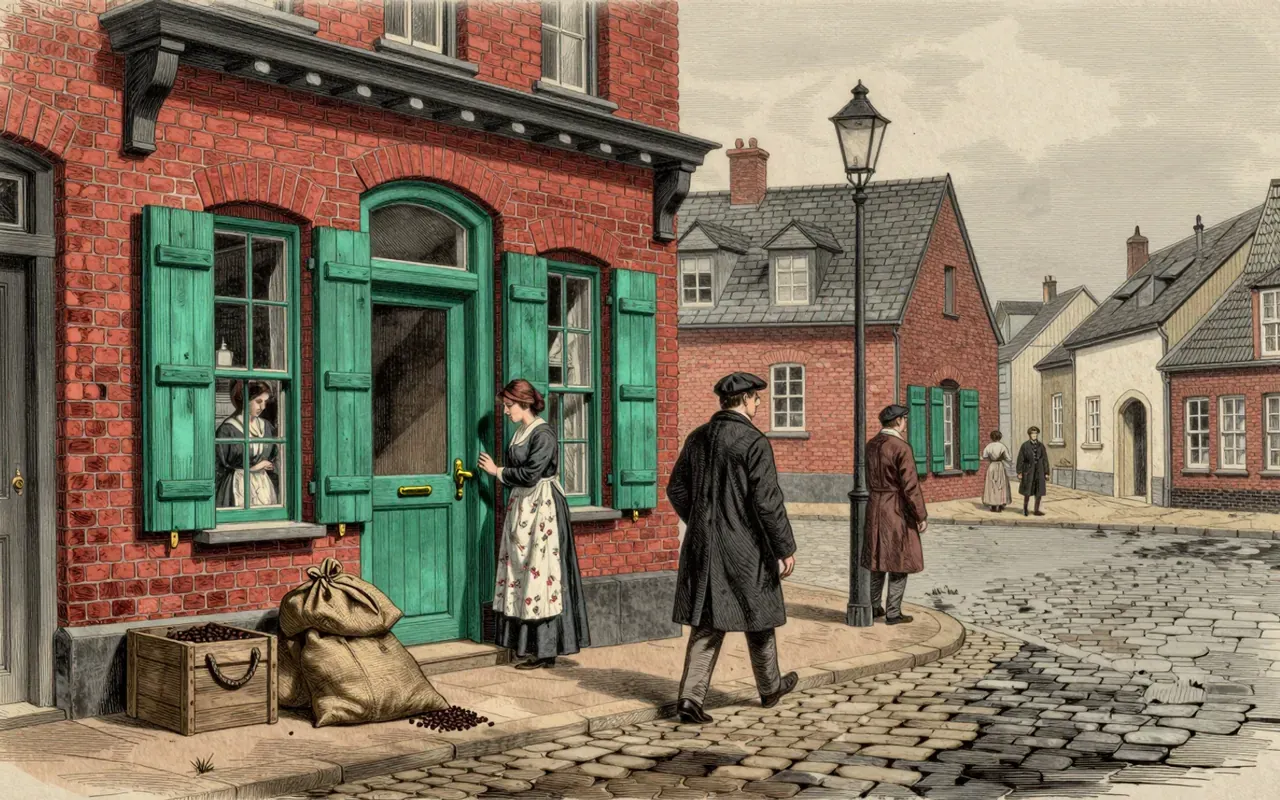
    The company began not as Tengelmann, but as a colonial goods store run by Meininghaus — with Wilhelm Schmitz apprenticing there in 1847 and co-leading it by 1857.

  2. 2:56
    1867 is the founding date

    The Tengelmann Group as named was established in 1867, after Ludwig Lindgens retired — marking the formal start of the family’s independent ownership.

  3. 4:40
    Investor, not operator

    It identifies as an 'active entrepreneurial family investor', not an operator — running three distinct investment vehicles focused on start-ups and mature companies.

  4. 6:08
    Retail anchors, opaque stakes

    Its largest-known holdings are retailers OBI and KiK — but the document states no ownership percentage, revenue contribution, or exit history for either.

Worth your time?

Yes. Study the whole thing.

3.5/ 5
What works
  • demonstrates multi-generational capital continuity
  • shows how retail heritage can pivot to financial infrastructure
  • exemplifies separation of ownership from operations
What does not
  • disclose revenue
  • state ownership percentages
  • report fund sizes or returns
  • identify controlling shareholders beyond 'family'
Study it if
  • students of corporate longevity
  • analysts of private holding structures
  • researchers of European family capitalism
Skip it if
  • investors seeking financial transparency
  • startups evaluating co-investment partners
  • policy researchers studying market concentration
The written brief1 min read

What the company or idea is

Tengelmann Group is a Munich-based, family-owned holding company founded in 1867, structured as Tengelmann Twenty-One KG, with active equity investments across retail, real estate, energy, insurance, and venture capital.

How it actually makes money

Tengelmann Group makes money by holding equity stakes in operating companies — including large retailers (OBI, KiK), real estate (TREI), energy consulting (Tengelmann Energie), insurance (Tengelmann Assekuranz), and audit services (Tengelmann Audit) — and through affiliated venture and growth funds that invest in start-ups and mature companies across Europe and North America.

What works

Its longevity rests on structural adaptation: successive leadership transitions, divestments, consolidation phases, and the creation of dedicated investment arms (Tengelmann Ventures, Emil Capital Partners, Tengelmann Growth Partners) that separate capital allocation from operations.

What does not

The document does not establish that Tengelmann Group operates any of its portfolio companies. It is not a retailer, developer, insurer, or consultant — it is a shareholder. Its ‘entrepreneurial’ label describes investment activity, not operational control.

What to take from it

The gap between origin and current form is stark: a colonial goods store in Mülheim an der Ruhr became a passive investor holding over 50 companies — but the document gives no revenue, valuation, ownership share, or performance data for any holding, leaving financial scale and influence unverifiable.

Is it worth your time

Yes — as a case study in how a 157-year-old family firm restructured itself from a colonial goods store into a diversified, non-operational holding vehicle without going public or selling out, it reveals the mechanics of intergenerational capital preservation in retail-adjacent sectors.


Same desk · Companies4 of 297
10:34
Airbus1998Airbus in 1998 was a consortium — not a company — sustained by national governments and bound by treaty, not equity. Its money came from airliner sales, but its structure reflected diplomacy more than business logic. It worked because Europe prioritised strategic autonomy over market efficiency. It failed as a unified enterprise until it abandoned the consortium model entirely. The lesson is structural: scale in aerospace is political first, economic second.
12:10
Anglo American plc1917Anglo American plc is a British multinational mining company headquartered in London, founded in 1917 in Johannesburg. It is the world's largest platinum producer (40% of global output) and owns 85% of De Beers. It merged with Minorco in 1999 to become Anglo American plc, and with Teck Resources in 2025 to form Anglo Teck. Between 2015 and 2015, it cut 138,000 jobs. In early 2015, it reported a $3 billion loss. It withdrew from the Pebble Mine in 2013 and partnered with Engie and First Mode in 2019 to develop a hydrogen-powered haul truck.
12:01
Birks GroupHenry Birks · 2005Birks Group is the legal successor to Henry Birks and Sons — a Canadian jeweller founded in 1879, vertically integrated from design to retail, with manufacturing roots in Roden Bros. and national reach built through owned stores and co-branded acquisitions. Its 2005 merger with Mayors was a structural consolidation, not a new beginning.
11:34
Chorus Limited2011Chorus is a state-shaped infrastructure monopoly built from a 2011 demerger. It controls the physical layer of New Zealand’s internet — but not the customer relationship, pricing, or service design. Its success is measured in coverage and uptake, not profit per user or innovation. It works because regulation forces openness — not because it competes.
Up next in Business

Assembly line

· 11:07

The assembly line is not innovation — it is enforced discipline disguised as progress.

11:07