businessbriefs
10:50in productionCh. 1 · Who really built Hyundai Motor?/ 10:50 · ceiling 15 min
Companies · Strategy

Hyundai Motor Company

Hyundai didn’t disrupt the auto industry — it absorbed it, one vertically integrated hectare at a time.

Hyundai Motor is a state-facilitated, scale-first automaker whose power lies in integration — not invention. It controls the largest single auto plant on earth, ranks third globally by output, and sells more hybrids than EVs. Its origin story is contested across sources. Its value is in execution, not narrative.

Chapters & takeaways4
  1. 1:06
    Who really built Hyundai Motor?

    Hyundai Motor was founded in 1967 by Chung Se-yung — not Chung Ju-yung — and separated from the Hyundai Group when he left to lead Hyundai Development Co.

  2. 3:22
    The factory that defines scale

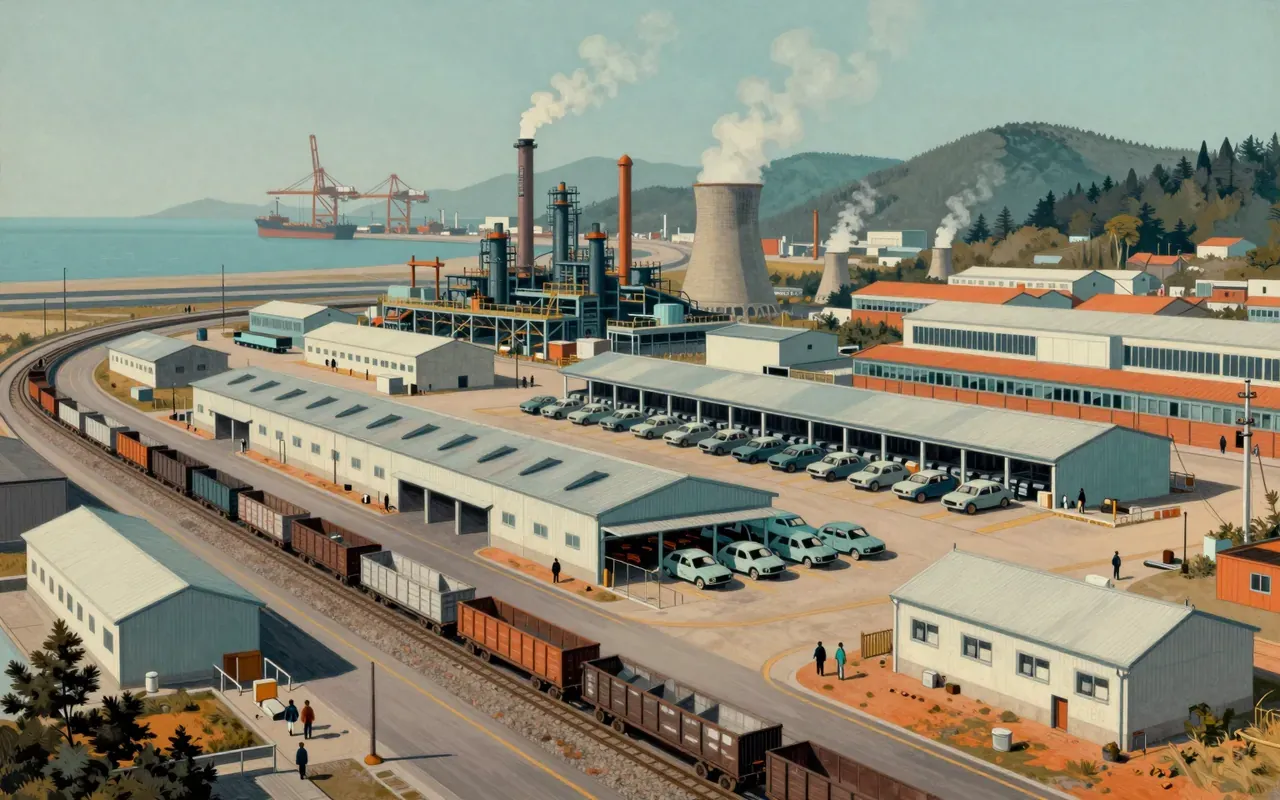
    The Ulsan plant isn’t just big — it’s the world’s largest single integrated automobile manufacturing facility, built in 1968.

  3. 5:10
    How Hyundai earned its rank

    Third-largest by production, it launched Korea’s first car in 1975 and achieved engine independence in 1991 — not through breakthroughs, but sustained integration.

  4. 6:53
    Electrification is real, but not yet electric

    In 2025, electrified vehicle sales hit 961,812 units — a 27% jump — but hybrids still outnumber EVs three to one.

Worth your time?

Yes. Study the whole thing.

4/ 5
What works
  • Ulsan plant scale and integration
  • 1991 engine and transmission independence
  • 2025 electrified vehicle volume
What does not
  • Chung Ju-yung founded Hyundai Motor
  • Hyundai Motor's headquarters is confirmed by both sources
  • The Pony launched in 1976 per both sources (one says 1975, one says 1976)
Study it if
  • Students of industrial policy
  • Analysts of latecomer industrialisation
  • Strategists assessing vertical integration
Skip it if
  • Those seeking startup disruption logic
  • Biographers of Chung Ju-yung
  • Investors looking for unverified growth metrics
The written brief1 min read

What the company or idea is

Hyundai Motor Company is a South Korean automotive manufacturer founded in 1967, operating the world’s largest single integrated car plant in Ulsan, and ranked third globally by production as of November 2024.

How it actually makes money

Hyundai makes money by manufacturing and selling cars globally, including electrified vehicles — hybrids and EVs — which accounted for 961,812 units sold in 2025.

What works

Its Ulsan facility delivers unmatched production scale: 1.52 million vehicles annually, employing 31,000 people across a 5-million-square-metre site. Its 1991 development of proprietary engines and transmissions marked real technological independence.

What does not

It does not control its own origin story: sources contradict on founding year (1967 vs. 1976 Pony launch), founder (Chung Ju-yung is named in the prompt but excluded by evidence; Chung Se-yung founded it), and headquarters (Seoul is cited in one source but not verified against the second).

What to take from it

Hyundai’s rise shows that scale, enforced integration, and incremental engineering — not first-mover innovation — can build global market position in capital-intensive industries.

Is it worth your time

Yes — if you are studying how state-adjacent industrial policy, vertical integration, and late-stage technology catch-up shape global auto competition.
Same desk · Companies4 of 297
10:34
Airbus1998Airbus in 1998 was a consortium — not a company — sustained by national governments and bound by treaty, not equity. Its money came from airliner sales, but its structure reflected diplomacy more than business logic. It worked because Europe prioritised strategic autonomy over market efficiency. It failed as a unified enterprise until it abandoned the consortium model entirely. The lesson is structural: scale in aerospace is political first, economic second.
12:10
Anglo American plc1917Anglo American plc is a British multinational mining company headquartered in London, founded in 1917 in Johannesburg. It is the world's largest platinum producer (40% of global output) and owns 85% of De Beers. It merged with Minorco in 1999 to become Anglo American plc, and with Teck Resources in 2025 to form Anglo Teck. Between 2015 and 2015, it cut 138,000 jobs. In early 2015, it reported a $3 billion loss. It withdrew from the Pebble Mine in 2013 and partnered with Engie and First Mode in 2019 to develop a hydrogen-powered haul truck.
12:01
Birks GroupHenry Birks · 2005Birks Group is the legal successor to Henry Birks and Sons — a Canadian jeweller founded in 1879, vertically integrated from design to retail, with manufacturing roots in Roden Bros. and national reach built through owned stores and co-branded acquisitions. Its 2005 merger with Mayors was a structural consolidation, not a new beginning.
11:34
Chorus Limited2011Chorus is a state-shaped infrastructure monopoly built from a 2011 demerger. It controls the physical layer of New Zealand’s internet — but not the customer relationship, pricing, or service design. Its success is measured in coverage and uptake, not profit per user or innovation. It works because regulation forces openness — not because it competes.
Up next in Business

ICA Gruppen

1938 · 12:18

A retailer-owned co-op that became a bank-owning, pharmacy-running, real-estate-holding conglomerate — without ever leaving Sweden’s grocery aisles.

12:18