What the thing is
A market-stall retail partnership founded in 1884, operating as a fixed-price penny bazaar before evolving into a national chain.
Where it came from
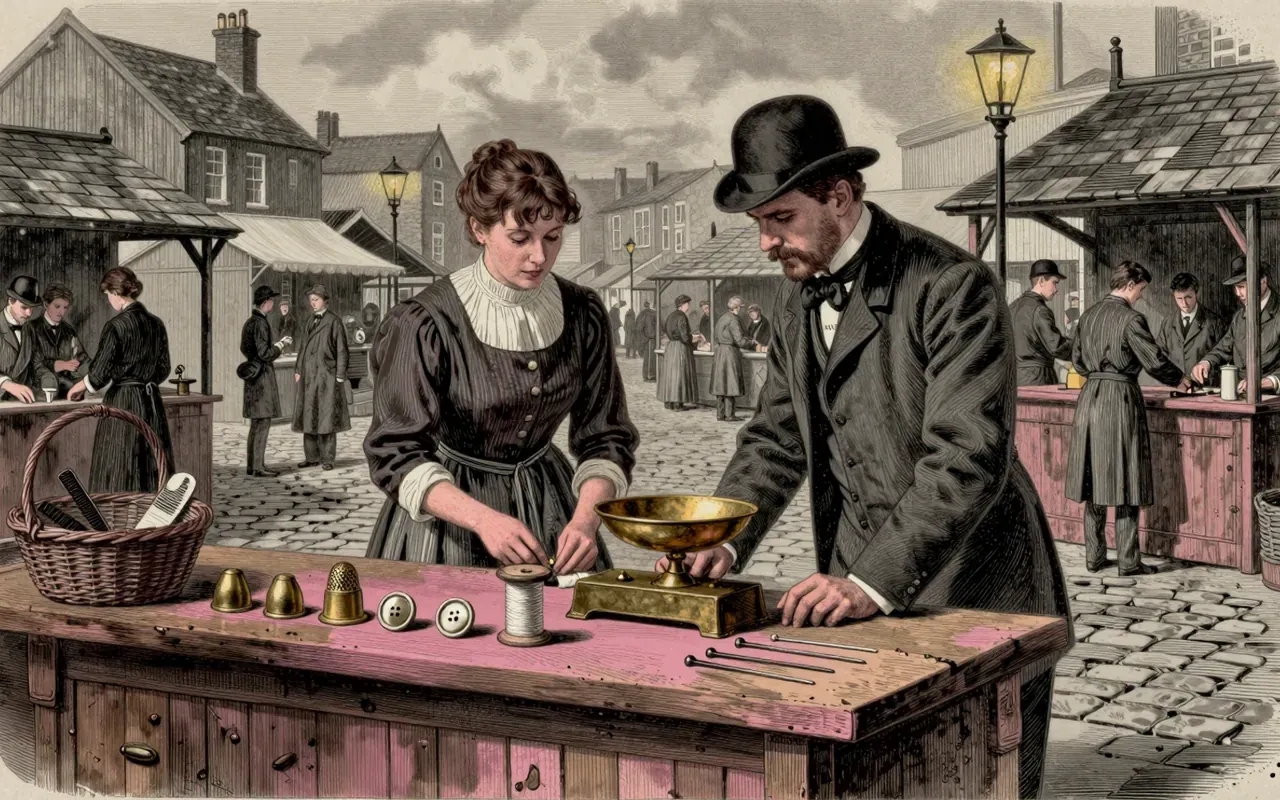
Leeds, 1884: Michael Marks, a Polish Jewish migrant from Słonim, used £5 lent by Isaac Jowitt Dewhirst to open a stall at Kirkgate Market.
What it gets right
It offered fixed low prices to people who distrusted haggling and had little time or capital. It scaled by copying the same stall model across Yorkshire and Lancashire covered markets.
What it gets wrong
It did not yet sell food or textiles in its founding decade. Its ‘penny bazaar’ model excluded anything priced above one penny — a limit it outgrew only after Marks’ death.
Why it matters now
It reveals how retail innovation emerged not from boardrooms but from immigrant entrepreneurs navigating local market regulations, credit networks, and physical infrastructure.
Is it worth your time
Yes — if you want to understand how retail infrastructure for mass working-class consumption was built from a £5 loan and a slogan.