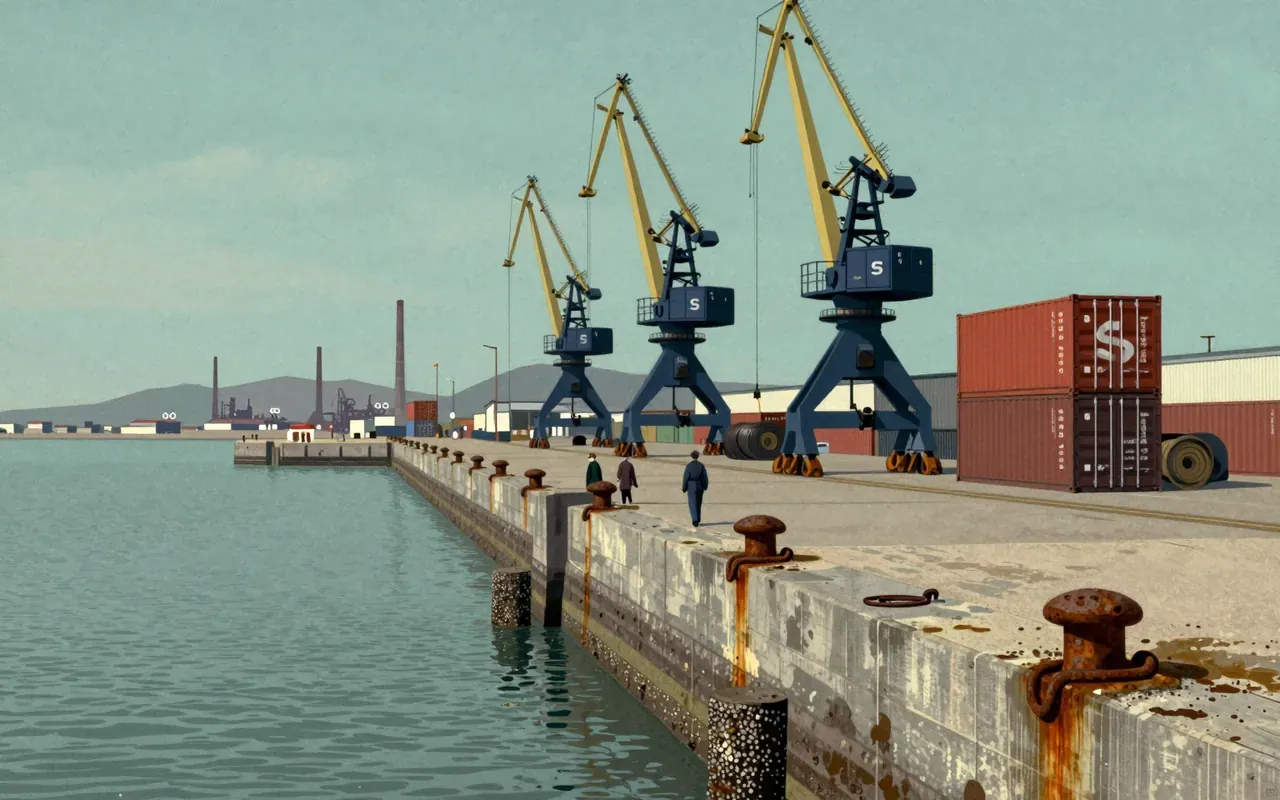
Marubeni is a sōgō shōsha — a Japanese general trading company — founded in 1858, reconstituted in 1949 after wartime merger and post-war dissolution. It holds leading market shares in cereal and paper pulp trading, and maintains a strong electrical and industrial plant business. It recorded its first annual net loss in 1998 due to the collapse of Japan’s asset price bubble. In 2006, it acquired a large minority stake in Daiei, selling it to Æon Group in 2013. In September 2018, it announced a shift from coal to renewable energy resources — a declared intention with no supporting detail in the source material.
Marubeni is not a modern corporation but a reconstituted institution—one that dissolved and re-emerged in 1949 after wartime merger and post-war dismantling.
2:27
Trading dominance + transactional ownership
Its market leadership in cereals and pulp coexists with opportunistic, non-core holdings—like its Daiei stake, acquired in 2006 and sold in 2013.
4:02
1998: The bubble broke Marubeni’s balance sheet
Its first net loss—in 1998—was a systemic failure, not a misstep: it exposed how deeply sōgō shōsha were entangled in Japan’s asset bubble.
6:03
2018: A statement, not a strategy
Its 2018 pledge to shift from coal to renewables is a declared intention—not a documented pivot—with no figures, timelines, or divestment disclosures in the source.
1 more chapterFewer chapters
Worth your time?
Yes. Study the whole thing.
3.5/ 5
What works
Its ability to retain market leadership in core commodity trades despite macro shocks.
Its institutional capacity to absorb regulatory penalties and controversies without existential threat.
Its documented evolution—from linen trading to renewables—as a record of adaptive survival, not innovation.
What does not
Marubeni’s 2018 renewable energy shift is substantiated by financial or operational data.
Marubeni has exited coal-related activities.
Its Daiei stake represented long-term strategic integration rather than transactional finance.
Study it if
Analysts tracking Japanese corporate resilience.
Students of post-war economic reconstruction.
Researchers studying the opacity of conglomerate capital allocation.
Skip it if
Anyone seeking evidence of ESG execution.
Investors looking for transparent capex commitments.
Founders seeking a replicable growth model.
Who should study it, and who should skipHide who it is for
The written brief1 min read
What the company or idea is
Marubeni is a sōgō shōsha: a Japanese general trading company founded in 1858, reconstituted as an independent entity in 1949 after wartime consolidation and post-war dissolution.
How it actually makes money
Marubeni makes money through diversified trading—cereals, paper pulp, electrical and industrial plants—and by holding stakes in operating businesses like supermarkets and energy projects.
What works
Its dominance in cereal and paper pulp trading, and strength in electrical and industrial plant business, are verified market positions—not aspirational claims.
What does not
Its 2018 renewable energy shift lacks evidence of material capital reallocation; coal-related revenue streams and project involvements are not disclosed in the source material.
What to take from it
Marubeni’s longevity reflects institutional elasticity—not foresight. It survives by absorbing state policy shifts, market crashes, and scandals without structural accountability.
Is it worth your time
Yes—if you want to understand how Japanese general trading companies absorb shocks, pivot under regulatory or reputational pressure, and monetise strategic ambiguity across decades.