What the company or idea is
Hiroshi Yamauchi was Nintendo’s president who transformed it from a hanafuda maker into a global video game company through sequential, high-stakes pivots.
He was third president of Nintendo, serving from 25 April 1949 to 24 May 2002. In 1948, while Yamauchi was still a law student at Waseda University, Kaneda suffered a stroke with no designated successor, and Yamauchi was asked to replace him. He agreed on condition that he be the only family member at Nintendo, and his older cousin was fired. Because of his age and lack of experience most employees resented him; he answered a factory strike by firing long-time employees who questioned his authority. He was the sole judge of new products and approved only those that appealed to his instincts.
How it actually makes money
Nintendo made money from licensed playing cards, toys, and later video game hardware and software — all distributed through its pre-existing domestic networks.
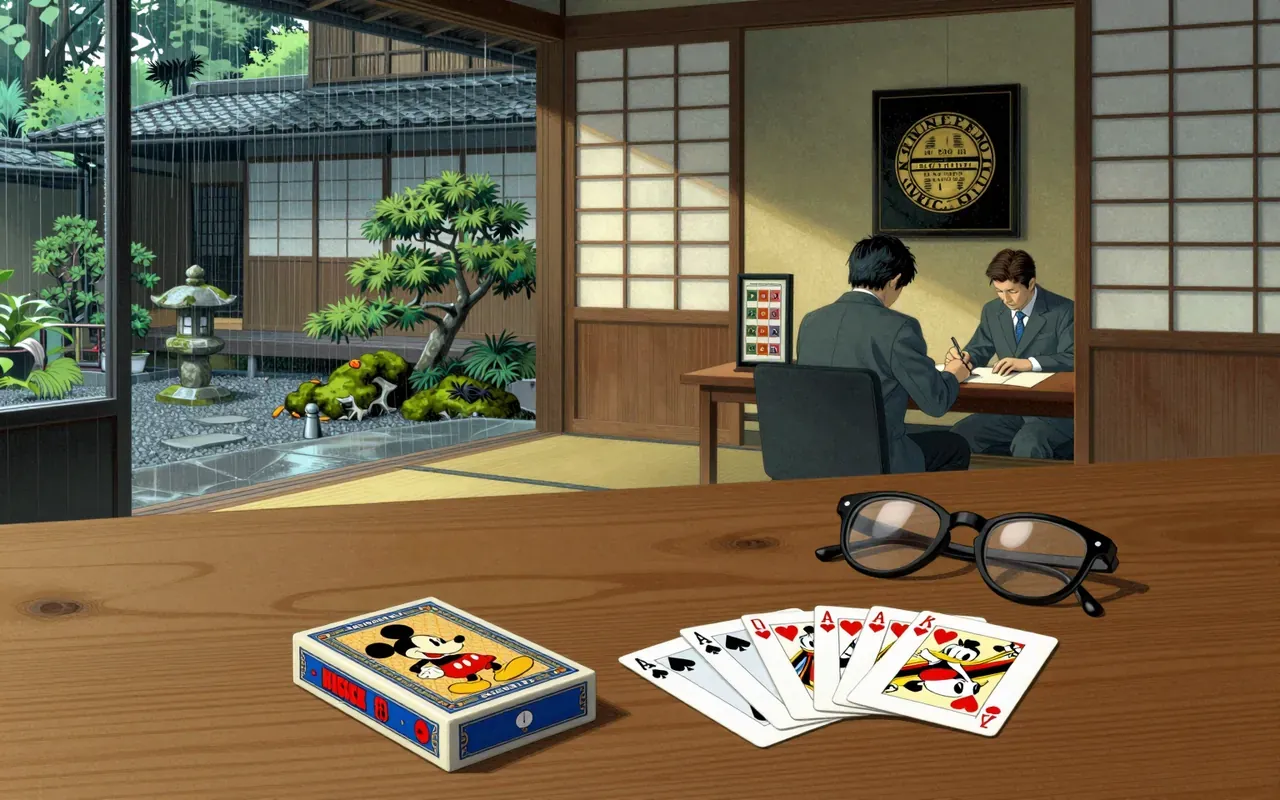
The 1959 licensing deal with Walt Disney produced a pack of plastic-backed Western playing cards with Disney characters and a booklet explaining card games. Association with gambling, technically illegal in Japan, had limited Western-style cards, yet 600,000 packs sold within a year, which helped Nintendo dominate the Japanese playing card market. In the electronics era Nintendo became the Japanese distributor of the Magnavox Odyssey and set up a Research & Development Department devoted to video games. A second unit staffed with hires from Sharp Electronics developed the Color TV-Game 6, Nintendo’s first console, and this separation led to competition and innovation.
What works
Leveraging existing distribution to launch toys; using licensing to bypass cultural barriers in Western-style card adoption; internal R&D that turned informal prototypes into mass-market products.
What does not
Diversification into instant rice and taxi services failed catastrophically, exposing the risk of abandoning core competencies without validating new markets.
The diversification followed a visit to the small headquarters of the United States Playing Card Company, the world’s biggest playing card maker, after which Yamauchi concluded that Nintendo would struggle to grow on its existing path. The instant rice product and the taxi company Daiya brought the company to the brink of bankruptcy. The Nintendo 64, released in 1996, was praised by critics but struggled commercially while consumer attention went to Sony’s PlayStation.
What to take from it
Success came not from vision alone, but from rapid iteration (Ultra Hand), licensing arbitrage (Disney cards), and ruthless pruning of dead ends — all funded by cash flow from adjacent businesses.
Fortunes changed in 1966 with the Ultra Hand, an extendable claw toy that factory engineer Gunpei Yokoi was seen playing with on a break. The Game & Watch of 1980 was a hit, but Yamauchi believed it lacked the depth to last, and efforts to find a product that did led to the Famicom in 1983. He promised an electronics company that one million units would be ordered within two years, a goal easily reached. After the video game crash of 1983, which he blamed on a glut of poor-quality games, he was strict about approving releases and limited third-party publishers to three titles a year, while still making games easy to develop because he believed artists, not technicians, create excellent games.
Is it worth your time
Yes, if you study how internal R&D, distribution leverage, and decisive pivots offset strategic overreach — not as a founder myth, but as a case in disciplined operational adaptation.