Huawei is not a global tech disruptor — it is China’s largest telecom infrastructure vendor, funded by state procurement and scaled by workarounds, not venture capital or open markets.
Huawei is a Chinese multinational technology conglomerate founded in Shenzhen in 1987 by Ren Zhengfei. Its headquarters are in Longgang, Shenzhen, Guangdong. Its main product lines include telecommunications equipment, consumer electronics, electric vehicle autonomous driving systems, and rooftop solar power products. Telecommunications equipment is its biggest area of business, and its largest customer is the Chinese government. Initially focused on manufacturing phone switches, Huawei expanded to more than 170 countries, building telecom infrastructure, providing equipment and services, and manufacturing consumer communications devices. In 2012, it surpassed Ericsson to become the world's largest telecommunications equipment manufacturer. As of 2025, it is the largest smartphone vendor in China with an 18.1% market share.
Huawei was founded in 1987 as a Shenzhen-based engineering project with a mission to serve China — not to disrupt or globalise.
2:34
Method: Assembly Before R&D, Agents Before Distribution
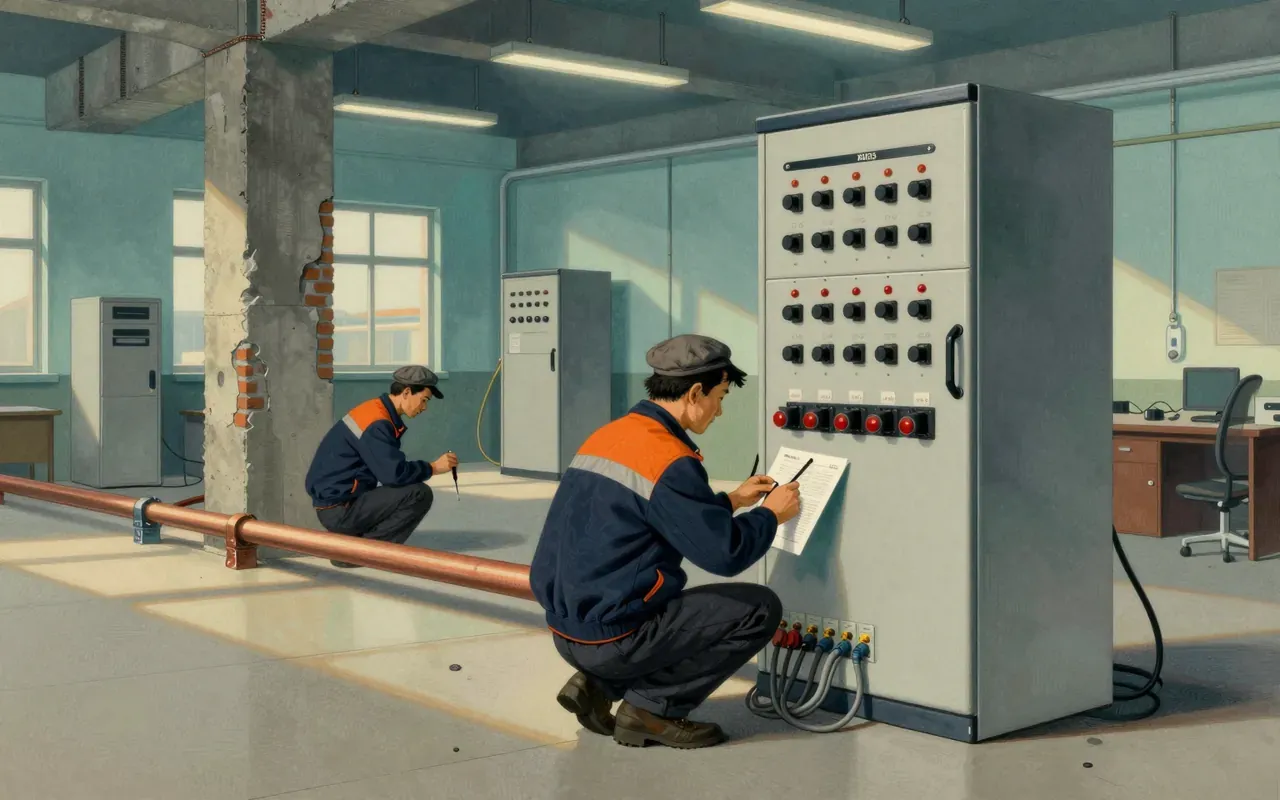
Huawei scaled by assembling foreign switches, then building its own while short on parts — not by breakthrough innovation, but by parallel execution.
3:46
Scale: Infrastructure First, Domestic Demand First
Its dominance is in telecom equipment, not smartphones — and its largest customer is the Chinese government, not consumers or global carriers.
5:08
Consumer Electronics: A Domestic Exception
Huawei’s consumer success is local: it is China’s largest smartphone vendor in 2025 with 18.1% share — no global figure is given.
6:40
Ownership: Wages Deferred, Not Equity Granted
Huawei’s employee shareholding system converted deferred wages into redeemable shares — aligning staff with survival, not equity upside.
7:57
Product Lines: Hardware Extensions, Not Platform Shifts
Huawei expanded from phone switches to telecom infrastructure, EV autonomy, and solar — but all lines remain hardware-driven and supply-chain dependent.
3 more chaptersFewer chapters
Worth your time?
Yes. Study the whole thing.
3.5/ 5
What works
telecom equipment dominance in China and globally (2012)
domestic smartphone leadership (2025)
concurrent assembly-and-R&D under constraint
agent-based sales and employee shareholding as scaling tools
What does not
global market share outside China
revenue
profitability
valuation
Study it if
students of state-aligned hardware scaling
analysts of telecom supply chains
researchers of non-Western corporate governance
Skip it if
investors seeking financial transparency
entrepreneurs looking for replicable startup playbooks
consumers assessing global brand trust
Who should study it, and who should skipHide who it is for
The written brief2 min read
What the company or idea is
Huawei is a Chinese multinational technology conglomerate founded in Shenzhen in 1987 by Ren Zhengfei. It manufactures telecommunications equipment, consumer electronics, electric vehicle autonomous driving systems, and rooftop solar power products. Telecommunications equipment is its biggest area of business.
How it actually makes money
Huawei makes money by selling telecommunications equipment to the Chinese government and telecom operators in over 170 countries. Its largest customer is the Chinese government. Revenue began with consignment sales of foreign-made program-controlled switches, then shifted to in-house assembly and R&D. It uses an agent-based sales model and an employee shareholding system where deferred wages convert into redeemable shares.
What works
Huawei’s shift from consignment sales to in-house switch assembly worked: it built its first program-controlled switch in September 1991 and sold over 200 units of the JK1000 office telephone at launch in May 1993. Its agent-based sales model solved early distribution problems. In 2012, it surpassed Ericsson to become the world’s largest telecommunications equipment manufacturer. As of 2025, it is the largest smartphone vendor in China.
What does not
Huawei does not operate as a globally neutral tech vendor. Its largest customer is the Chinese government, and its expansion relies on state-embedded infrastructure demand. It has no disclosed revenue figures, profitability, or cost structure. Its consumer electronics success is confined to China: it holds 18.1% of the Chinese smartphone market as of 2025 but no global share is stated.
What to take from it
Huawei shows how engineering-led execution, concurrent assembly-and-R&D, and adaptive ownership models (e.g., employee shares tied to deferred wages) can scale a hardware business without external equity or public financial disclosure — but only where domestic demand, procurement channels, and policy alignment are assured.
Is it worth your time
Yes — if you are studying how a state-aligned infrastructure vendor scales under resource constraints, navigates component shortages, and sustains R&D while relying on domestic procurement and distribution workarounds. No — if you expect transparency on margins, valuation, or global market share outside China.