What the company or idea is
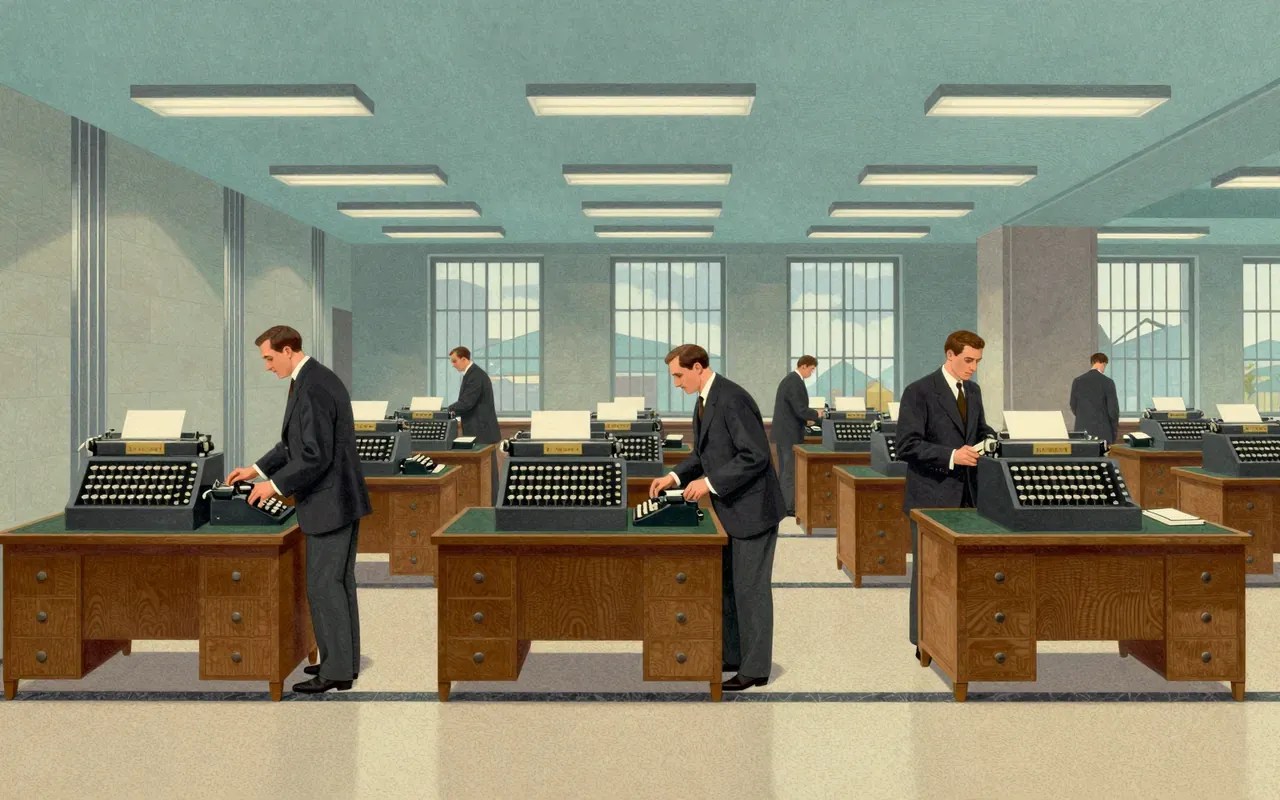
IBM began in 1911 as CTR, a holding company for record-keeping and measuring equipment makers; under Thomas J. Watson Sr., it became a vertically controlled tabulating machine business centred on punched cards.
How it actually makes money
IBM made money by selling and leasing punched card tabulating machines, then later mainframes, under a bundled model that tied hardware to proprietary punch cards and service contracts.
What works
IBM owned and leased over 90% of all tabulating machines in the US by the 1930s, doubled revenues to $9 million in four years, and grew to $897 million and 72,500 employees by 1956 — proving the scalability of integrated hardware-service-leasing.
What does not
Its monopoly over tabulating machines collapsed when the Supreme Court barred exclusive punch-card contracts in 1936 — revealing its revenue model was legally fragile, not technologically inevitable.
What to take from it
Watson built IBM not on breakthrough engineering but on sales discipline, cultural branding (‘THINK’), global leasing infrastructure, and legal leverage — until courts stripped that leverage away.
Is it worth your time
Yes — IBM’s early dominance shows how vertical control of infrastructure, not just invention, creates market power — and how antitrust intervention (1936) forced structural change.