Computing
The machine that ate every other machine.
- 7
- in business
- 10:48
- average
- 76 min
- in total
- 101
- across the network
IBM
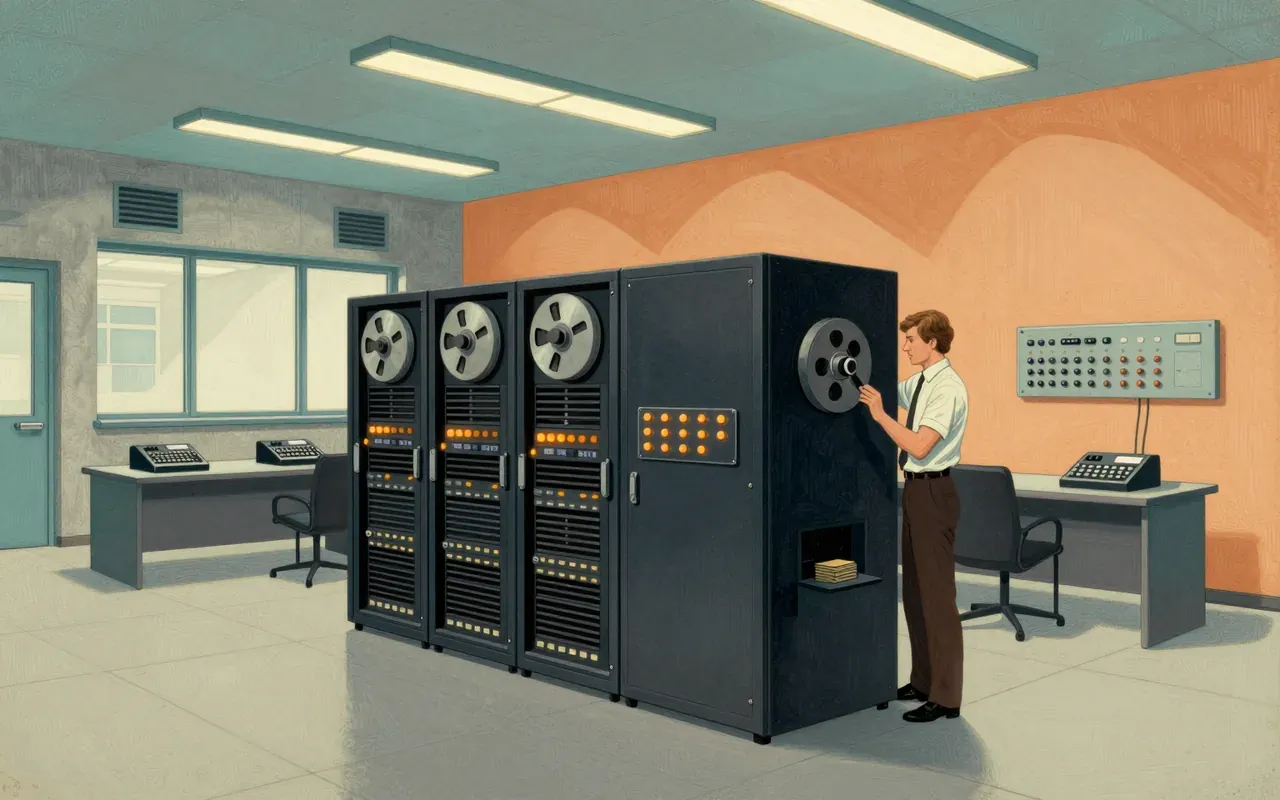
IBM under Thomas J. Watson Sr. was a sales-and-leasing enterprise built on punched card tabulators — not computing. Its dominance relied on vertical control, not technical novelty. That control was dismantled by antitrust action in 1936. Everything else — System/360, AI, PCs — belongs to a later era.
SAP
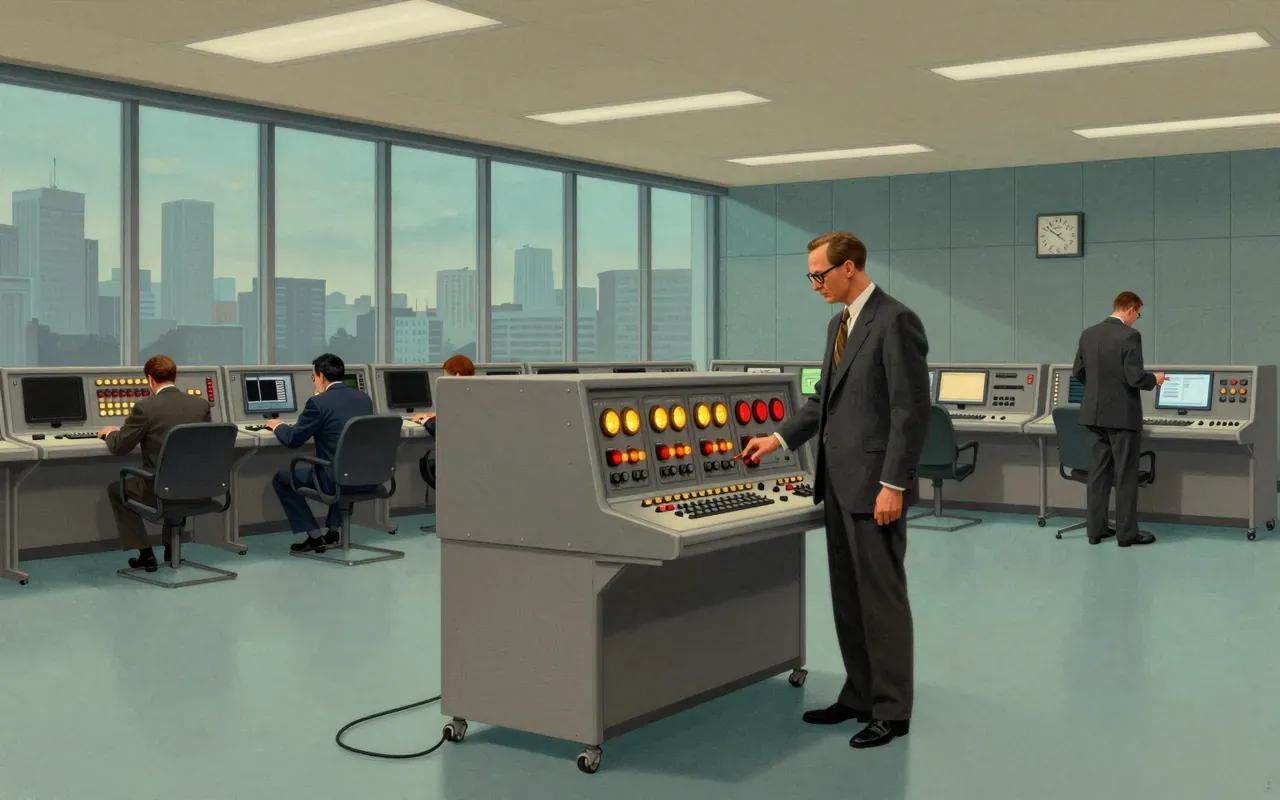
SAP is the world's largest vendor of enterprise software. Founded in 1972 in Walldorf by Dietmar Hopp and four former IBM colleagues, it built its first product—the RF financial accounting system—in 1973 for Imperial Chemical Industries in Östringen. Its technical distinction was real-time operation via local electronic storage and a common logical database, eliminating overnight punch card processing. It restructured from GbR to GmbH (1981), to AG (late 1980s), to SE (2014). Hopp led SAP from 1988 to 2005 and retained ~10% equity.
Xerox
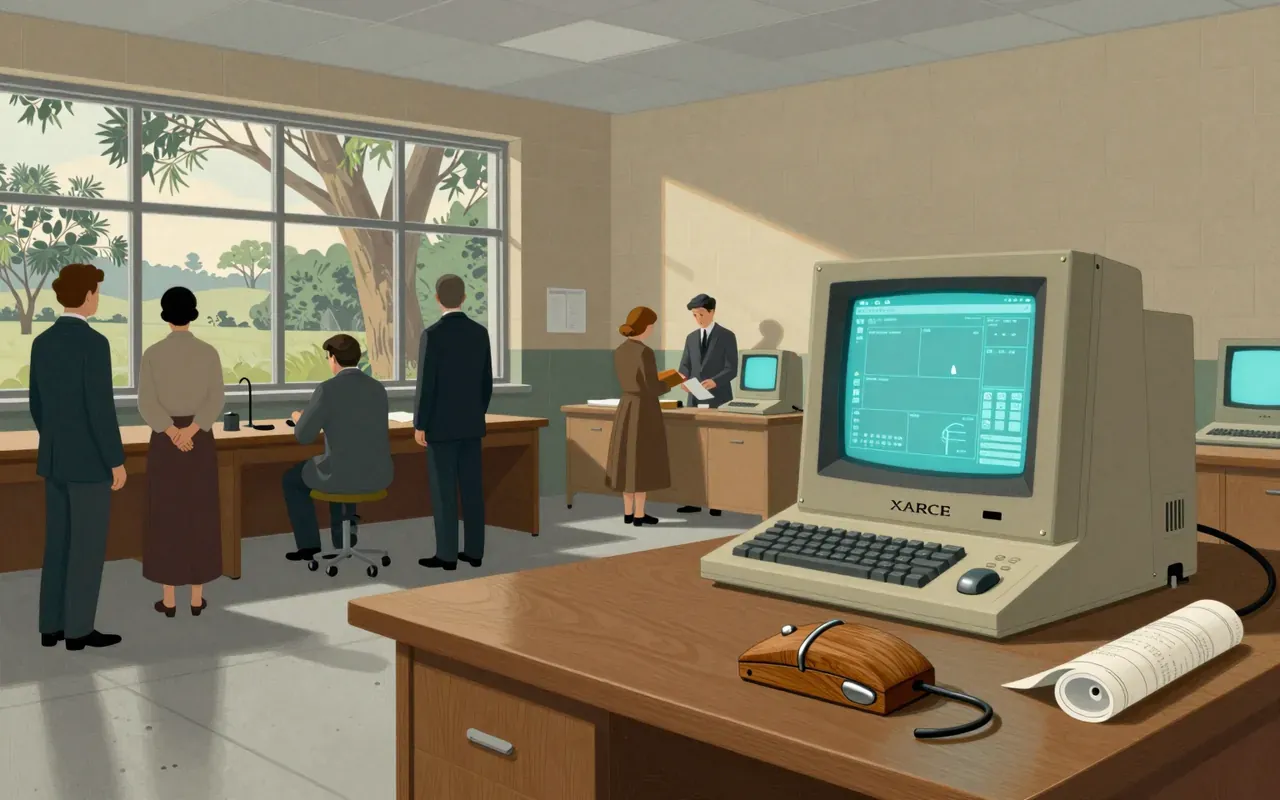
Xerox pioneered the photocopier market starting with the Xerox 914 in 1959; Joseph C. Wilson signed an agreement in 1946 to develop Chester Carlson's invention commercially; before the 914, Xerox tested the market with the Flat-plate 1385 prototype, which proved nonviable due to slow speed; the 914—the first plain paper photocopier—was developed by Carlson and John H. Dessauer; researchers at Xerox and PARC invented key personal computing elements including the GUI, mouse, and desktop computing; Xerox opened PARC in 1970; and Gary Starkweather invented the laser printer in 1969 by modifying a Xerox 7000 copier.

Intel
Intel is a foundational semiconductor company whose business model pivoted from memory to microprocessors—and whose lasting leverage came from controlling the x86 instruction set, not just fabrication.
Google in 1998 is a case study in pre-commercial technical foundation—not a functioning business. Its value lies in how cleanly it separates algorithmic insight from economic execution.

Microsoft
Microsoft’s founding was not about building the best software first — it was about controlling the terms of distribution before the market existed. Its early success came from timing, contractual foresight, and treating software as licensable intellectual property — not a service or craft. The company established the template for platform leverage in computing: own the interface, not the hardware.