What the company or idea is
Peterbilt is a U.S. heavy- and medium-duty truck manufacturer founded in 1939 via acquisition of Fageol Truck and Coach Company in Oakland, California, and operated under PACCAR since 1958.
How it actually makes money
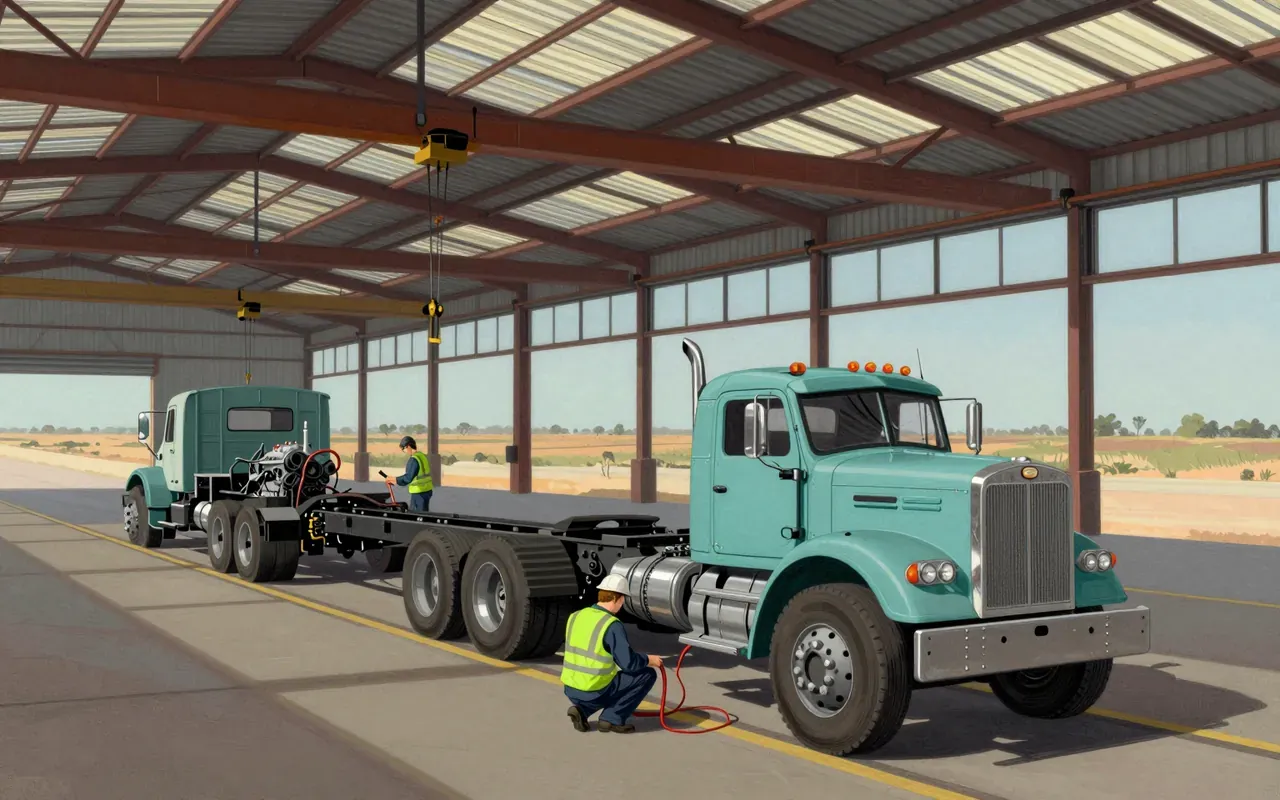
Peterbilt makes money by manufacturing heavy- and medium-duty commercial trucks — Class 5–8 vehicles — sold to fleet operators, contractors, and government agencies. Revenue comes from unit sales, not services, subscriptions, or data. It operates as a wholly owned subsidiary of PACCAR, which funds capital expenditure and absorbs overhead.
What works
Peterman’s focus on quality gained recognition within two years. His co-invented water-free drum brake and trailer rollers solved real problems in logging transport. The 1944 military contract proved scalable production. Relocation to Denton in 1954 preceded the 1958 sale but enabled continuity under PACCAR.
What does not
Peterbilt did not build an independent brand identity in its first two decades. Its earliest trucks were near-copies of Fageol designs. It did not scale beyond military and regional contracts before 1958. It did not retain ownership: the company was sold in 1958 due to site redevelopment pressure, not strategic choice.
What to take from it
The gap between Peterman’s timber-sector engineering pragmatism — water-free brakes, log-stabilising rollers — and Peterbilt’s later reputation as a premium cab-over builder reveals how origin stories obscure operational continuity. The company’s early value was in solving specific transport failures, not general vehicle excellence.
Is it worth your time
Yes — if you are studying how niche industrial capability emerges from acquisition, not invention; how founder-led engineering priorities survive corporate absorption; or how real estate pressures, not market failure, can trigger a sale.