businessbriefs
11:25in productionCh. 1 · Incorporated, not founded/ 11:25 · ceiling 15 min
Companies · Strategy

Angang Steel

1948

A 'joint-stock' company that answers to the State Council isn’t a market actor—it’s an administrative unit with a balance sheet.

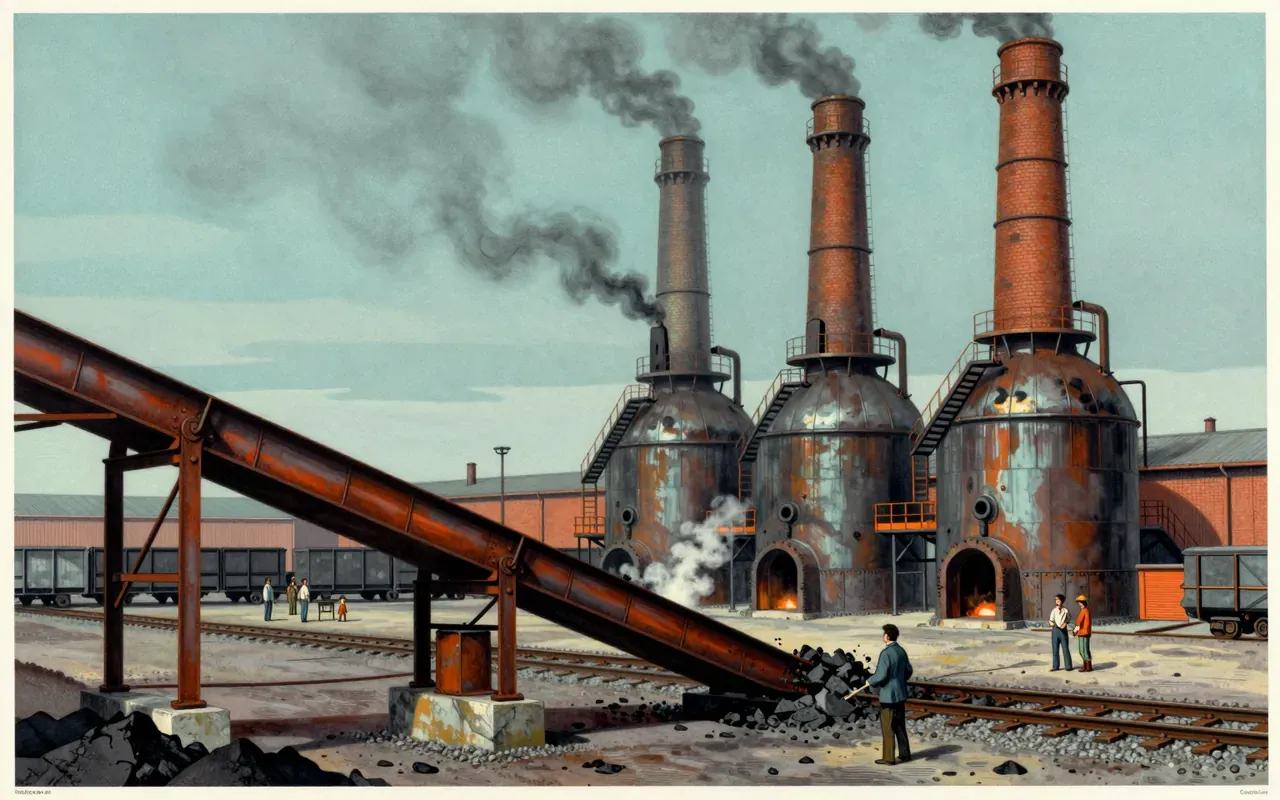
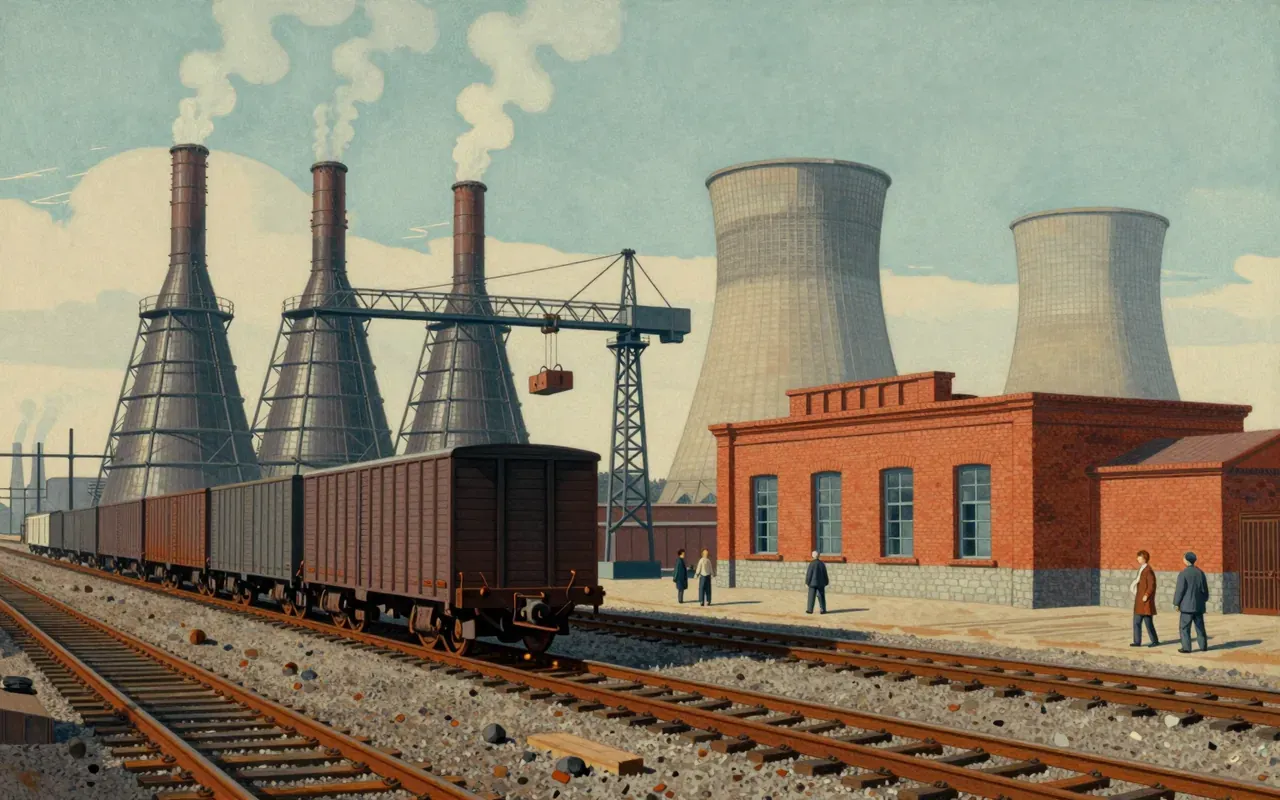
Angang Steel is a state-supervised industrial vehicle—not a commercial enterprise in the conventional sense. Its incorporation in 1997 formalised existing assets rather than launching new capability. It produces standard steel products at scale, but its structure, oversight, and naming all point to administrative continuity, not strategic reinvention.

Chapters & takeaways4
  1. 1:07
    Incorporated, not founded

    Angang Steel was created in 1997—not founded—as a corporate shell for pre-existing state assets.

  2. 3:08
    Second-largest by design

    Its size reflects state consolidation, not competitive advantage or market share growth.

  3. 5:10
    What it sells is what it inherited

    Its product range is defined by legacy infrastructure, not customer demand or diversification strategy.

  4. 6:52
    Saddle steel, not steel brand

    Its name ties it to Anshan geographically and administratively—not to brand identity or market positioning.

Worth your time?

Yes. Study the whole thing.

3.5/ 5
What works
  • It consolidates production capacity under unified state supervision.
  • It maintains continuity across generations of Chinese industrial planning.
  • It demonstrates how corporate form can mask administrative function.
What does not
  • It does not operate independently of state oversight.
  • It does not generate revenue from innovation or branding.
  • It does not disclose financial metrics, margins, or capital efficiency.
Study it if
  • Students of state capitalism.
  • Analysts tracking China’s industrial policy implementation.
  • Researchers comparing SOE restructuring models.
Skip it if
  • Investors seeking market-led growth signals.
  • Entrepreneurs looking for scalable business models.
  • Consumers evaluating product differentiation.
The written brief1 min read

What the company or idea is

Angang Steel is a joint-stock limited company incorporated in 1997, formed by injecting key steel production operations from its state-owned parent into a new corporate vehicle.

How it actually makes money

Angang Steel makes money by producing and selling steel products including billets, cold rolled sheets, color coating plates, wire rods, thick plates, and heavy rails.

What works

It works as a mechanism for consolidating and scaling steel production under centralised control: it is the second-largest steel maker in Mainland China.

What does not

It does not operate independently of state oversight: it is parented by Anshan Iron and Steel Group and supervised by the State Council of the People’s Republic of China.

What to take from it

The gap between its corporate form (a joint-stock company) and its governance (direct State Council supervision) reveals how China structures industrial policy through layered ownership—not market logic.

Is it worth your time

Yes—if you are studying how China’s state-supervised industrial enterprises operate at scale, not as a model of market-driven innovation or financial transparency.
Same desk · Companies4 of 325
11:42
HuaweiRen Zhengfei · 1987Huawei is a Chinese multinational technology conglomerate founded in Shenzhen in 1987 by Ren Zhengfei. Its headquarters are in Longgang, Shenzhen, Guangdong. Its main product lines include telecommunications equipment, consumer electronics, electric vehicle autonomous driving systems, and rooftop solar power products. Telecommunications equipment is its biggest area of business, and its largest customer is the Chinese government. Initially focused on manufacturing phone switches, Huawei expanded to more than 170 countries, building telecom infrastructure, providing equipment and services, and manufacturing consumer communications devices. In 2012, it surpassed Ericsson to become the world's largest telecommunications equipment manufacturer. As of 2025, it is the largest smartphone vendor in China with an 18.1% market share.
11:21
State Grid Corporation of China2002State Grid is not a power company — it is the physical and administrative backbone of China’s electricity system. Its scale, revenue, and reach are functions of state assignment, not market performance. It works where central coordination delivers efficiency — but its structure deliberately avoids generation, competition, or price discovery.
10:44
SiemensWerner von Siemens · 1847Siemens is a German multinational engineering company founded in 1847 as Telegraphen-Bauanstalt von Siemens & Halske in Berlin. It evolved through mergers into Siemens AG in 1966. It makes money from industrial automation, building automation, rail transport, and health technology. Its early model worked: rapid internationalisation via family agents, vertical integration from invention to installation, and patent-backed standard-setting. It does not sustain leadership in all its historical domains: it no longer builds x-ray tubes, electric trams, or passenger trains as standalone products. The gap between Siemens’s founding logic — applied electromagnetism deployed via owned workshops and international agents — and its present structure — a diversified, publicly listed conglomerate with AI and software at its core — reveals how industrial capability gets recoded as platform strategy over time. Yes — if you are studying how engineering firms scale infrastructure innovation into global revenue without pivoting to venture capital narratives.
11:40
Baowu1978Baowu is the world's largest steel producer by volume — a title earned not through innovation, pricing power or global reach, but through state-mandated merger of two Chinese SOEs in 2016. Its scale is real. Its autonomy is not.
Up next in Business

Bradespar

2000 · 9:28

A bank spun off its industrial assets into a holding company — then let that company become a one-stock ticker.

9:28