What the company or idea is
Wuhan Iron and Steel Corporation (WISCO) was a Chinese state-owned enterprise founded in 1958 as a flagship project of the First Five-Year Plan, headquartered at the Qingshan steel plant in Wuhan.
How it actually makes money
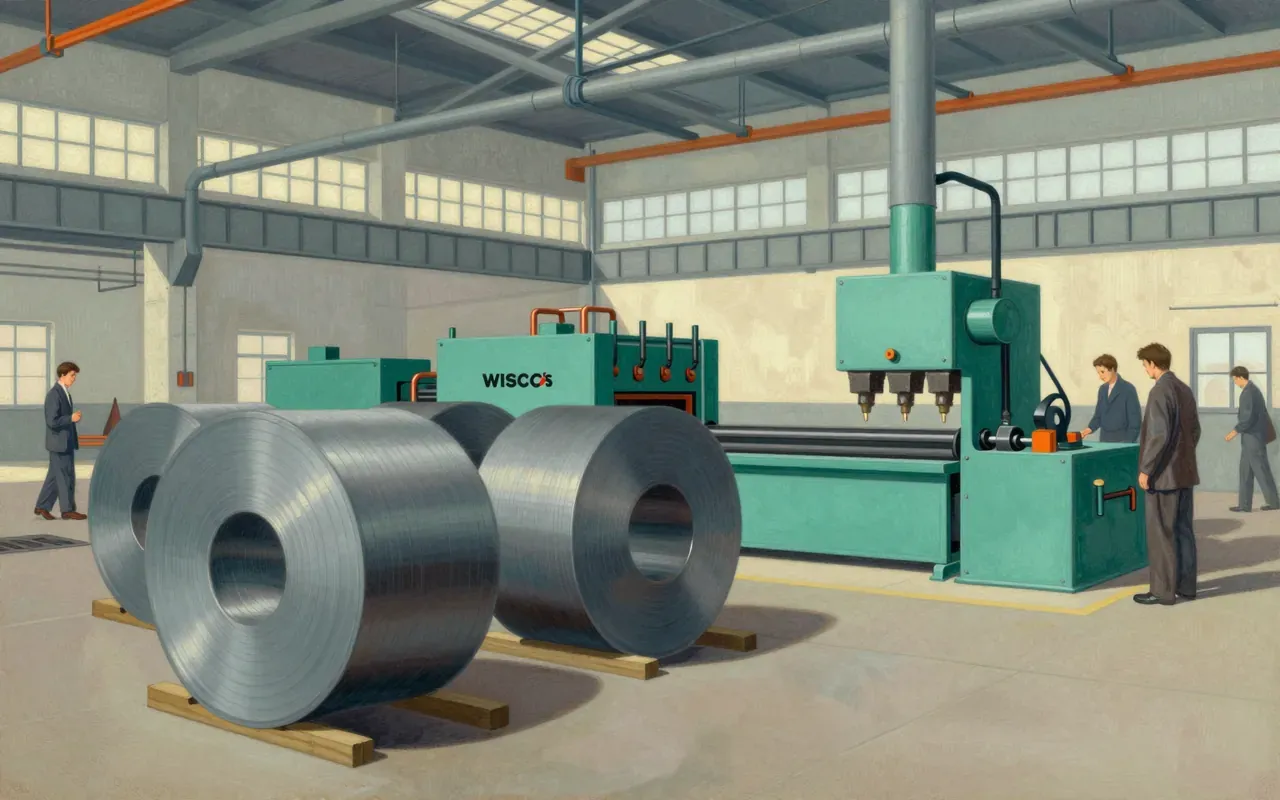
It made money by producing and selling steel, primarily from its Qingshan plant, and later through diversified operations including automotive laser-welded blanks after acquiring Tailored Blanks in 2012.
What works
Its listing vehicle, Wuhan Iron and Steel Co., Ltd., enabled capital access via the Shanghai Stock Exchange from 1997; its acquisition of Tailored Blanks gave it a foothold in high-margin automotive components with ~40% global market share in laser-welded blanks.
What does not
Its scale did not protect it from financial distress. The 2015 net loss triggered capacity cuts of 4.42 million tonnes and a 62.5% workforce reduction — proof that vertical integration and national priority status do not insulate against commodity-cycle collapse.
What to take from it
State ownership does not guarantee resilience. WISCO’s trajectory — from foundational industrial project to distressed asset requiring merger — shows how political origin confers no operational or financial immunity.
Is it worth your time
Yes — it reveals how state-directed industrial policy confronts global overcapacity, not through innovation or market adaptation, but through top-down consolidation, workforce reduction, and asset disposal.