businessbriefs
11:49in productionCh. 1 · Origin: Chemical first, pharma second/ 11:49 · ceiling 15 min
Companies

Boehringer Ingelheim

Private ownership didn’t just preserve Boehringer Ingelheim—it built its biotech advantage decades before the word existed.

Boehringer Ingelheim is a rare case of sustained private ownership enabling both technical continuity (from lactic acid to biopharma) and social infrastructure (welfare policies pre-dating national systems). Its business model is not about disruption but compound discipline: owning the science, the scale, and the staff.

Chapters & takeaways6
  1. 1:12
    Origin: Chemical first, pharma second

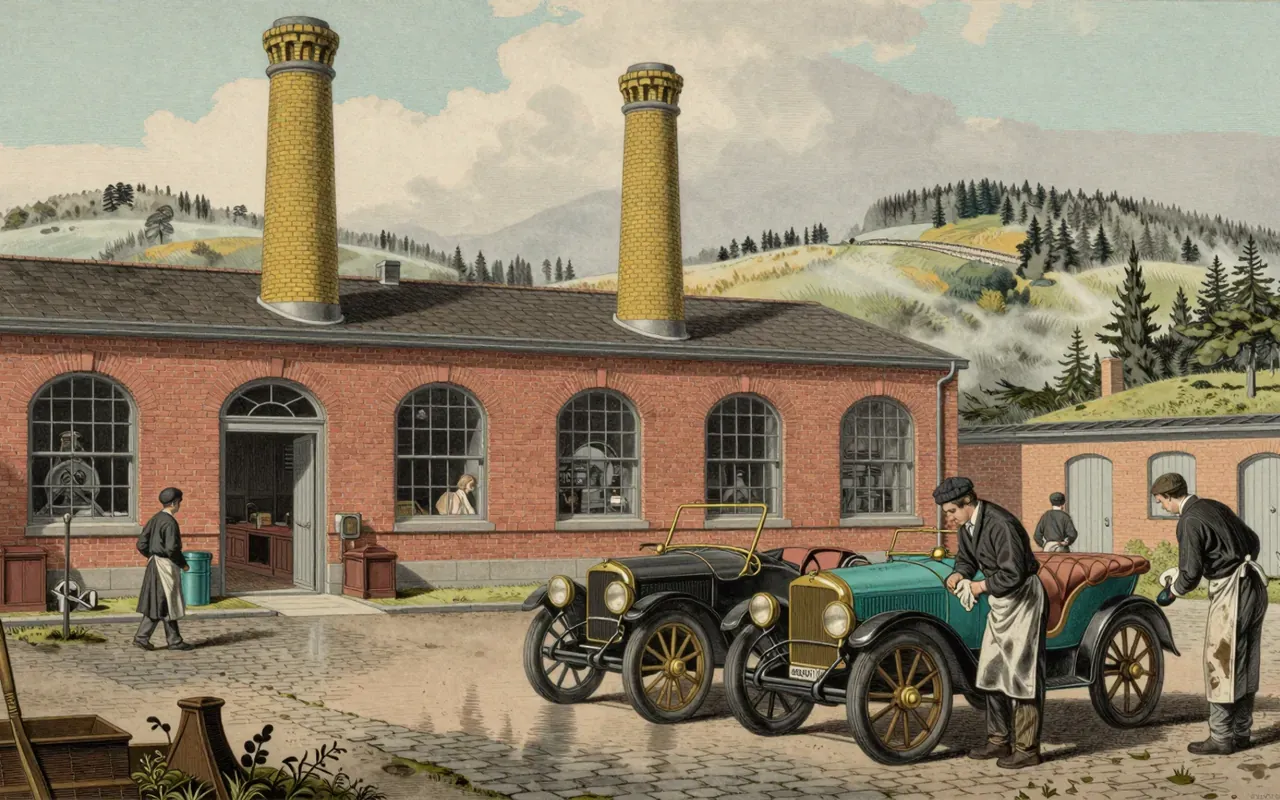
    It began as C.H. Boehringer Sohn in Nieder-Ingelheim in 1885—not as a pharma firm, but as a chemical enterprise.

  2. 2:24
    Biotech before the label

    Bulk lactic acid production via bacterial fermentation in the early 1890s was its first industrial biotech product—and an early mainstay.

  3. 3:30
    Research as infrastructure, not afterthought

    Laudanon launched in 1915, but the real shift was structural: a formal research department founded in 1917 on Nobel chemist Wieland’s advice.

  4. 4:50
    Welfare as workforce architecture

    Health insurance (1902), paid vacation (by 1910), pension (1912), and staff canteen (1917) were not perks—they were operating systems for retention.

  5. 6:30
    Scale without shareholders

    As of 2018, it remained the world’s largest private pharma company—fully family-owned, with 54,000 employees in 76 countries.

  6. 7:52
    Three pillars, one engine

    Its therapeutic focus—respiratory, metabolism, immunology, oncology, CNS—is served by human pharma, animal health, and biopharma divisions across 20 plants and five R&D sites.

Worth your time?

Yes. Study the whole thing.

4.5/ 5
What works
  • long-term-R-and-D-funding
  • early-biotech-integration
  • employee-retention-through-welfare
What does not
  • revenue
  • profit
  • valuation
  • market-share
Study it if
  • students-of-private-equity-alternatives
  • historians-of-biotech
  • labour-policy-researchers
Skip it if
  • investors-seeking-financial-metrics
  • analysts-tracking-drug-pipeline
The written brief1 min read

What the company or idea is

Boehringer Ingelheim is a privately owned pharmaceutical company founded in 1885 in Ingelheim am Rhein, Germany. It works in human pharmaceuticals, animal health, and biopharmaceuticals. It is fully owned by three families and operates globally with over 54,000 employees in 76 countries.

How it actually makes money

Boehringer Ingelheim makes money from selling human pharmaceuticals, animal health products, and biopharmaceuticals. It operates 20 production plants in 13 countries and runs R&D facilities across five sites.

What works

The model of private ownership enables consistent capital allocation to R&D and manufacturing—evidenced by formal research department launch in 1917 and five global R&D sites. Its early move into bacterial fermentation gave it a durable technical edge in biopharma before the term existed.

What does not

The sources do not establish revenue, profit, valuation, market share, drug approval rates, clinical trial success, pricing strategy, or cost of goods sold. They say nothing about current pipeline performance, regulatory setbacks, or commercial failures.

What to take from it

Its longevity rests on two deliberate, interlocking choices: vertical integration into bioproduction (starting with lactic acid in the 1890s) and binding employee loyalty through welfare infrastructure (health insurance in 1902, pension in 1912, canteen in 1917). Neither was incidental.

Is it worth your time

Yes—if you are studying how private ownership shapes long-term R&D investment, employee welfare policy, or the industrialisation of biotechnology. No—if you assume scale requires public markets or that early biotech was accidental.
Same desk · Companies4 of 164
Up next in Business

BP

William Knox D'Arcy · 1908 · 10:04

BP was not built on discovery — it was built on a concession signed in 1901 with a Persian tribal leader.

10:04