businessbriefs
11:52in productionCh. 1 · Origin: From Wardha to Mumbai/ 11:52 · ceiling 15 min
Companies · Founders

Bajaj Group

A 98-year-old Indian conglomerate that grew by owning factories — not algorithms, not users, not data.

The Bajaj Group is a 98-year-old Indian industrial conglomerate — not a tech platform, not a VC-backed startup, not a lifestyle brand. Its value comes from physical assets, sectoral spread, and continuity of ownership. It does not claim to disrupt. It owns factories.

Chapters & takeaways6
  1. 1:15
    Origin: From Wardha to Mumbai

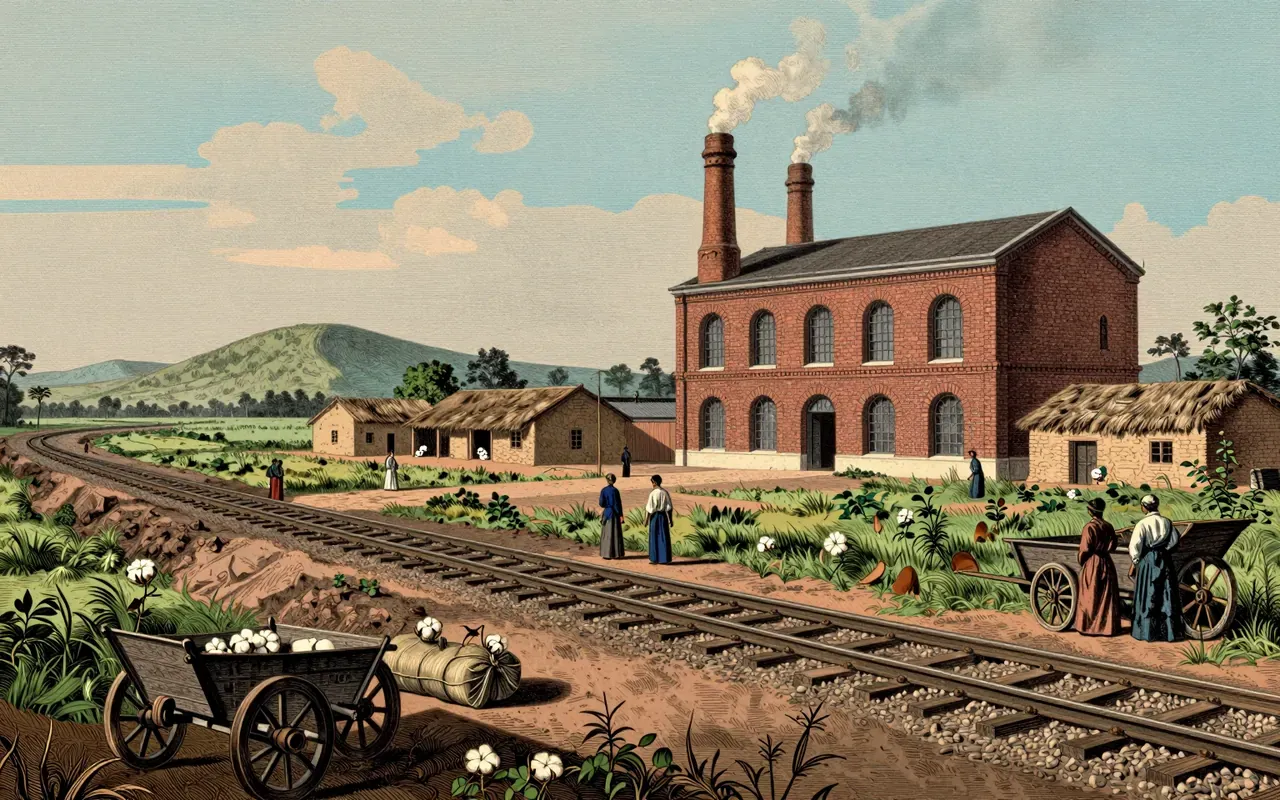
    The Bajaj Group began as a cotton ginning factory in Wardha in 1905 — then became a formal industrial business in Mumbai in 1926.

  2. 2:39
    Scale: 40 Companies, One Capital Base

    It earns across automobiles, home appliances, heavy electricals, lighting, iron and steel, insurance, travel, and finance — with 40 companies and Rs. 14 lakh crores market cap.

  3. 4:01
    The Engine: Bajaj Auto’s Global Position

    Bajaj Auto is the only unit confirmed as globally competitive — producing two- and three-wheelers at scale.

  4. 5:39
    Values: Gandhi’s Disciple, Not ESG Consultant

    Jamnalal Bajaj’s relationship with Gandhi shaped the group’s CSR identity — focused on skilling, health, livelihood and water, not shareholder returns.

  5. 6:36
    Founding: Industrial, Not Digital

    Jamnalal Bajaj founded the group in the 1920s — not as a startup, but as an industrial and trading business named Bachhraj Factories.

  6. 8:16
    Structure: Conglomerate, Not Ecosystem

    No single product, platform or service unifies the group — it is a portfolio of standalone businesses sharing only a name and history.

Worth your time?

Yes. Study the whole thing.

4/ 5
What works
  • longevity through diversification
  • CSR rooted in founder ideology, not compliance
  • global scale in two- and three-wheelers
What does not
  • disrupt
  • innovate digitally
  • rely on venture capital
  • operate as a unified platform
Study it if
  • students of industrial history
  • analysts of Indian economic development
  • strategists studying conglomerate resilience
Skip it if
  • startup founders seeking growth playbooks
  • investors chasing AI or SaaS metrics
  • marketers looking for brand storytelling templates
The written brief1 min read

What the company or idea is

The Bajaj Group is an Indian multinational conglomerate founded formally in 1926 in Mumbai by Jamnalal Bajaj, built on an informal cotton ginning factory started in Wardha in 1905.

How it actually makes money

The Bajaj Group makes money across at least eight sectors: automobiles, home appliances, heavy electricals, lighting, iron and steel, insurance, travel, and finance. Its flagship, Bajaj Auto, generates revenue from two- and three-wheelers — the group’s only explicitly named product category with global scale.

What works

Bajaj Auto’s position among the world’s leading two- and three-wheeler producers works. The group’s market capitalization of Rs. 14 lakh crores (~US$167 billion) confirms scale. Its CSR focus on skilling, health, livelihood and water conservation is active and sectorally grounded.

What does not

The group does not unify its businesses under a single strategy, brand, or technology stack. It operates 40 companies — including Mukand Ltd, Bajaj Electricals Ltd and Bajaj Hindusthan Ltd — with no evidence of shared infrastructure, data systems, or centralised R&D.

What to take from it

Its longevity rests on sectoral diversification, not integration; on inherited industrial assets, not platform logic; and on CSR alignment with Gandhi’s values — not ESG metrics or investor mandates.

Is it worth your time

Yes — as a case study in how a family-founded Indian conglomerate scaled across unrelated sectors without relying on venture capital, IPO narratives, or digital disruption claims.

Same desk · Companies4 of 217
12:57
MeituanWang Xing · 2010Meituan is a Chinese technology company headquartered in Beijing that operates a platform for local services, including on‑demand food delivery, in‑store services, consumer reviews under Dazhong Dianping, hotel and travel bookings, and instant retail. It monetises through fees on its platform, taking a commission on food delivery orders and charging merchants for booking and in‑store services. Meituan’s rapid user growth is driven by its extensive coverage of local services, its integration of food delivery, in‑store services, and hotel bookings creating a one‑stop shop, and its large merchant base of 14.5 million active merchants providing network effects. Meituan faces regulatory scrutiny in China, its 2021 post by Wang Xing triggered a 7.1 % share plunge and anti‑monopoly investigation, and the company has been subject to scrutiny by Beijing Municipal Human Resources and Social Security Bureau. Meituan demonstrates the power of a diversified local‑services platform, its ability to scale across cities and internationally shows the importance of network effects, and its regulatory challenges highlight the need for compliance awareness. Meituan offers a case study in rapid scaling and diversification, but its regulatory risks caution investors.
10:56
ABBCharles Eugene Lancelot Brown · 1988ABB is a post-merger industrial incumbent whose value lies in proven, regulated, physical infrastructure — not software, platforms, or scalability stories.
10:50
AbbVie2012AbbVie is a textbook example of post-innovation pharmaceutical value extraction — built on a single blockbuster, sustained by patent thickets and pricing, checked only by biosimilars and congressional scrutiny.
11:08
Abu Dhabi National Oil Company1971ADNOC is the state-owned oil company of Abu Dhabi, UAE — founded by concession in 1939, ranked 12th globally by production, and expanding output to 5 million barrels per day by 2027. It is the UAE’s largest oil company. Output rose from ~2.5 mbpd in the 1990s to 2.9 mbpd in 2008 and 4.85 mbpd in 2024. It is described as efficient and well managed, but financially opaque. It is one of few oil companies increasing production amid climate pressure.
Up next in Business

BASF

1865 · 10:20

BASF isn’t a legacy—it’s a rebranding of catastrophe.

10:20