What the company or idea is
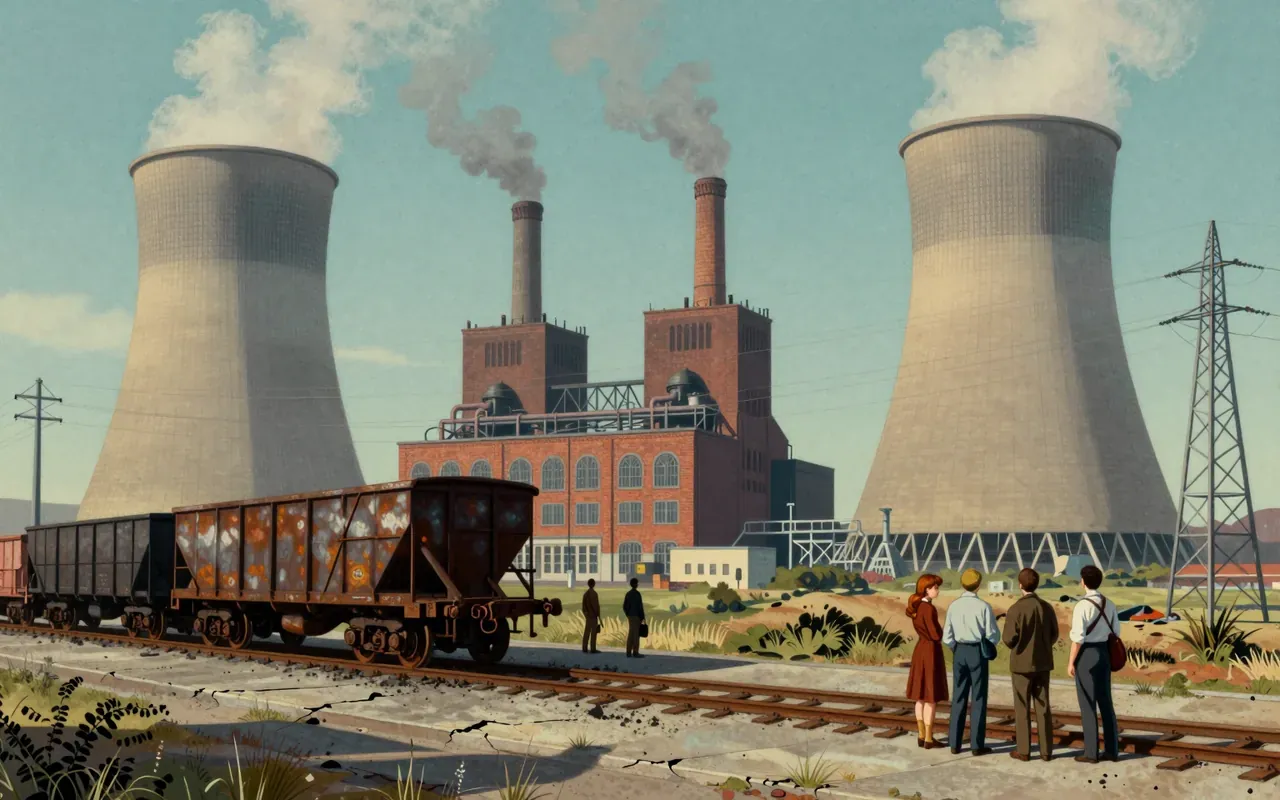
NTPC Limited is an Indian central Public Sector Undertaking owned by the Ministry of Power and the Government of India, founded in 1975 to generate electricity.
It was founded on 7 November 1975 by Indira Gandhi, as National Thermal Power Corporation Private Limited, and began work on its first thermal project at Singrauli in Uttar Pradesh in 1976. It began commercial operations in 1983 and earned profits of INR 4.5 crores in FY 1982–83. Its capacity passed 15,000 MW by the end of 1994 and 31,000 MW by the end of 2010. It was listed on the BSE and NSE on 5 November 2004; the Government of India holds 51.10% of its equity after a series of stake sales between 2004 and 2017. It is the largest power company in India, with an installed capacity of 80,154.50 MW.
How it actually makes money
NTPC makes money by generating electricity and selling it to State Electricity Boards in India.
It also takes consultancy and turnkey contracts covering engineering, project management, construction management, and operation and management of power plants. Its subsidiary NTPC Mining mined about 100 MMT of coal in the 2023–2024 financial year, from mines in Jharkhand, Odisha and Chhattisgarh. Assured power purchase agreements with state-owned distribution companies let NTPC sell its power at higher margins on the capital deployed.
What works
Its integrated fleet of 55 power stations — 24 coal, seven gas, two hydro, one wind, 11 solar — delivers consistent volume: 25 billion units per month. Its headquarters in New Delhi coordinate this centrally owned, centrally directed system.
What does not
It does not own or operate retail distribution networks. It does not sell directly to consumers. Its solar and wind assets (12 of 55 stations) remain marginal in output relative to coal and gas.
NTPC has also drawn criticism. A 2016 draft national electricity plan said India does not need additional coal-fired plants until 2027, beyond those already under construction, and the argument is made that NTPC’s coal expertise is becoming obsolete against wind and solar. NTPC is also said to have chosen to lobby the government to extend pollution-reduction deadlines rather than install emissions-cutting technology. Badarpur Thermal Power Station, 705 MW, was permanently closed from 15 October 2018 over pollution in the Delhi region. There has been opposition to land acquisition in rural and tribal areas, and to a 1,320 MW joint-venture plant in Bangladesh because of its closeness to the Sundarbans.
What to take from it
Efficiency — not just capacity — drives disproportionate impact: 16% of national installed capacity yields over 25% of generation because its plants run at 80.2% PLF versus a national average of 64.5%.
Is it worth your time
Yes — it is a rare, empirically grounded case study of scale, state ownership, and operational discipline in energy infrastructure.