businessbriefs
10:33in productionCh. 1 · Name Without Origin/ 10:33 · ceiling 15 min
Rise & fall

Daimler Company

A British carmaker that licensed its name, outlived its German namesake in the UK market, and dissolved in 2025 — not with a bang, but after decades of dormancy.

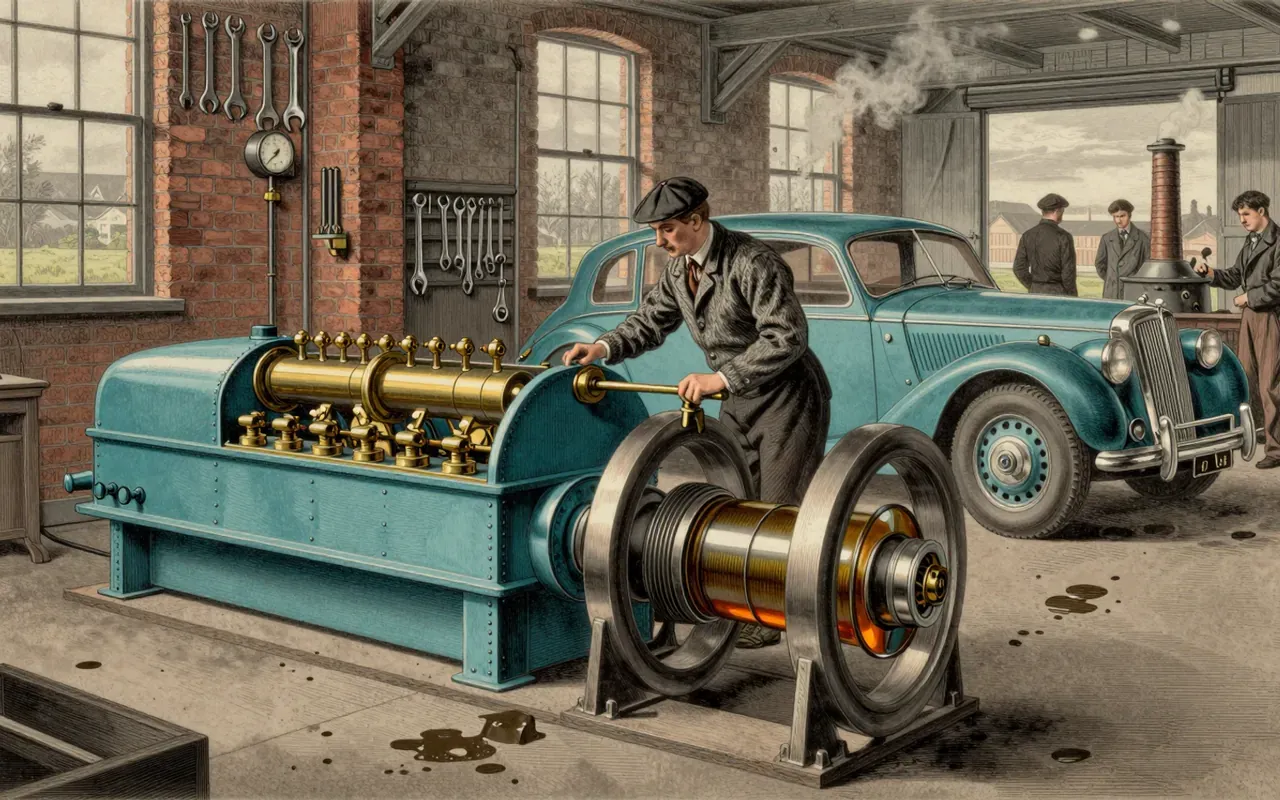
The Daimler Company was a British motor vehicle manufacturer founded in London in 1896, with manufacturing based in Coventry; it acquired rights to the Daimler name from Gottlieb Daimler and Daimler-Motoren-Gesellschaft; underwent reorganisation in 1904 and was purchased by BSA in 1910; absorbed the Lanchester Motor Company in 1933; held a Royal Warrant from 1902 until the 1950s; employed distinctive technologies including the Daimler-Knight engine, worm gear final drive, and patented fluid flywheel with Wilson preselector gearbox; and was dissolved on 23 December 2025 after years of dormancy.

Chapters & takeaways4
  1. 0:57
    Name Without Origin

    It was British by incorporation, Coventry by factory, and German by name — a licensed brand before licensing was a strategy.

  2. 2:49
    Crown and Conglomerate

    Royal patronage masked structural dependence: reorganisation in 1904, BSA acquisition in 1910, and Lanchester absorption in 1933 all preceded the loss of the Royal Warrant in the 1950s.

  3. 4:35
    Patented, Not Pioneered

    Its engineering signature — worm drive, Knight engine, fluid flywheel — was proprietary only in application, not invention.

  4. 6:38
    Dormant, Then Deleted

    Dissolution on 23 December 2025 was administrative closure, not market exit: the company had been dormant for years.

Worth your time?

Yes. Study the whole thing.

3.5/ 5
What works
  • licensing-as-a-business-model
  • technical-differentiation-without-IP-control
  • longevity-through-institutional-patronage
What does not
  • invention
  • founders
  • startups-and-venture
Study it if
  • historians-of-industrial-design
  • strategists-studying-licensed-brands
  • engineers-interested-in-transmission-systems
Skip it if
  • founders-seeking-inspiration
  • investors-assessing-growth-potential
The written brief1 min read

What the company or idea is

The Daimler Company was a British motor vehicle manufacturer founded in London in 1896, with Coventry-based manufacturing, that licensed the Daimler name from Gottlieb Daimler and Daimler-Motoren-Gesellschaft.

How it actually makes money

It made money selling luxury motor vehicles to the British elite and institutions, including the monarchy, funded by shareholder capital and later absorbed into BSA’s industrial conglomerate.

What works

Its Royal Warrant (1902–1950s), patented transmission systems, and integration of German-derived engine technology gave it a premium positioning and technical differentiation in the UK market for over four decades.

What does not

Its reliance on licensed German naming rights did not translate into sustained technological leadership or independence: it was reorganised in 1904, acquired by BSA in 1910, and lost its Royal Warrant to Rolls-Royce in the 1950s.

What to take from it

A company can build a durable brand and distinctive engineering identity — worm drive, fluid flywheel, Knight engines — without owning the foundational IP or controlling its own strategic destiny.

Is it worth your time

Yes — as a case study in licensed branding, technical divergence from parent IP, and the slow erosion of sovereign market position despite royal patronage and engineering distinction.

Same desk · Rise & fall4 of 34
9:32
Alfa RomeoNicola Romeo · 1910Alfa Romeo was not founded by Nicola Romeo. It was founded in 1910 as A.L.F.A. to acquire the assets of the failing Italian Darracq subsidiary. Romeo acquired it in 1915, took full ownership by 1918, renamed it in 1920, launched the first Alfa Romeo-branded car in 1921, won the inaugural 1925 World Manufacturers’ Championship, faced near-liquidation in 1927 due to poor investments, departed formally in 1928, and was taken over by the Italian state in 1933.
9:47
Merger of AOL and Time WarnerThe AOL–Time Warner merger was a $180 billion acquisition led by AOL — the smaller, less profitable company — based solely on its inflated market valuation. It closed on 11 January 2001 after regulatory approval but generated no meaningful synergy. It produced a $99 billion loss in 2003, triggered debt-driven divestitures, abandoned the AOL brand by late 2003, and culminated in AOL’s spin-off in December 2009. It stands as a definitive case of valuation masquerading as strategy.
9:47
Bombardier Inc.1942Bombardier Inc. is a Canadian manufacturer founded in 1942 in Valcourt by Joseph-Armand Bombardier to market his snowmobiles. It diversified into public transport vehicles and commercial jets during the 1970s and 1980s. Its turnover multiplied sixfold within six years at the end of the 1980s. At that time, it was North America's most important producer of railway vehicles, Canada's most important aerospace manufacturer, and the worldwide leading snowmobile maker. It is headquartered in Montreal.
11:47
CitroënAndré-Gustave Citroën · 1919Citroën was a French automobile manufacturer founded in 1919 in Saint-Ouen-sur-Seine. It pioneered four world-first production car technologies: front-wheel drive with unibody construction (1934), hydropneumatic self-levelling suspension (1954), modern disc brakes (1955), and swiveling headlights (1967). It also launched the 2CV in 1948, pioneering soft interconnected suspension. Citroën gained international reputation mass-producing armaments in WWI. It became the fourth-largest carmaker in the world in the 1930s, peaking in 1932 with the Traction Avant. Cost struggles aggravated by the Great Depression led to bankruptcy in 1934 and takeover by Michelin. Its double-chevron logo derived from André Citroën’s application of double helical gears, which he acquired after seeing them used by a Polish carpenter around 1900.
Up next in Business

Daniel Ek

· 9:49

Daniel Ek didn’t build a music company — he built a licensing wrapper for peer-to-peer infrastructure.

9:49