businessbriefs
Highest rated

All briefs

561 briefs · 5965 min · 289–384 on page 4 of 6
10:53

ArcelorMittal

Lakshmi Mittal · 2006

ArcelorMittal is the world’s second-largest steelmaker — a $33 billion hostile merger of Mittal Steel and Arcelor in 2007. It operates across mining, smelting, and recycling in 14 countries. In 2025, it produced 55.6 million tons of steel against 74.6 million tons of capacity — 53% in Europe, 40% in the Americas. It sources 72% of its iron ore and 91% of its coke internally. The Mittal family surrendered control to close the deal. It is not a technology company. It is not growing. It is a vertically integrated commodity producer whose scale is structural, not strategic.

11:50

Barrick Mining

Peter Munk · 1983

Barrick Mining is a gold-and-copper extraction company built through strategic acquisitions — not innovation, not discovery, not vertical integration. Its value lies in scale: 89 million ounces of gold in reserves, 3.91 million ounces produced in 2024, and a history of absorbing rivals like Placer Dome. But its governance fails where operations meet people: in 2008, Peter Munk personally silenced testimony about violence at Porgera. That gap — between reserve size and human accountability — is the real story.

9:30

Biedronka

Jerónimo Martins · 1997

Biedronka is a Polish discount supermarket chain owned by Portuguese group Jerónimo Martins. It operates 3,730 stores in Poland, employs 84,000 people, and accounts for approximately 70% of its parent’s sales. Its model relies on high-volume, low-margin sales of local and own-label goods — not differentiation or premium pricing. Its sole international move — one store in Slovakia, opened March 2025 — shows no evidence of traction. Its strength is also its risk: extreme geographic concentration in Poland.

9:48

Dell Technologies

A $67 billion merger that wasn’t about growth — it was about leverage, liquidity, and the cost of staying relevant in enterprise tech.
10:44

DiDi

Cheng Wei · 2012

DiDi is a Chinese mobility technology company founded in 2012 by Cheng Wei in Beijing. It offers ride-hailing, taxi dispatch, bike sharing, vehicle leasing, food delivery, automobile services, and electric vehicle development. It merged with Kuaidi Dache in 2015 and acquired Uber China in 2016. It listed on the NYSE in June 2021 and was delisted in June 2022 after a $1.2 billion fine and app removal over data security concerns.

12:06

ExxonMobil

Rockefeller Standard Oil · 1882

ExxonMobil is the largest U.S.-based oil and gas company. It was formed in 1999 by merging Exxon and Mobil. It is vertically integrated across oil and gas and its chemicals division. It produces about 3% of the world’s oil and 2% of global energy. In 2024, it emitted 610 Mt of CO2 — 1.58% of global emissions. It has faced widespread criticism and litigation over environmental incidents, including the 1989 Exxon Valdez oil spill, and for decades of climate change denial despite internal scientific accuracy.

9:39

FTSE Group

FTSE Group is not a data innovator — it is a licensing gatekeeper built on geography, incumbency, and quiet vertical integration.
11:38

Carrefour Brazil

Carrefour Brazil didn’t build Brazil’s biggest food retailer — it bought it, piece by piece, with no evidence that integration ever caught up to ambition.
10:36

E. H. Harriman

Harriman didn’t build a company — he built a command-and-control apparatus that worked only while he was alive.
11:57

JA Solar Holdings

A solar cell supplier that grew on Chinese subsidies — and now faces U.S. sanctions for military links.
13:52

K+S

Europe’s largest potash supplier is not too big to fall off the DAX.
10:12

Metro AG

Metro AG isn’t shrinking — it’s retreating with receipts.
11:09

NNPC

NNPC is not a commercial oil company — it is a state monopoly dressed in corporate clothing.
9:31

PSA Group

PSA Group was not a carmaker that grew — it was a consolidator that bought its way into relevance, then sold its independence.
9:27

Quandt

A family name, not a firm: the Quandts built wealth on industrial control — and silence on complicity.
9:12

Rimi Baltic

A Baltic grocer built on serial acquisitions, not organic growth — and sold five times in under thirty years.
10:20

Rosneft

Rosneft is not an energy company — it is a state-owned hydrocarbon extraction platform with climate costs baked into its balance sheet.
10:03

Sanofi

Sanofi-Aventis wasn’t built to invent new medicines — it was built to own the ones that already paid.
9:03

Sears

Sears didn’t fall to Amazon — it was dismantled by its own owner.
11:36

Shanghai Pharmaceuticals

Shanghai Pharmaceuticals is a distribution giant that bought its way to the top — not a drug developer that earned it.
10:39

Sunrise LLC

Sunrise is not a tech innovator—it’s a financial instrument wrapped in a telecom brand.
11:34

Surgutneftegas

Vladimir Bogdanov · 1993

Surgutneftegas is a Russian oil and gas company formed in 1994 by merging state-owned entities holding major Western Siberian reserves. It became a private company in 1993 and has operated under Vladimir Bogdanov’s leadership since. Its business model relies on control of upstream assets, state-granted infrastructure rights, and export relationships — not capital markets, innovation, or transparency.

10:15

TAP Air Portugal

A flag carrier that flies the language, not just the flag — and pays for it every time the state changes its mind.
10:19

Vinaphone

Vinaphone isn’t competing for customers — it’s managing a state asset inside a triopoly that leaves 2% of the market to everyone else.
11:53

Vodafone Germany

Vodafone Germany is not a German company — it is a London-dictated subsidiary that bought its way into the market, then scaled by bundling.
8:55

WeWork: Or the Making and Breaking of a $47 Billion Unicorn

WeWork Companies Inc. · 2021

WeWork: Or the Making and Breaking of a $47 Billion Unicorn is a 2021 documentary film. It follows Adam Neumann, founder and leader of the real estate company WeWork, who was forced out after a failed IPO. The film centres the collapse on that removal — not on debt, defaults, or unit economics.

9:37

Wind Tre

A merger built for scale, then reshaped by ownership — not customers.
10:48

Deutsche Börse

A state-anchored exchange monopoly that grows by absorbing risk, not inventing markets.
10:00

Coopérative U

A 130-year-old cooperative that owns no stores but runs 1,804 — by letting others do the work and pay for the name.
10:18

Telefónica

A monopoly born in 1924 didn’t become global by innovating—it licensed its name and inherited its constraints.
9:55

All Nippon Airways

Yoshida Shoji · 1952

ANA is Japan’s largest airline, rooted in a 1952 helicopter-and-aeroplane transport company. It launched Japan’s first postwar scheduled flight by a Japanese pilot in December 1953, added passenger service on the Osaka–Tokyo route in February 1954, and scaled into a dominant domestic carrier. Its growth reflects regulatory privilege more than competitive differentiation. No financials, pricing, or cost structure are disclosed in the source material.

8:42

Magnit

Sergei Galitskiy · 1994

Magnit is a Russian food retailer founded in 1994 in Krasnodar by Sergey Galitsky. It grew rapidly from a regional chain into a national leader, adopting the convenience store format in 2004 and expanding to 1,000 stores by 2000 and 1,500 by 2005—surpassing Pyaterochka in revenue. By 2010 it ranked among the world’s top 250 retailers (Deloitte), and in 2014 became Russia’s largest importer. Its growth continued with milestones including 10,000 stores (2015), entry into pharmacy and drogerie formats, and strategic acquisitions like Dixy (2021) and Samberi (2024). Ownership shifted significantly after 2018, with Marathon Group becoming the largest shareholder in November 2021. Management transitioned from Galitsky to external CEOs starting in 2018, and the company pursued vertical integration via in-house production facilities and distribution infrastructure.

10:37

OMV

Hans Susta · 1956

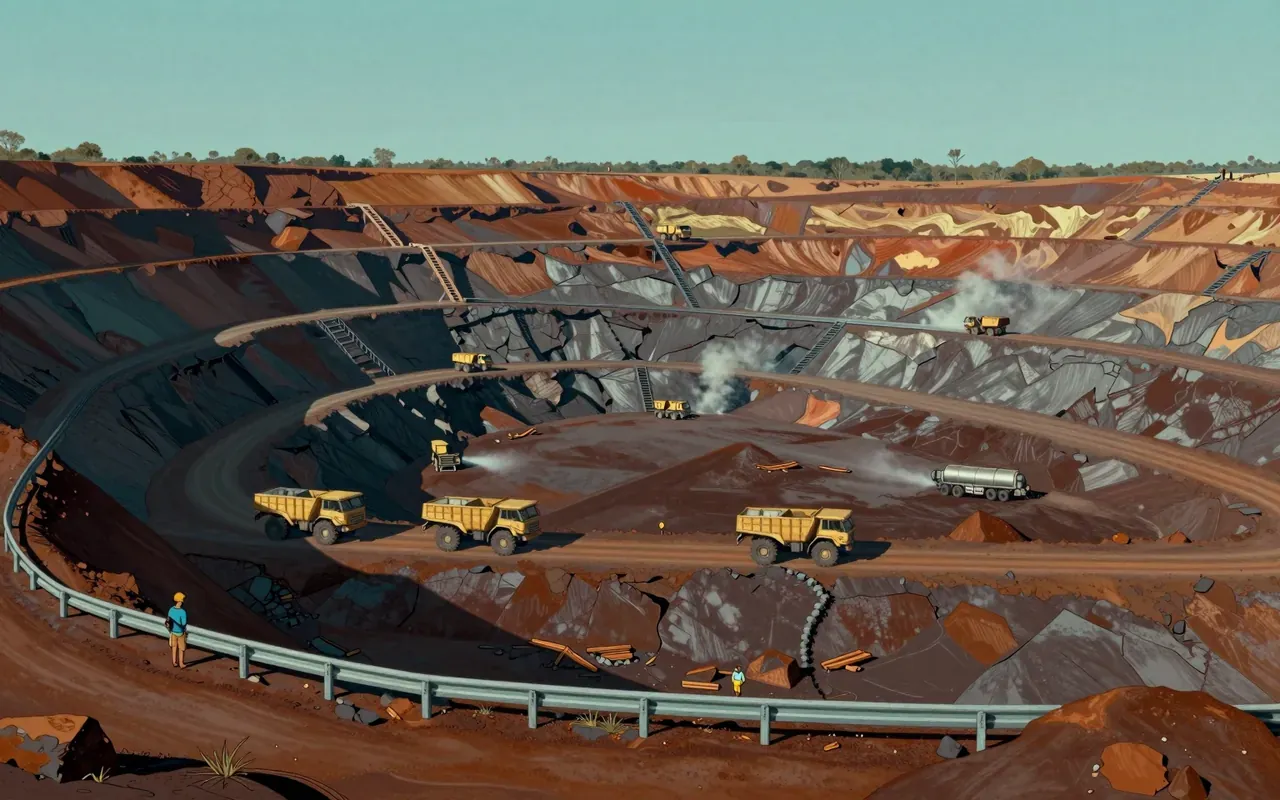
OMV is Austria’s major integrated oil- and gas company, founded in 1956 as the successor to the Soviet Mineral Oil Administration in occupied Austria. It makes money from refining crude oil at Schwechat, importing oil via the Adria–Vienna Pipeline from Trieste, selling natural gas supplied under contract with the Soviet Union, and operating transit infrastructure like the Trans-Austria Gas Pipeline. Its vertical integration worked: Schwechat refinery (1960), Soviet gas supply (1968), Adria–Vienna Pipeline (1970), and Trans-Austria Gas Pipeline (1974) formed a self-reinforcing system that locked in Austria’s role as a Central European energy node. OMV’s foundational model does not address decarbonisation, renewable generation, or energy storage. Its 1956–1974 expansion relied entirely on fossil fuel import, processing, and transit — with no indication of diversification beyond that scope in the source material. OMV shows how a national energy company can be built not through innovation or market creation, but through sequential infrastructure capture: refinery, pipeline, gas contract, transit corridor — each reinforcing the others’ value. Yes — as a case study in state-origined energy integration, infrastructure-led regional positioning, and Cold War-era resource diplomacy. Not as a model for modern energy transition strategy.

11:21

Peloton Interactive

John Foley · 2012

Peloton Interactive is an American exercise equipment and media company founded in January 2012 in New York City. It sells Internet-connected stationary bicycles, treadmills, and rowers equipped with touchscreens that stream live and on-demand fitness classes through a subscription service. Built-in sensors track metrics such as power output, providing real-time performance feedback and leaderboard rankings. Peloton charges $49.99 monthly for equipment-based access and $12.99 for app-only access. Its first bike sold on Kickstarter in 2013 at an early-bird price of $1,500; its first commercial Internet-connected bike launched in 2014. The company faced safety recalls (Tread+ in 2021, Bike PL01 in 2023), leadership changes (Foley stepped down as CEO in 2022, McCarthy resigned in 2024, Stern became CEO in 2025), and a sharp valuation decline—from $8.1 billion at IPO in 2019 to ~$1.3 billion by June 2024.

10:46

Rio Tinto (corporation)

Charles Du Cane · 1873

Rio Tinto is a British–Australian multinational mining company founded in 1873, headquartered in London and Melbourne, and operating globally as a major producer of copper, iron ore, aluminium, and lithium. Its history includes early dominance in Spanish copper production, strategic diversification after 1925, pivotal mergers — notably with Consolidated Zinc in 1962 and Alcan in 2007 — and extensive international expansion. The company is dual-listed on the London and Australian stock exchanges and has faced recurring criticism over environmental damage, corruption allegations (especially in Guinea), human rights concerns (e.g., Juukan Gorge), workplace culture issues, and legal challenges related to bribery and espionage. Its operational structure spans four product-based business units and numerous subsidiaries across six continents, with core assets concentrated in Australia and Canada.

11:03

Singapore Airlines

Tan Chin Tuan · 1964

Singapore Airlines is a state-aligned, operationally diversified aviation group—not a founder-led startup. Its value lies in infrastructure leverage, not narrative.

11:03

Vedanta Limited

Anil Agarwal · 1954

Vedanta Limited is a mining and metals company built on acquisitions, offshore holding structures, and regulatory navigation—not on technological differentiation or market creation.

11:12

Ahold Delhaize

A Dutch-Belgian holding company whose identity is anchored in Europe but whose revenue is anchored in America.
11:40

Baowu

Baowu isn’t a company that grew — it was assigned volume.
11:17

Bonduelle

Bonduelle didn’t build a vegetable empire—it built a preservation empire, one can, freezer, and salad kit at a time.
9:48

Carrefour

Marcel Fournier · 1959

Carrefour is a foundational case in retail format design — not technology, not branding, not finance — but physical integration, location logic, and incremental scaling.

9:57

Coop (Sweden)

A co-operative built to resist corporate power spent a decade losing billions — then rebranded in 2001 and kept losing.
11:18

Corteva

Corteva is not a startup—it’s DowDuPont’s agriculture division, spun off to sell more chemicals while pretending to pivot away from them.
9:14

Jack Dorsey

Dorsey built a reliable machine that refused to charge—until investors insisted.
10:25

E-Plus

Third place wasn’t enough: E-Plus had 25 million customers, but no defensible spectrum position.
10:46

Emirates (airline)

Mohammad Al Maktoum · 1985

Emirates is a state-owned UAE flag carrier founded in 1985 after Gulf Air reduced Dubai services. It operates over 3,600 weekly flights from Dubai International Airport’s Terminal 3, serves 150+ cities across six continents, and ranks third globally by passenger volume and second by freight volume. Its ownership lies with Dubai’s Investment Corporation of Dubai, and its cargo arm is Emirates SkyCargo. It is not part of any global airline alliance.

11:37

FrieslandCampina

A royal cooperative built on mergers, not milk — and approved by Brussels only after it agreed to cut itself apart.
10:14

Gazprom Neft

A state-engineered oil company disguised as a startup — founded with ready-made assets, not a business plan.
11:42

Globe Telecom

Globe Telecom isn’t defined by its 5G rollout—it’s defined by who owns it and who pays for it.
9:08

Auchan

Auchan did not invent retail — it alphabetised its way into dominance.
10:01

Bel Group

A 159-year-old cheese business didn’t scale with disruption—it scaled with Swiss processing, a cartoon cow, and a UK subsidiary in 1929.
12:18

ICA Gruppen

A retailer-owned co-op that became a bank-owning, pharmacy-running, real-estate-holding conglomerate — without ever leaving Sweden’s grocery aisles.
12:24

Itochu

A sogo shosha is not a conglomerate — it’s a trading nervous system with balance-sheet muscle.
10:56

ITV plc

A merger designed to dominate UK TV instead built too many studios and closed too many offices — proving scale without synergy is just overhead with a press release.
12:39

Kaufland

Dieter Schwarz · 1968

Kaufland is a German hypermarket chain founded in 1984 in Neckarsulm, part of the Schwarz Gruppe, and developed by Dieter Schwarz as a full-range alternative to Lidl’s discount format. It makes money by selling groceries and general merchandise from hypermarkets averaging over 10,000 m², operating under vertical integration — running in-house bakeries since 1994, meat processing facilities, and organic product lines launched in November 2018. Its strategy of acquiring competitor assets (e.g., 12 famila stores and a Cash-&-Carry-Markt in January 2010) and rebranding existing Handelshof locations gave it rapid scale. It dominates eastern Germany today — a result of opening its first East German store in Meißen in 1990, immediately after reunification. Its Australian expansion failed within a year (2019–2020), exposing limits to its model outside culturally and logistically aligned markets. It does not operate outside Europe. The gap between Kaufland’s self-presentation as a sustainability- and quality-driven retailer (e.g., 2021 decarbonisation strategy, organic range) and its operational reality — acquisitions, rebranding, and regional dominance built on post-reunification timing and antitrust-cleared takeovers — reveals how legacy retail power consolidates without innovation.

11:21

Lactalis

Lactalis didn’t build a dairy empire — it bought one, piece by piece, while its factories kept poisoning babies.
9:07

Lenta (retail)

A Russian hypermarket chain built on Soviet-era infrastructure, scaled with Western capital, and run without public financials.
9:40

Robert Maxwell

Robert Maxwell didn’t build a publishing empire — he built a financial shell around one.
12:57

Meituan

Wang Xing · 2010

Meituan is a Chinese technology company headquartered in Beijing that operates a platform for local services, including on‑demand food delivery, in‑store services, consumer reviews under Dazhong Dianping, hotel and travel bookings, and instant retail. It monetises through fees on its platform, taking a commission on food delivery orders and charging merchants for booking and in‑store services. Meituan’s rapid user growth is driven by its extensive coverage of local services, its integration of food delivery, in‑store services, and hotel bookings creating a one‑stop shop, and its large merchant base of 14.5 million active merchants providing network effects. Meituan faces regulatory scrutiny in China, its 2021 post by Wang Xing triggered a 7.1 % share plunge and anti‑monopoly investigation, and the company has been subject to scrutiny by Beijing Municipal Human Resources and Social Security Bureau. Meituan demonstrates the power of a diversified local‑services platform, its ability to scale across cities and internationally shows the importance of network effects, and its regulatory challenges highlight the need for compliance awareness. Meituan offers a case study in rapid scaling and diversification, but its regulatory risks caution investors.

10:01

MOL (company)

MOL is not a disruptor—it’s a post-state apparatus that learned to trade, refine, and retreat when necessary.
10:24

Morrisons

William Morrison · 1899

Morrisons is a UK supermarket chain founded in 1899 as an egg and butter stall in Rawson Market, Bradford. It grew regionally until the 2004 Safeway acquisition gave it national reach across Great Britain and one store in Gibraltar. As of 2021, it operated 497 stores, employed 110,000 people, and served ~11 million customers weekly. It was listed on the London Stock Exchange until its October 2021 acquisition by Clayton, Dubilier & Rice. Since then, it has struggled financially and fallen to fifth place in UK market share (8.6%), overtaken by Aldi in September 2022.

10:05

Netto (Denmark)

Netto didn’t disrupt discount retail — it absorbed it, funded by Salling Group while keeping its own books opaque.
10:44

Nutrien

A merger sold as a fix for low fertilizer prices delivered cost cuts — but no proof it could raise prices.
10:13

Telefónica Germany

A German telco that trades under a British brand, answers to Spanish shareholders, and owns more cell towers than any rival — but no longer answers to German investors.
11:02

Orange Group

Orange didn’t build its brand — it bought it, then renamed itself after it.
11:20

Orlen

A state-directed oil giant masquerading as a multinational — its scale is real, its independence is not.
10:19

PLDT

PLDT isn’t a tech disruptor — it’s a legal and infrastructural vessel that carried Philippine telecom across empire, war and independence.
10:23

RTL Group

Bertelsmann · 2000

RTL Group is a broadcast-first European media operator built through merger, not innovation. Its structure reflects regulatory fragmentation, not technological ambition.

10:59

SFR

SFR built scale without building infrastructure — a telecom that wins by renting, not owning.
10:51

Singtel

Singtel isn’t a tech innovator — it’s a state-backed infrastructure gatekeeper that profits from scarcity, not speed.
11:07

Spark New Zealand

Spark isn’t a digital disruptor — it’s a privatised utility that outsourced its wires and kept the brand.
10:42

Swisscom

A state-owned telecom that kept control by changing its name — not its structure.
9:49

Syngenta

Swiss chemical-agricultural · 2000

Syngenta is a global agricultural technology company headquartered in Basel, Switzerland, operating primarily in crop protection and seeds for farmers. It was founded in 2000 by the merger of the agrichemical businesses of Novartis and AstraZeneca. In 2004, Syngenta Seeds purchased Garst and Golden Harvest Seeds. In February 2016, ChemChina offered to purchase Syngenta for $43 billion, a deal Syngenta unanimously recommended to shareholders. In April 2017, U.S. and European antitrust authorities approved ChemChina's acquisition of Syngenta. To secure regulatory approval, ChemChina agreed to divest pesticide production of paraquat, abamectin, and chlorothalonil.

10:07

Tatneft

A Soviet oil giant built on one field, one republic, and one decree—and still running on that logic sixty years later.
9:08

Tele2

Tele2 isn’t built on disruption — it’s built on divestment, rebranding, and regulatory arbitrage.
10:41

TIM Group

A state monopoly reborn as a binational telco—with all the strategic rigidity that implies.
9:56

Telemadrid

A public broadcaster that swapped editorial independence for political utility—and paid for it in audience, credibility, and legality.
10:22

Telkom Indonesia

A colonial telegraph line reborn as Indonesia’s largest telecom by subscriber count—without revealing how much it earns, spends, or keeps.
11:00

Telstra

Telstra isn’t a telecom company that went private — it’s a government department that kept the billing system.
10:41

Tengelmann Group

A 157-year-old family firm stopped selling coffee and started selling equity — but never tells you how much it earns from either.
10:50

Three UK

Three UK proved that regulatory compliance can substitute for scale — but only until the network shuts down.
11:02

TPG Telecom

A telco built on access, not ownership—and listed on the ASX only after winning a court battle against competition regulators.
12:35

True Corporation

A merger built on infrastructure ownership, not integration — where equal partnership papers over unequal control.
9:36

Vivendi

Jean-Marie Messier · 1987

Vivendi is a French investment company headquartered in Paris, founded in 1853 as Compagnie générale des eaux. It evolved through mergers and diversification — notably becoming Vivendi Universal in 2000 via merger with Groupe Canal+ and Seagram — before reverting to Vivendi in 2006. From 2021, it executed a strategic spin-off of its core assets, culminating in 2024 with the separation of Canal+, Havas, and Louis Hachette Group, transforming itself into a focused investment company holding stakes in media and entertainment firms.

11:10

Vodafone Australia

A national telecom brand that never owned its fixed infrastructure—and survived only by merging out of independence.
9:55

Vodafone

Vodafone is not a tech innovator—it’s a licensing and balance-sheet play on mobile ubiquity.
9:32

Walton Family Foundation

A private foundation funded by Walmart wealth isn’t civic infrastructure—it’s inherited influence made permanent.