businessbriefs
8:55in productionCh. 1 · What It Was/ 8:55 · ceiling 15 min
Rise & fall

WeWork: Or the Making and Breaking of a $47 Billion Unicorn

A real estate company’s collapse wasn’t caused by market conditions — it was triggered by its founder’s removal after an IPO failed.

WeWork: Or the Making and Breaking of a $47 Billion Unicorn is a 2021 documentary film. It follows Adam Neumann, founder and leader of the real estate company WeWork, who was forced out after a failed IPO. The film centres the collapse on that removal — not on debt, defaults, or unit economics.

Chapters & takeaways4
  1. 0:47
    What It Was

    WeWork was a real estate company — not a tech platform — and Adam Neumann ran it.

  2. 2:25
    What Ended It

    Neumann’s exit followed a failed IPO — not fraud charges, regulatory action, or bankruptcy.

  3. 3:59
    What It Is

    This is a 2021 documentary film — not a forensic audit or investor report.

  4. 5:09
    How It Defines Collapse

    The film frames collapse as leadership removal — not balance-sheet failure or lease default.

Worth your time?

Yes. Study the whole thing.

3.5/ 5
What works
  • establishes the sequence: valuation → IPO attempt → leadership removal
  • names WeWork’s core activity — real estate
  • treats Neumann as central actor, not mythic figure
What does not
  • explain revenue sources beyond leasing
  • cite any financial metric
  • name a single investor, landlord, or tenant
  • describe WeWork’s cost structure
Study it if
  • readers assessing how narratives shape corporate perception
  • those comparing documentary framing to SEC filings or earnings reports
Skip it if
  • investors seeking due diligence material
  • operators benchmarking flexible workspace models
  • students studying capital allocation or real estate finance
The written brief1 min read

What the company or idea is

WeWork is a real estate company run by Adam Neumann.

How it actually makes money

WeWork made money by leasing commercial real estate, renovating it, and subleasing it to businesses and individuals on flexible terms.

What works

It establishes a clear causal arc: Neumann’s leadership, the $47 billion valuation, the failed IPO, and his forced exit — all as documented events within the film’s scope.

What does not

The documentary does not explain how WeWork’s unit economics failed, how much it cost to fit out spaces, what occupancy rates were, or who bore the losses when leases expired or tenants left.

What to take from it

The gap between WeWork’s self-presentation as a tech-enabled community platform and its reality as a leveraged real estate operator is central — but the documentary treats that gap as biography, not business model.

Is it worth your time

Yes, if you want a tightly framed account of how leadership, valuation logic, and IPO readiness collided in one company — but it offers no financial data, operational detail, or third-party analysis beyond its narrative frame.
Same desk · Rise & fall4 of 52
11:54
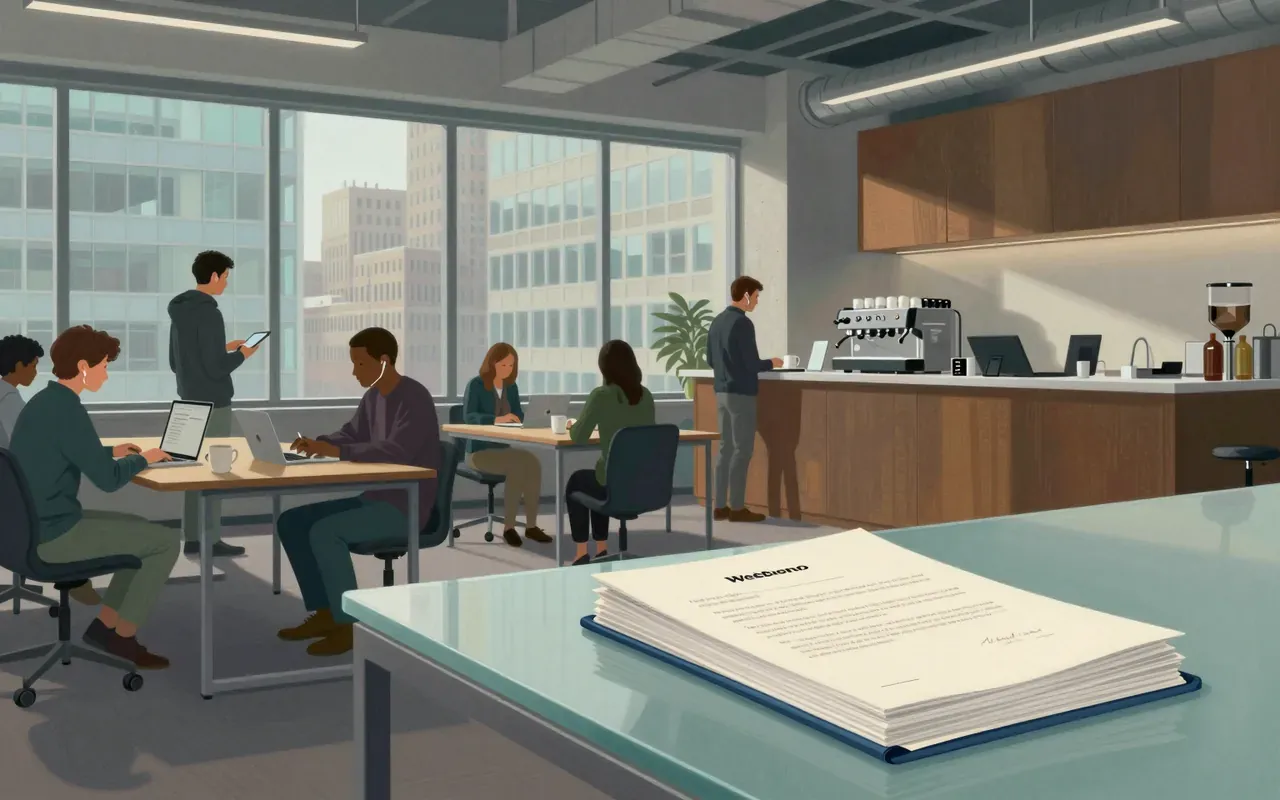
WeWorkAdam Neumann · 2010WeWork was a shared-workspace provider founded in 2010 by Adam Neumann and Miguel McKelvey, operating physical and virtual coworking spaces in ~600 buildings across 125 cities. It made money by leasing commercial real estate long-term, then subleasing it short-term to members — a classic mismatch of lease duration and revenue risk. The brand resonated and the format met demand for flexible office space — but only at small scale, with tight lease control and disciplined expansion. The business model failed under scale: fixed long-term lease liabilities could not be offset by volatile, short-term membership revenue — especially when growth relied on subsidising occupancy with investor capital. Neumann’s practice of buying buildings and leasing them back to WeWork exposed a governance vacuum — incompatible with public markets. Bankruptcy in 2023 and restructuring in 2024 confirmed the model collapsed under its own lease obligations — not market timing. A company can raise $12.8 billion and peak at a $47 billion valuation without ever proving unit economics — because investors funded narrative, not margins. Yes — as a case study in how governance failures, misaligned incentives, and financial engineering can override operational reality.
7:56
Blockbuster (retailer)1985Blockbuster collapsed because it prioritised late fees and franchise royalties over adapting its distribution model — even as Netflix mailed DVDs, Redbox deployed kiosks, and video-on-demand services scaled. Its $900 million debt burden and leadership failures turned competitive pressure into terminal failure. By 2014, all corporate-owned US stores were closed. Only one franchised location survived — in Bend, Oregon — until at least 2019.
9:16
Blockbuster (retailer)David Cook · 1985Blockbuster’s story is not about disruption — it is about refusal. It controlled distribution, not demand. It priced convenience as punishment. Its collapse was mechanical, not mystical.
9:03
Sears1892Sears collapsed because its owner chose financial extraction over retail renewal.
Up next in Business

Wind Tre

2016 · 9:37

A merger built for scale, then reshaped by ownership — not customers.

9:37