businessbriefs
12:06in productionCh. 1 · Origin by merger/ 12:06 · ceiling 15 min
Companies · Scandals

ExxonMobil

A single company emits 1.58% of the world’s CO2 — and calls itself an energy transition player.

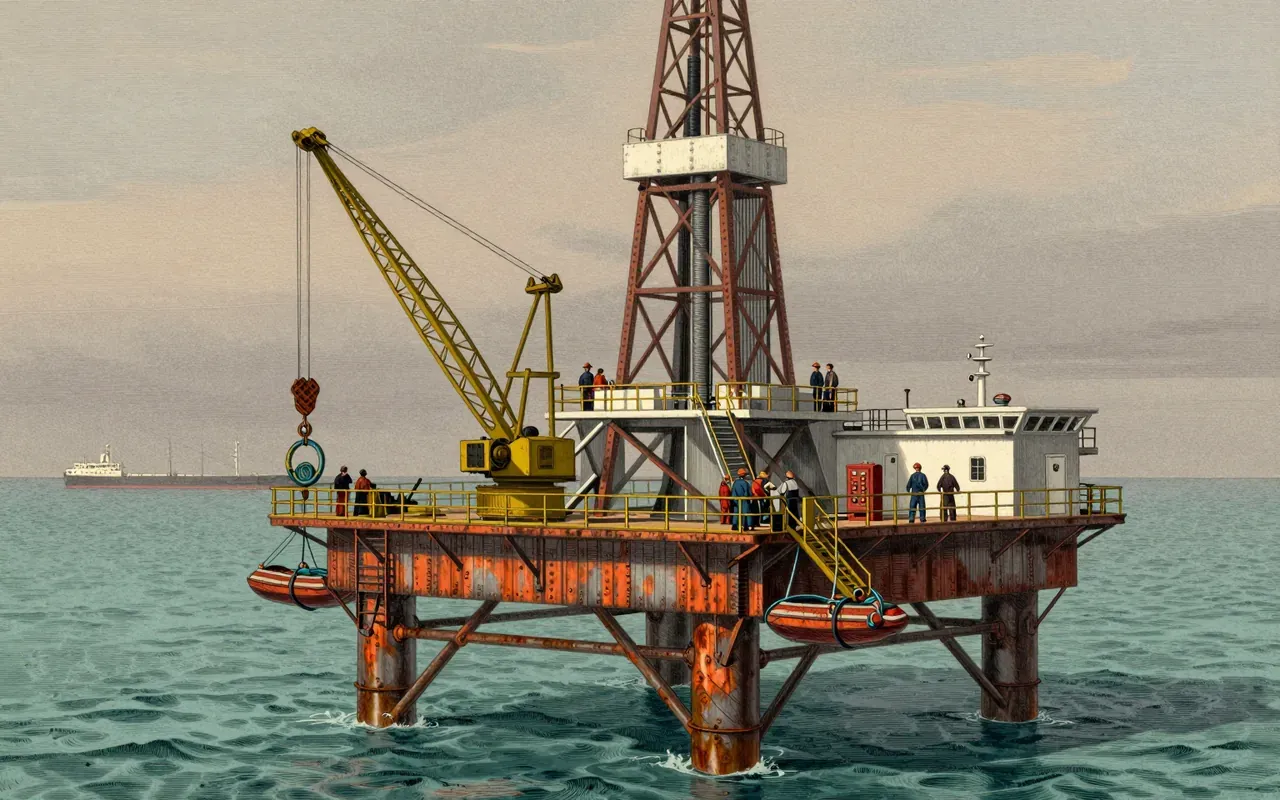
ExxonMobil is the largest U.S.-based oil and gas company. It was formed in 1999 by merging Exxon and Mobil. It is vertically integrated across oil and gas and its chemicals division. It produces about 3% of the world’s oil and 2% of global energy. In 2024, it emitted 610 Mt of CO2 — 1.58% of global emissions. It has faced widespread criticism and litigation over environmental incidents, including the 1989 Exxon Valdez oil spill, and for decades of climate change denial despite internal scientific accuracy.

Chapters & takeaways6
  1. 0:57
    Origin by merger

    ExxonMobil was created in 1999 — not by innovation or disruption, but by merger.

  2. 2:19
    Vertical integration as profit architecture

    It owns every stage of oil and gas production — and its chemicals division — not to diversify, but to lock in margins.

  3. 3:32
    Emissions at scale

    In 2024, one company accounted for 1.58% of global CO2 emissions — more than most countries.

  4. 5:04
    Litigation as operating history

    It has been sued repeatedly — not for ambition or error, but for denial and damage.

  5. 6:23
    Size as strategy

    It is the largest U.S. oil and gas company — and produces 3% of the world’s oil — by design, not accident.

  6. 7:46
    Transition as addition, not substitution

    Its low-carbon projects exist alongside, not instead of, its fossil fuel operations.

Worth your time?

Yes. Study the whole thing.

3.5/ 5
What works
  • scale
  • integration
  • litigation resilience
What does not
  • transition
Study it if
  • policy-makers
  • investors
  • climate analysts
Skip it if
  • sustainability marketers
  • ESG fund managers
The written brief1 min read

What the company or idea is

ExxonMobil is an American multinational oil and gas corporation formed in 1999 by the merger of Exxon and Mobil, and the largest U.S.-based oil and gas company.

How it actually makes money

ExxonMobil makes money by extracting, refining, and selling oil and gas — producing about 3% of the world’s oil and 2% of global energy — and by manufacturing chemicals including plastics and synthetic rubber.

What works

Its vertical integration across oil and gas and its chemicals division works: it controls upstream, midstream, downstream, and petrochemical value chains, enabling consistent revenue from hydrocarbons and derived products.

What does not

Its low-carbon initiatives — carbon capture, hydrogen, lithium mining — do not offset its core business: in 2024 it emitted 610 Mt of CO2, 1.58% of global emissions, while continuing large-scale fossil fuel operations.

What to take from it

The gap between ExxonMobil’s self-presentation as an energy transition participant and its actual emissions profile — 1.58% of global CO2 from a single corporate entity — reveals how scale distorts climate accountability.

Is it worth your time

Yes, if you need to understand how a vertically integrated fossil fuel giant operates amid climate accountability, litigation, and token low-carbon expansion — not as a case study in transition, but as a benchmark of scale, inertia, and emissions responsibility.
Same desk · Companies4 of 315
10:34
Airbus1998Airbus in 1998 was a consortium — not a company — sustained by national governments and bound by treaty, not equity. Its money came from airliner sales, but its structure reflected diplomacy more than business logic. It worked because Europe prioritised strategic autonomy over market efficiency. It failed as a unified enterprise until it abandoned the consortium model entirely. The lesson is structural: scale in aerospace is political first, economic second.
12:10
Anglo American plc1917Anglo American plc is a British multinational mining company headquartered in London, founded in 1917 in Johannesburg. It is the world's largest platinum producer (40% of global output) and owns 85% of De Beers. It merged with Minorco in 1999 to become Anglo American plc, and with Teck Resources in 2025 to form Anglo Teck. Between 2015 and 2015, it cut 138,000 jobs. In early 2015, it reported a $3 billion loss. It withdrew from the Pebble Mine in 2013 and partnered with Engie and First Mode in 2019 to develop a hydrogen-powered haul truck.
10:53
ArcelorMittalLakshmi Mittal · 2006ArcelorMittal is the world’s second-largest steelmaker — a $33 billion hostile merger of Mittal Steel and Arcelor in 2007. It operates across mining, smelting, and recycling in 14 countries. In 2025, it produced 55.6 million tons of steel against 74.6 million tons of capacity — 53% in Europe, 40% in the Americas. It sources 72% of its iron ore and 91% of its coke internally. The Mittal family surrendered control to close the deal. It is not a technology company. It is not growing. It is a vertically integrated commodity producer whose scale is structural, not strategic.
11:50
Barrick MiningPeter Munk · 1983Barrick Mining is a gold-and-copper extraction company built through strategic acquisitions — not innovation, not discovery, not vertical integration. Its value lies in scale: 89 million ounces of gold in reserves, 3.91 million ounces produced in 2024, and a history of absorbing rivals like Placer Dome. But its governance fails where operations meet people: in 2008, Peter Munk personally silenced testimony about violence at Porgera. That gap — between reserve size and human accountability — is the real story.
Up next in Business

Ferrari

Enzo Ferrari · 1947 · 11:18

A racing team with a car business attached: road-car revenue funds Scuderia Ferrari, and the racing sets the price and the engineering.

11:18