businessbriefs
11:09in productionCh. 1 · What kind of company is it?/ 11:09 · ceiling 15 min
Companies

NNPC

1977

NNPC is not a commercial oil company — it is a state monopoly dressed in corporate clothing.

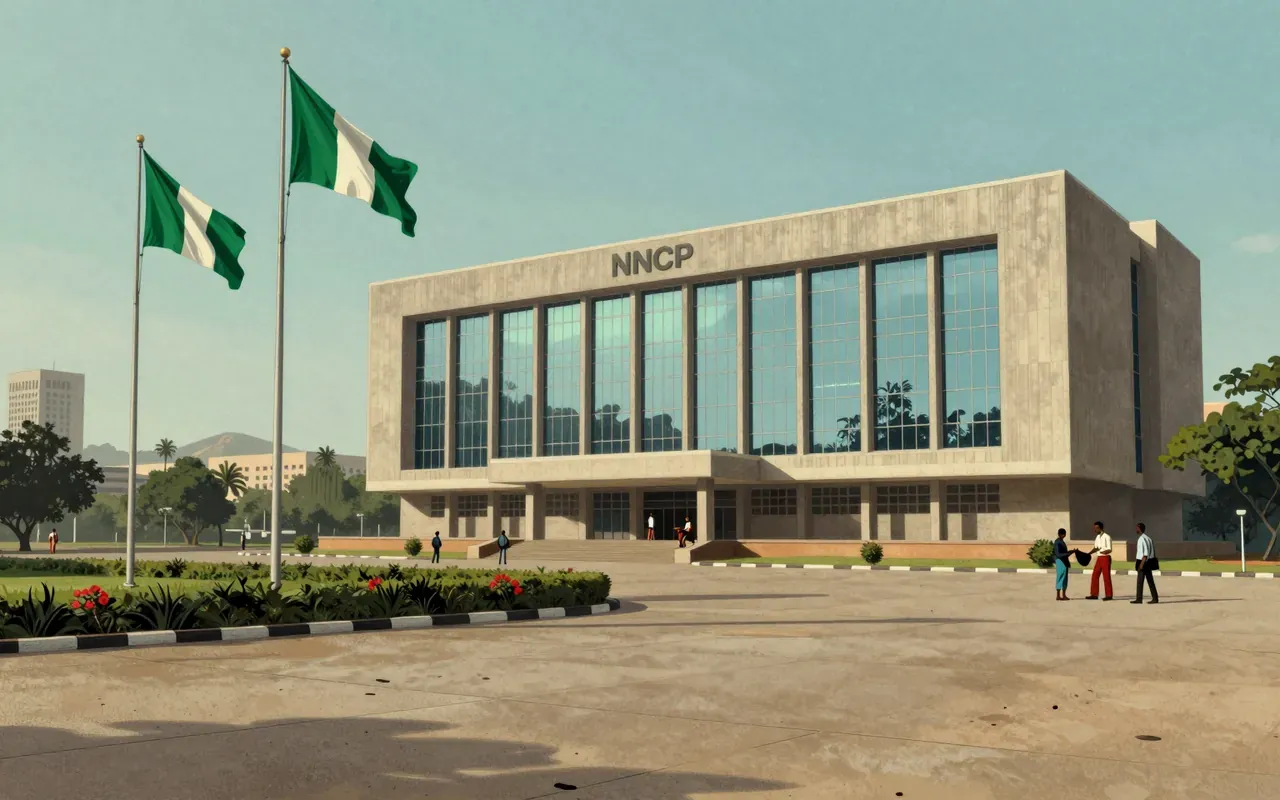
NNPC Limited is Nigeria’s state-owned oil monopoly, restructured in July 2022 as a limited liability company to project commercial credibility. It controls all petroleum operations in Nigeria, manages joint ventures with Shell, ExxonMobil, TotalEnergies, Chevron and others, and holds $153B in assets — making it Africa’s largest national oil company. Its claim to operate commercially post–2021 Petroleum Industry Act is undermined by its statutory monopoly, lack of competition, and continued role as the federal government’s exclusive petroleum agent. Its first DES LNG cargo to Japan in June 2024 marks an export milestone but reveals nothing about actual market access or governance reform.

Chapters & takeaways4
  1. 1:11
    What kind of company is it?

    NNPC is a fully state-owned limited liability company, not a privatised or partially owned entity.

  2. 2:33
    Where does its power come from?

    It holds a legal monopoly over Nigeria’s petroleum industry and manages all federal joint ventures with foreign oil majors.

  3. 4:12
    How big is it — and what does 'commercial' really mean?

    With $153B in assets, it is Africa’s largest NOC — but operates commercially only in law, not in practice.

  4. 6:14
    What does its recent activity reveal?

    Its first DES LNG cargo to Japan signals export ambition, but does not prove capital market access or operational independence.

Worth your time?

Yes. Study the whole thing.

3.5/ 5
What works
  • monopoly scale
  • statutory control of joint ventures
  • $153B asset base
  • first LNG export execution
What does not
  • NNPC is not a commercial oil company — it is a state monopoly dressed in corporate clothing.
Study it if
  • analysts of state capitalism
  • energy policy researchers
  • investors assessing African sovereign commodity entities
Skip it if
  • startups seeking disruption playbooks
  • founders looking for growth models
  • consumers evaluating brand alternatives
The written brief1 min read

What the company or idea is

NNPC Limited is a fully government-owned Nigerian oil company, legally transformed into a limited liability company in July 2022.

How it actually makes money

NNPC makes money by operating across upstream, midstream, and downstream petroleum sectors — extracting, transporting, refining, and selling oil and gas — as the sole licensed operator in Nigeria’s petroleum industry.

What works

Its $153B asset base, statutory monopoly, and management of long-standing joint ventures with Shell, ExxonMobil, TotalEnergies, Chevron, and others give it scale, infrastructure access, and revenue stability.

What does not

It does not yet operate independently of government influence: its monopoly status, statutory mandate to manage joint ventures with foreign multinationals, and role as the federal government’s sole petroleum licensee contradict claims of full commercial autonomy.

What to take from it

NNPC shows how legal form change — from corporation to limited liability company — is used to signal market readiness without altering core state control or competitive structure.

Is it worth your time

Yes, if you are assessing how state-owned energy incumbents restructure to operate commercially while retaining monopoly control and sovereign alignment.
Same desk · Companies4 of 315
10:34
Airbus1998Airbus in 1998 was a consortium — not a company — sustained by national governments and bound by treaty, not equity. Its money came from airliner sales, but its structure reflected diplomacy more than business logic. It worked because Europe prioritised strategic autonomy over market efficiency. It failed as a unified enterprise until it abandoned the consortium model entirely. The lesson is structural: scale in aerospace is political first, economic second.
12:10
Anglo American plc1917Anglo American plc is a British multinational mining company headquartered in London, founded in 1917 in Johannesburg. It is the world's largest platinum producer (40% of global output) and owns 85% of De Beers. It merged with Minorco in 1999 to become Anglo American plc, and with Teck Resources in 2025 to form Anglo Teck. Between 2015 and 2015, it cut 138,000 jobs. In early 2015, it reported a $3 billion loss. It withdrew from the Pebble Mine in 2013 and partnered with Engie and First Mode in 2019 to develop a hydrogen-powered haul truck.
10:53
ArcelorMittalLakshmi Mittal · 2006ArcelorMittal is the world’s second-largest steelmaker — a $33 billion hostile merger of Mittal Steel and Arcelor in 2007. It operates across mining, smelting, and recycling in 14 countries. In 2025, it produced 55.6 million tons of steel against 74.6 million tons of capacity — 53% in Europe, 40% in the Americas. It sources 72% of its iron ore and 91% of its coke internally. The Mittal family surrendered control to close the deal. It is not a technology company. It is not growing. It is a vertically integrated commodity producer whose scale is structural, not strategic.
11:50
Barrick MiningPeter Munk · 1983Barrick Mining is a gold-and-copper extraction company built through strategic acquisitions — not innovation, not discovery, not vertical integration. Its value lies in scale: 89 million ounces of gold in reserves, 3.91 million ounces produced in 2024, and a history of absorbing rivals like Placer Dome. But its governance fails where operations meet people: in 2008, Peter Munk personally silenced testimony about violence at Porgera. That gap — between reserve size and human accountability — is the real story.
Up next in Business

PSA Group

1976 · 9:31

PSA Group was not a carmaker that grew — it was a consolidator that bought its way into relevance, then sold its independence.

9:31