businessbriefs
10:44in productionCh. 1 · Origin: Taxi-hailing, not tech/ 10:44 · ceiling 15 min
Rise & fall

DiDi

DiDi didn’t fail because it was too big — it failed because it was too visible to Beijing.

DiDi is a Chinese mobility technology company founded in 2012 by Cheng Wei in Beijing. It offers ride-hailing, taxi dispatch, bike sharing, vehicle leasing, food delivery, automobile services, and electric vehicle development. It merged with Kuaidi Dache in 2015 and acquired Uber China in 2016. It listed on the NYSE in June 2021 and was delisted in June 2022 after a $1.2 billion fine and app removal over data security concerns.

Chapters & takeaways5
  1. 1:05
    Origin: Taxi-hailing, not tech

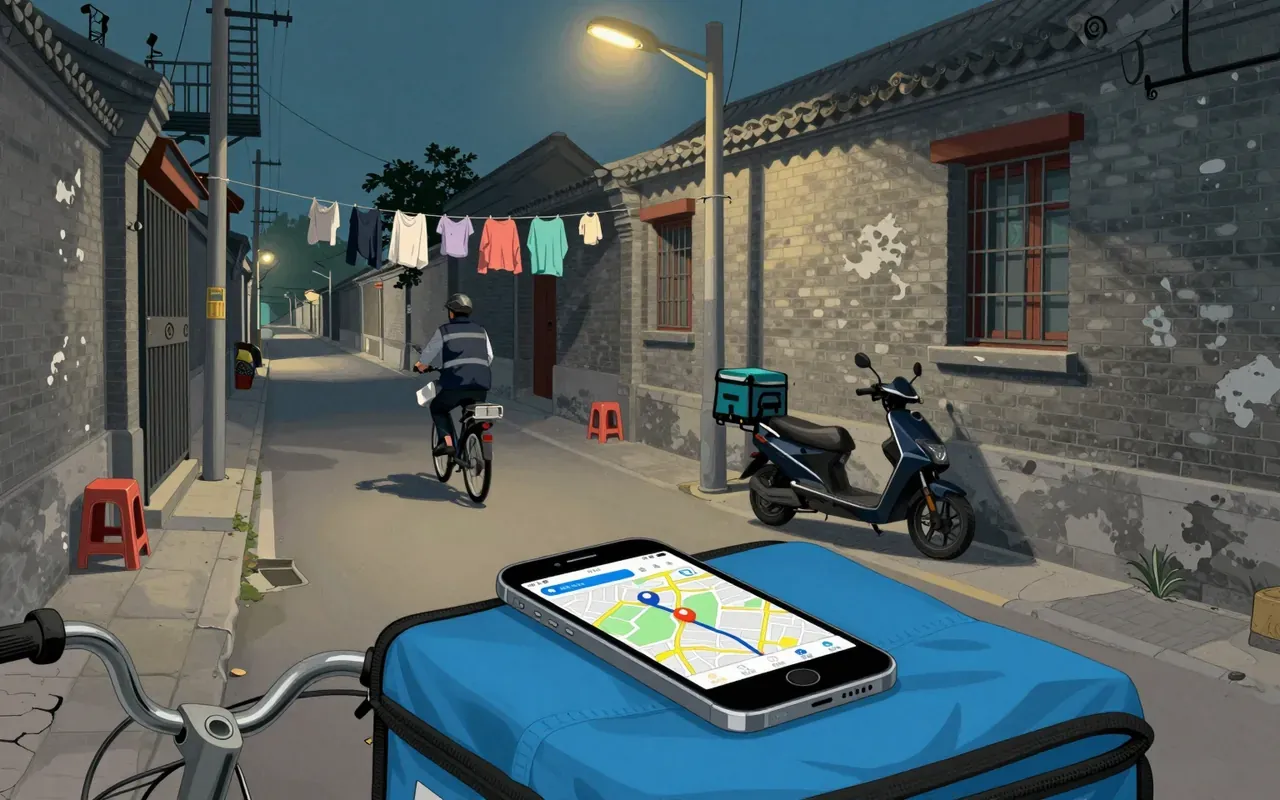
    DiDi began as a taxi-hailing app in Beijing in 2012 — not a global mobility platform, but a local solution built on mobile infrastructure.

  2. 2:28
    Consolidation, not competition

    DiDi merged with Kuaidi Dache in February 2015 — a consolidation move that created a monopoly-in-waiting.

  3. 3:54
    Uber’s surrender, not DiDi’s conquest

    DiDi acquired Uber China’s assets in August 2016 — not a strategic expansion, but a forced exit for Uber under regulatory pressure.

  4. 4:56
    IPO as regulatory trigger

    DiDi’s June 2021 NYSE IPO triggered an immediate cybersecurity investigation — the first signal that its data practices were incompatible with Chinese law.

  5. 6:41
    Data, not dollars, was the crime

    Chinese regulators fined DiDi $1.2 billion and removed its app — not for fraud or safety, but for unauthorised cross-border data transfers.

Worth your time?

Yes. Study the whole thing.

3.5/ 5
What works
  • market consolidation
  • local-to-national scaling
  • regulatory arbitrage (until it backfired)
What does not
  • data sovereignty
  • regulatory foresight
  • global listing readiness
Study it if
  • platform operators
  • regulators
  • venture investors in emerging markets
Skip it if
  • consumers seeking service reliability
  • founders assuming scale equals safety
  • analysts treating IPOs as validation
The written brief1 min read

What the company or idea is

DiDi is a Beijing-headquartered Chinese mobility technology company founded in 2012 by Cheng Wei, offering app-based transportation services including ride-hailing, taxi dispatch, bike sharing, vehicle leasing, food delivery, automobile services, and electric vehicle development.

How it actually makes money

DiDi makes money from commissions on ride-hailing and taxi dispatch transactions, fees from bike-sharing rentals and vehicle leasing, and revenue from food delivery orders and automobile services; it also invests in electric vehicle development, but no source states how or whether that generates revenue.

What works

DiDi’s merger with Kuaidi Dache in 2015 and acquisition of Uber China in 2016 eliminated competition and consolidated market control — mechanics that worked until they collided with state priorities.

What does not

DiDi does not control its own data sovereignty. Its NYSE listing triggered immediate Chinese regulatory intervention, exposing a fatal gap between its global capital strategy and domestic compliance capacity.

What to take from it

Platform dominance in China does not insulate against state power — it invites scrutiny. DiDi’s collapse post-IPO shows that regulatory permission, not market share, is the binding constraint.

Is it worth your time

Yes — DiDi is a case study in how platform scale, regulatory capture, and geopolitical risk interact in real time; its trajectory reveals the limits of growth-at-all-costs in China’s tech sector.

Same desk · Rise & fall4 of 49
10:46
Chrysler Chapter 11 reorganizationChrysler’s 2009 Chapter 11 reorganization was not a turnaround. It was a state-directed asset transfer that overrode creditor agreements, cut payouts mid-process, and excluded key physical assets — all under judicial approval.
9:45
Cora (hypermarket)1969Cora was a hypermarket chain founded in 1974 by Belgium’s Louis Delhaize Group through the acquisition of three Carrefour hypermarkets in Belgium; it operated across several European countries before being progressively divested — Hungary (2011), Romania (2023), Luxembourg (2024), and France (2023–2024) — with its remaining seven Belgian hypermarkets scheduled to close on 31 January 2026.
9:12
General Motors Chapter 11 reorganizationGeneral Motors’ 2009 collapse was not a restructuring but a legal dissolution: the old company vanished, its assets sold to a new Treasury-backed entity in a pre-packaged Chapter 11 process. It ranks fourth among U.S. bankruptcies by assets. No common stockholders recovered value. The outcome was not profitability restored, but continuity preserved — at public expense and with permanent brand and workforce reduction.
9:56
Noah GlassNoah Glass co-founded Twitter and coined its name. He helped develop its seed idea and designed core features in 2006 while at Odeo. He did not retain equity or recognition after the spin-out. This is not about who 'really' founded Twitter — it is about how contributions get assigned, erased, and rewritten when ownership changes hands.
Up next in Business

Enron

Kenneth Lay & Jeffrey Skilling · 1985 · 9:15

Enron wasn’t an energy company — it was a shell game dressed as a market.

9:15