businessbriefs
Longest first

All briefs

561 briefs · 5965 min · 97–192 on page 2 of 6
11:31

Geely

Li Shufu · 1986

Geely is a founder-led, family-financed industrial pivot machine — not a tech innovator or brand builder. It built scale by acquiring assets (Volvo, Lotus, Smart, Aston Martin), not customers. Its business model relies on platform reuse and regulatory arbitrage, not margin expansion or consumer loyalty. Verified financials are absent. Its most durable tactic is holding equity stakes where others seek control.
11:29

Sun Pharma

Sun Pharma proves that global scale in generics isn’t built on patents or pipelines — it’s built on factories, filings, and foot soldiers in FDA, EMA and CDSCO exam rooms.
11:28

Mack Trucks

Jack and Gus Mack · 1900

Mack Trucks is a vertically narrow, geographically mobile, and corporately subordinated industrial brand — sustained not by innovation or scale, but by consistent execution in a defined vehicle class and enduring customer trust in its vocational durability.

11:28

Saudi Aramco

Abdul Aziz ibn Saud · 1988

Saudi Aramco is the majority state-owned national oil company of Saudi Arabia. It holds the world's largest proven crude oil reserves and largest daily oil production. It operates the world's largest single hydrocarbon network, the Master Gas System. Its shares began trading on the Saudi Exchange on 11 December 2019, reaching a market capitalisation of about US$1.88 trillion. Its origins lie in a 1933 concession granted by Ibn Saud and executed by Chevron Corporation.

11:27

GSK plc

Henry Wellcome · 2000

GSK plc is a British multinational pharmaceutical and biotechnology company formed in 2000 by the merger of Glaxo Wellcome and SmithKline Beecham. It traces its origins to Henry Wellcome’s 1880 co-founding of Burroughs Wellcome & Company. GSK developed the first malaria vaccine (RTS,S), markets WHO-listed essential medicines, and reported $42.4 billion in revenue and $9.32 billion in earnings in 2025. In 2012, it pleaded guilty in the US to unlawful drug promotion, failure to report safety data, and physician kickbacks — agreeing to a $3 billion settlement, the largest healthcare fraud case in US history and the largest in the pharmaceutical industry. The Wellcome Foundation Ltd., established by Henry Wellcome in 1924, was later sold to GSK following changes in UK charity law.

11:26

Maruti Suzuki

India didn’t build a car company — it built Suzuki’s largest global subsidiary.
11:25

Angang Steel

A 'joint-stock' company that answers to the State Council isn’t a market actor—it’s an administrative unit with a balance sheet.
11:25

DTE Energy

A coal-dependent utility masquerading as a diversified energy company — its non-utility projects are real, but their economics are invisible.
11:24

Aeroplan

Aeroplan isn’t a loyalty program—it’s a licensed data-and-redemption conduit owned, sold, and reacquired for CA$450 million.
11:24

Alibaba Group

Jack Ma · 1999

Alibaba Group is a Chinese multinational technology company founded in 1999 in Hangzhou as a B2B e-commerce marketplace, now operating nine major subsidiaries including Taobao, Tmall, and Alibaba Cloud.

11:24

The Walt Disney Company

Walt Disney · 1923

The Walt Disney Company is an American multinational mass media and entertainment conglomerate founded on October 16, 1923, as the Disney Brothers Studio by Walt and Roy Disney in California. It rose to prominence in animation with Steamboat Willie (1928), diversified into live-action films, television, and theme parks in the 1950s, reversed a post-1966 decline under Michael Eisner via international theme park expansion and the Disney Renaissance (1989–1999), and transformed into a major entertainment conglomerate under Bob Iger through strategic acquisitions (Pixar, Marvel, Lucasfilm, 21st Century Fox). It operates the largest television and film studio in Hollywood.

11:24

HDFC Bank

India’s largest private bank isn’t built on innovation — it’s built on being too big to fail.
11:24

Nvidia

Jensen Huang · 1993

Nvidia is a fabless semiconductor company whose business model depends on external demand shocks, not internal cost control or manufacturing leverage.

11:23

Duke Energy

A century-old utility built on coal and nuclear isn’t transitioning—it’s being transitioned, one regulator-approved rate case at a time.
11:22

ConocoPhillips

A vertically stripped hydrocarbon extractor — upstream only, emissions-heavy, legally separated from its own downstream past.
11:22

ICICI Bank

K.V. Kamath · 1994

ICICI Bank’s 1994 formation under K.V. Kamath was not the birth of a startup but the strategic repackaging of a state-backed institution into a private, technology-enabled, acquisitive financial group — with real execution in regulation-constrained conditions.

11:21

Peloton Interactive

John Foley · 2012

Peloton Interactive is an American exercise equipment and media company founded in January 2012 in New York City. It sells Internet-connected stationary bicycles, treadmills, and rowers equipped with touchscreens that stream live and on-demand fitness classes through a subscription service. Built-in sensors track metrics such as power output, providing real-time performance feedback and leaderboard rankings. Peloton charges $49.99 monthly for equipment-based access and $12.99 for app-only access. Its first bike sold on Kickstarter in 2013 at an early-bird price of $1,500; its first commercial Internet-connected bike launched in 2014. The company faced safety recalls (Tread+ in 2021, Bike PL01 in 2023), leadership changes (Foley stepped down as CEO in 2022, McCarthy resigned in 2024, Stern became CEO in 2025), and a sharp valuation decline—from $8.1 billion at IPO in 2019 to ~$1.3 billion by June 2024.

11:21

Lactalis

Lactalis didn’t build a dairy empire — it bought one, piece by piece, while its factories kept poisoning babies.
11:21

REWE Group

A co-operative that won a landmark EU case and spun off software — but still answers to its grocers, not its investors.
11:20

Orlen

A state-directed oil giant masquerading as a multinational — its scale is real, its independence is not.
11:20

SABMiller

A global brewer built on colonial infrastructure, then dissolved into a monopoly — not by failure, but by design.
11:20

Schneider Electric

Schneider Electric didn’t discover electricity — it discovered that renaming yourself after your latest acquisition is the most reliable form of corporate reinvention.
11:20

BNP Paribas

BNP Paribas didn’t outsmart the crisis—it outsourced its survival to governments and paid $8.9 billion to unstick itself from U.S. sanctions.
11:20

Novartis

A merger born of necessity, not vision — Novartis was built to survive, not invent.
11:19

TSMC

Morris Chang · 1987

TSMC is the world’s largest and most advanced contract chipmaker — a state-enabled, capital-intensive factory system that executes Moore’s Law with industrial rigour. Its dominance comes not from vision or branding, but from delivering real chips, on schedule, at scale.

11:18

Ferrari

Enzo Ferrari · 1947

Ferrari is a racing operation that sells cars — not the reverse. Its business model depends on using road-car revenue to fund Scuderia Ferrari, which in turn validates the brand, justifies price premiums, and dictates engineering direction. It was never financially self-sustaining in racing alone. Enzo Ferrari maintained control of racing through every ownership change — including Fiat’s 1969 investment — because that control was the source of legitimacy, not the cars.

11:18

Corteva

Corteva is not a startup—it’s DowDuPont’s agriculture division, spun off to sell more chemicals while pretending to pivot away from them.
11:18

Sky UK

Sky UK isn’t a tech disruptor — it’s a licensed gatekeeper that built scale by merging distribution, content and connectivity under one bill.
11:18

Telia Company

The largest Nordic telecom operator sold its media division because the math didn’t lie — and the scandal still did.
11:18

BYD Company

Wang Chuanfu · 1995

BYD is a battery-born, vertically integrated Chinese manufacturing conglomerate whose automotive business now dominates its revenue and global EV output — but the sources disclose no financials, no unit economics, and no evidence of why its integration delivers advantage beyond scale and employment headcount.

11:18

SK Group

Chey Jong-hyon · 1953

SK Group is a South Korean chaebol founded in 1953 through the acquisition of Sunkyong Textiles — Japanese-owned property seized by the South Korean government after the Korean War armistice. It is the second-largest chaebol by revenue, controlled by the estate of Chey Tae-won via SK Inc., and operates 186 subsidiaries under the SKMS management system. Its cornerstone remains energy and chemicals, though it spans AI semiconductors, flash memory, telecommunications, and petrochemicals. The material confirms no revenue figures, margins, valuations, or operational metrics beyond structure, origin, control, and sectoral scope.

11:17

Bonduelle

Bonduelle didn’t build a vegetable empire—it built a preservation empire, one can, freezer, and salad kit at a time.
11:16

Gazprom

A state monopoly isn’t an accident of history — it’s a legal instrument, and Gazprom is its most fully realised form.
11:15

Bayer

Friedrich Bayer · 1863

Bayer was a dyestuffs partnership founded in 1863 by Friedrich Bayer and Johann Friedrich Weskott. It expanded through synthetic dye innovation, relocated due to arsenic contamination, built brand equity via Aspirin and the Bayer Cross, then merged into IG Farben in 1925 — whose assets were seized post-WWII for Nazi atrocities.

11:14

Washington Mutual

Washington Mutual didn’t fail because it was reckless — it failed because regulators treated it as too big to fail, then seized it the moment it became too big to save.
11:13

Fiat

Giovanni Agnelli · 1899

Fiat’s early success came from disciplined scaling, not invention. It built volume, listed publicly, and dominated Italy’s auto market — all before 1910. Its story is about capital, control, and concrete.

11:13

WEC Energy Group

A century-old utility built dominance through engineering first, expansion second — but its current business model remains opaque on climate risk and customer economics.
11:12

Ahold Delhaize

A Dutch-Belgian holding company whose identity is anchored in Europe but whose revenue is anchored in America.
11:12

Embraer

A state-built aerospace champion that went public—but never truly went private.
11:12

George Weston Limited

George Weston · 1882

George Weston Limited is a Canadian holding company founded in 1882, structured around two core assets: Loblaw Companies Limited and Choice Properties REIT.

11:11

CME Group

Leo Melamed · 2007

CME Group is a vertically integrated derivatives infrastructure operator. It runs exchanges, provides mandatory central clearing, and operates two spot platforms. In 2025, 81% of its revenue came from clearing and transaction fees, charged at $0.70 per contract across over 7 billion contracts. Volume increases during market volatility — a mechanical, observable feature. Its Bitcoin spot launch in May 2024 has no reported volume or revenue impact. Every major innovation — currency futures (1972), Globex (1987), IPO (2002) — was structural, not product-led.

11:11

Suncor Energy

Suncor isn’t a pioneer—it’s a consolidation play built on one province’s tar sands and two governments’ exits.
11:10

Vodafone Australia

A national telecom brand that never owned its fixed infrastructure—and survived only by merging out of independence.
11:10

Entergy

A century-old utility built on monopoly franchises—not markets, not tech, not disruption.
11:10

Hitachi

Namihei Odaira · 1910

Hitachi’s origin was not entrepreneurial mythmaking — it was applied engineering inside a single mine. Its revenue came from selling hardware that replaced steam, muscle, and manual control with electrified motion. It succeeded by staying embedded in physical infrastructure — not by pivoting to services or software. Its independence in 1920 marked a shift in legal structure, not strategy. Odaira’s leadership lasted until 1947, but he never owned the firm he built.

11:09

NNPC

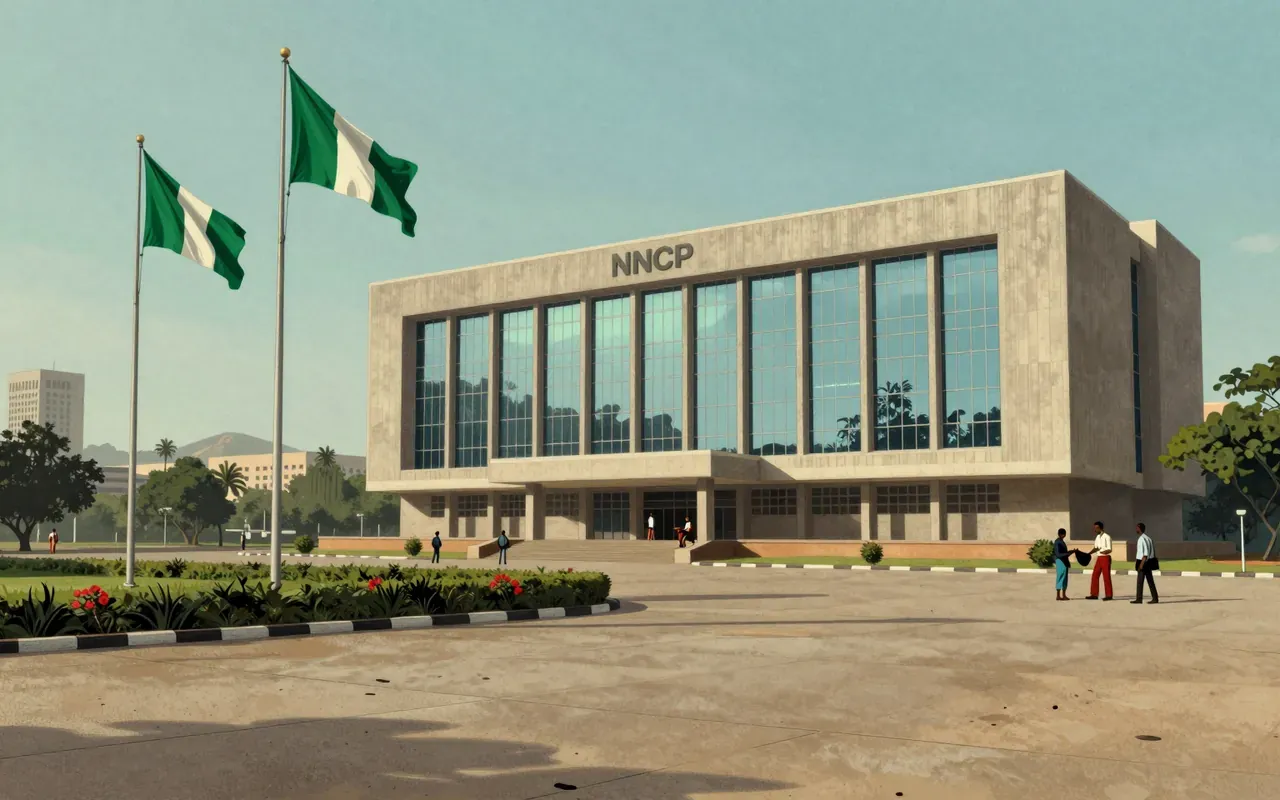
NNPC is not a commercial oil company — it is a state monopoly dressed in corporate clothing.
11:08

Intermodal container

Malcolm McLean · 1934

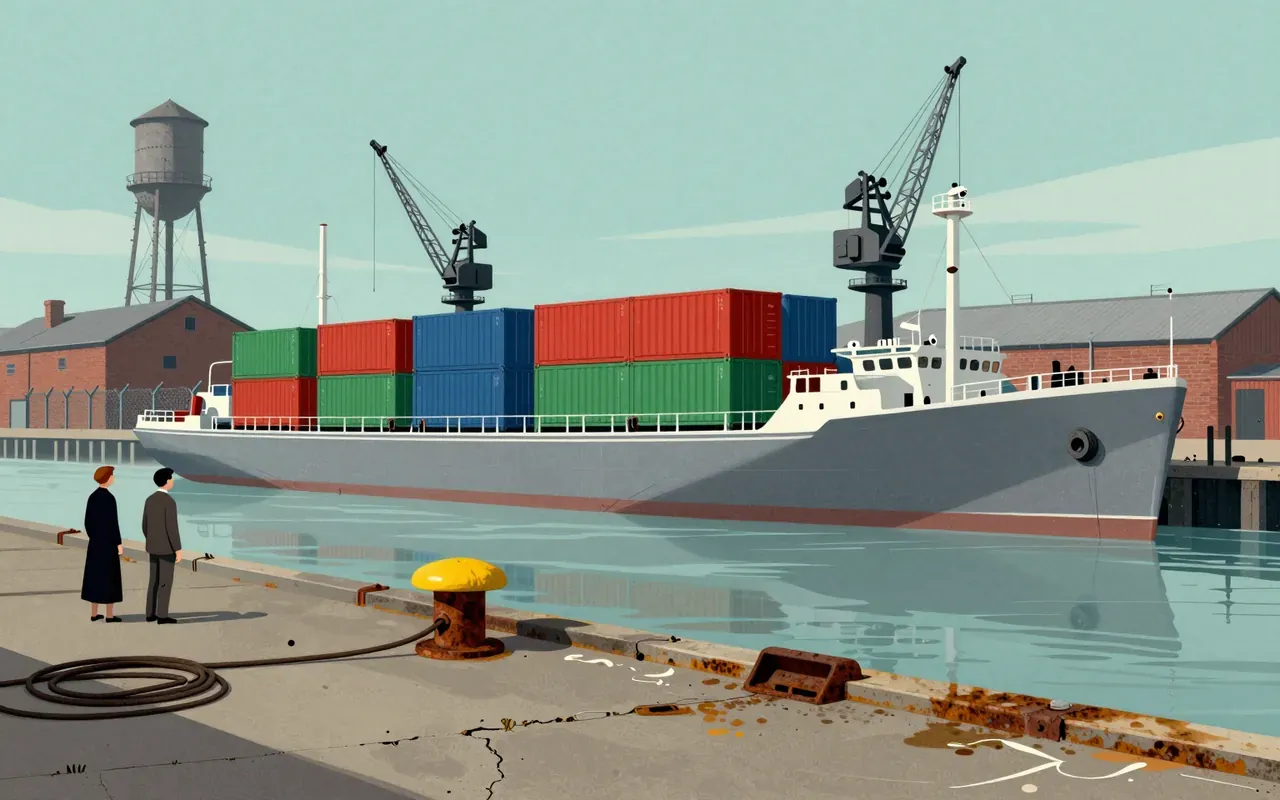
Malcolm McLean’s intermodal container was not an invention but a system — built around a 35-foot steel box sized for Pennsylvania highways, secured by Tantlinger’s corner castings and twistlocks, and operated by Sea-Land’s vertically controlled ships and cranes. It cut port handling time to eight hours — but only on one ship, at one port, under one company’s control. The real innovation was enforcing standardisation through ownership, not designing a better box.
11:08

Abu Dhabi National Oil Company

ADNOC is expanding oil production while the rest of the industry retreats — not because it ignores climate change, but because it answers to no one but Abu Dhabi.
11:08

Airbnb

Brian Chesky · 2008

Airbnb’s origin is materially humble: a rent crisis, two roommates, an air mattress, and Pop-Tarts. Its business model — brokerage via commission — was clear from the start, but its execution required repeated, costly pivots: cereal sales, crashed websites, YC’s $20k for 6%, and Sequoia’s $585k only after that. Its European expansion relied on acquiring Accoleo — not organic growth or superior product. The story Airbnb tells about itself is one of design-led innovation; the record shows it was one of opportunistic adaptation, funded by hustle and validated by investors only after infrastructure and evidence accumulated.

11:08

Ford Motor Company

Henry Ford · 1903

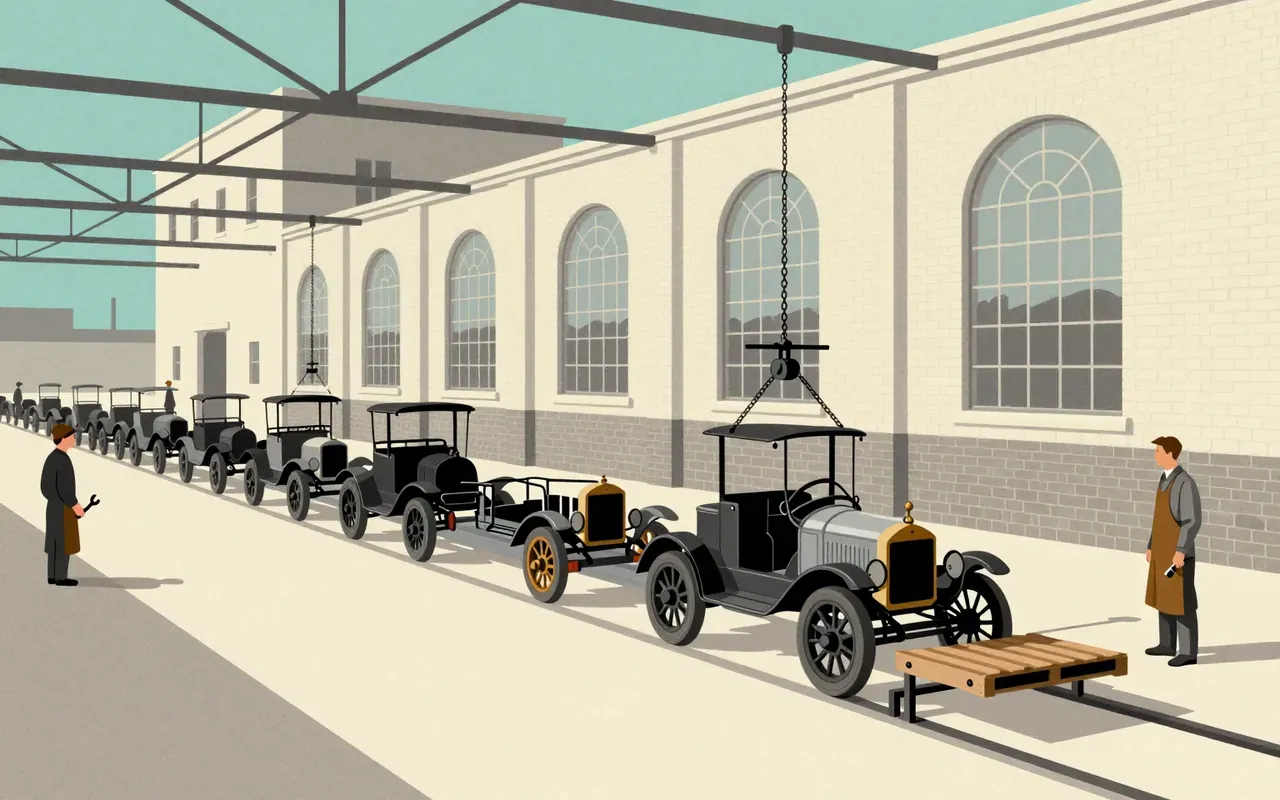
Ford Motor Company was not an idea about mobility—it was a financial and mechanical system for turning $28,000 into 15 million cars. Its power came from eliminating variability: in parts, in process, in price, and eventually in design. It succeeded by making everything repeatable—including authority.

11:07

Spark New Zealand

Spark isn’t a digital disruptor — it’s a privatised utility that outsourced its wires and kept the brand.
11:07

Assembly line

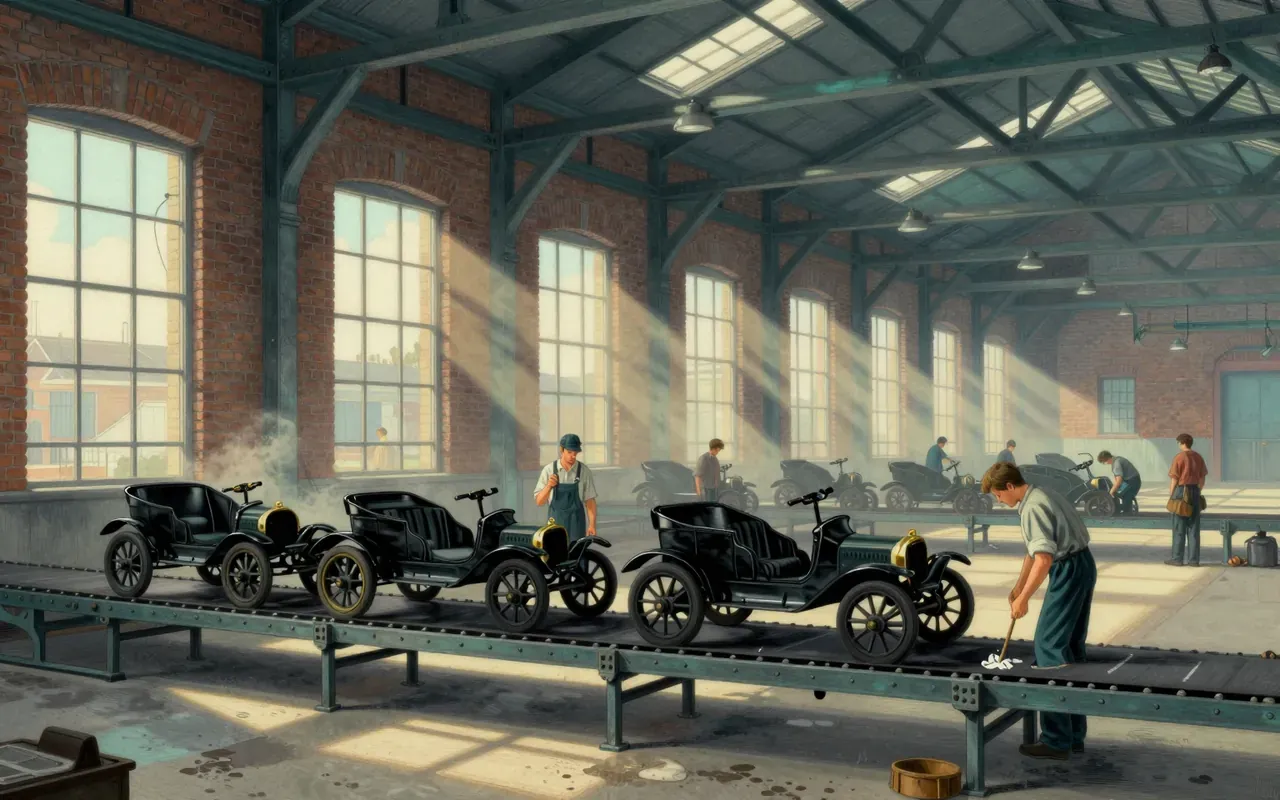
The assembly line is not innovation — it is enforced discipline disguised as progress.
11:07

Phil Knight

Nike began not with a shoe, but with a handshake and a regional distribution licence.
11:07

Toyota

Kiichiro Toyoda · 1937

Toyota’s founding was a licensed, capital-backed industrial pivot — not a startup story.

11:06

Sinopharm (company)

A state-owned vaccine developer that delivered peer-reviewed efficacy — and sold 400,520 faulty doses.
11:04

CITIC Group

CITIC Group isn’t China’s gateway to global markets — it’s the state’s offshore balance sheet, built to move money, not ideas.
11:04

Shein

Chris Xu · 2008

Shein is a global fast fashion e-commerce platform founded in 2008 in Nanjing, China, and currently headquartered in Singapore. It began as a drop shipping-style operation sourcing from Guangzhou’s wholesale market, then transformed into a fully integrated retailer starting in 2012. Its product range spans women’s, men’s, and children’s apparel plus accessories and cosmetics, targeting Europe, the Americas, Australia, and the Middle East. Its growth has been tied to popularity among younger Millennials and older Gen Z consumers, enabled by low pricing and rapid trend response.

11:03

Singapore Airlines

Tan Chin Tuan · 1964

Singapore Airlines is a state-aligned, operationally diversified aviation group—not a founder-led startup. Its value lies in infrastructure leverage, not narrative.

11:03

Vedanta Limited

Anil Agarwal · 1954

Vedanta Limited is a mining and metals company built on acquisitions, offshore holding structures, and regulatory navigation—not on technological differentiation or market creation.

11:03

Mastercard

A cooperative turned public company that profits from every swipe — without ever touching the money.
11:02

Orange Group

Orange didn’t build its brand — it bought it, then renamed itself after it.
11:02

TPG Telecom

A telco built on access, not ownership—and listed on the ASX only after winning a court battle against competition regulators.
11:02

Infosys

Narayana Murthy · 1981

Infosys is a textbook example of policy-led scaling: no proprietary tech, no venture funding, no market creation — just disciplined execution on a regulatory opportunity.

11:02

Warner Bros.

Warner Brothers

Warner Bros. is a trademarked asset that has outlived every corporate owner since its 1923 founding — surviving mergers, spin-offs, and acquisitions not through creative consistency, but because its library and IP rights remain licensable across shifting distribution models.

11:01

Virgin Media

Virgin Media isn’t a telecoms brand — it’s a cable infrastructure play disguised as a consumer service.
11:01

Nestlé

Henri Nestlé · 1866

Nestlé is a case study in how industrial food companies scale not through singular genius, but through technical borrowing, wartime procurement, and post-war recalibration. Henri Nestlé invented a product, then exited. The company that bears his name grew via merger, contract, and consolidation — not continuity.

11:01

Rolex

Hans Wilsdorf · 1905

Rolex is a vertically integrated Swiss luxury watchmaker founded in London in 1905, whose early authority came from technical validation (Kew Observatory, 1914), wartime policy (RAF replacement), and structural control (foundation ownership since 1960). It claimed the first waterproof wristwatch case in 1926 — but Depollier patented a functionally identical design eight years earlier. No financial data appears in the sources.

11:01

Société Générale

A bank built to serve French industry in 1864 now survives not by reinvention, but by scale, supervision, and systemic weight.
11:01

Morgan Stanley

Henry S. Morgan & Harold Stanley · 2008

Morgan Stanley is a financial institution whose origin story is legally precise, but whose current identity is structurally ambiguous. It began as a Glass–Steagall-mandated spin-off — not a startup, not a rebellion, but a regulatory necessity. Its early market share proves execution mattered more than ideology. Its 1997 merger erased the line between investment banking and mass-market finance — yet the firm still trades on the prestige of 1935. That dissonance is the real story.

11:01

The Coca-Cola Company

Asa Griggs Candler · 1892

The Coca-Cola Company was founded in 1892 by Asa Griggs Candler in Atlanta after he purchased the formula from John Stith Pemberton in 1888. It generated revenue by manufacturing and selling syrup to soda fountains, then licensing bottling rights for $1 per territory — a contract that transferred capital and operational risk to third parties while preserving brand control. By 1895 it achieved nationwide US distribution; exports began in 1899 (Cuba) and 1901 (Europe). Candler trademarked the brand and paid dividends in 1893, proving early financial viability. The model worked because it scaled without infrastructure — but failed to ensure product consistency across bottlers. This is a masterclass in leveraging intellectual property through contractual design, not product innovation.
11:00

Telstra

Telstra isn’t a telecom company that went private — it’s a government department that kept the billing system.
11:00

Valero Energy

Valero isn’t going green—it’s adding green to an oil-refining empire, one acquired plant at a time.
11:00

Sumitomo Corporation

A '1919 company' that legally ceased to exist in 1947 — and rebuilt itself not as a startup, but as a sovereign-grade trading apparatus.
11:00

BlackBerry Limited

Mike Lazaridis & Douglas Fregin · 1984

BlackBerry Limited is a Canadian software company specialising in secure communications and IoT. It was founded in 1984 as Research In Motion (RIM) and developed the BlackBerry brand of wireless mobile devices from 1999 to 2016. After spinning off its mobile division into BlackBerry Mobile in 2016 — discontinued in 2020 — the company transitioned to providing software and services and holds critical software application patents. RIM was the first wireless data technology developer in North America and the first outside the Nordic countries to develop Mobitex connectivity products. In 1996, RIM introduced the Interactive Pager, the first two-way messaging pager. In 1999, RIM introduced the BlackBerry 850 pager, the first device to use the BlackBerry OS, which received push email from Microsoft Exchange Server using BlackBerry Enterprise Server (BES). Its introduction set the stage for enterprise-oriented products, such as the BlackBerry 957 in April 2000, the first BlackBerry smartphone.

10:59

SFR

SFR built scale without building infrastructure — a telecom that wins by renting, not owning.
10:59

Astellas Pharma

A keiretsu-backed Japanese pharma merger that bought its way into oncology — but couldn’t fix its own dosing labels.
10:58

Godrej & Boyce

Ardeshir Godrej · 1897

Godrej & Boyce is not a story of disruption but of continuity — sustained by refusing to outsource precision, testing claims in fire, and anchoring engineering to national need. Its business model has never been about scaling a single product, but about retaining sovereign capability across generations.

10:58

Vale S.A.

Vale owns the rails, the port, and the ships—but not the trust.
10:58

Daewoo

Kim Woo-choong · 1967

Daewoo was a South Korean chaebol founded in March 1967 by Kim Woo-choong as a small textiles trading corporation. It expanded using government-sponsored cheap loans tied to export potential, acquiring near-bankrupt companies across shipbuilding, electronics, and automotive sectors. By the 1990s, it ranked second largest in assets and third in revenues among South Korean conglomerates. It collapsed in November 1999 with $50 billion in debt after the 1997 Asian financial crisis exposed its reliance on continuous credit. Its story reveals how state-backed finance can substitute for profitability — until it cannot.

10:57

KLM

Albert Plesman · 1919

KLM was not a private venture but a state-backed aviation instrument. Its longevity stems from institutional alignment — not market innovation.

10:57

Bill Gates

Bill Gates didn’t build Microsoft by writing better code—he built it by defining what counted as theft.
10:57

Kodak

George Eastman · 1880

Kodak was not a camera company first — it was a film company that used cameras to distribute its consumable. Its 1888 system created a new market by removing technical barriers. Its dominance came from controlling the film supply chain, not the hardware. No source mentions digital disruption, so the brief stops at peak film-era success.

10:56

JBS S.A. ransomware attack

José Batista Sobrinho

JBS S.A. is the world’s largest meat processor by sales. On May 30, 2021, ransomware disabled its beef and pork slaughterhouses in the US, Canada, and Australia. It paid $11 million in Bitcoin. The White House attributed the attack to a Russian organisation; news outlets named REvil. REvil did not claim responsibility before its infrastructure vanished on July 13, 2021.

10:56

ITV plc

A merger designed to dominate UK TV instead built too many studios and closed too many offices — proving scale without synergy is just overhead with a press release.
10:56

ABB

Charles Eugene Lancelot Brown · 1988

ABB is a post-merger industrial incumbent whose value lies in proven, regulated, physical infrastructure — not software, platforms, or scalability stories.