FTSE Group
FTSE Group is not a data innovator — it is a licensing gatekeeper built on geography, incumbency, and quiet vertical integration.



Vivendi is a French investment company headquartered in Paris, founded in 1853 as Compagnie générale des eaux. It evolved through mergers and diversification — notably becoming Vivendi Universal in 2000 via merger with Groupe Canal+ and Seagram — before reverting to Vivendi in 2006. From 2021, it executed a strategic spin-off of its core assets, culminating in 2024 with the separation of Canal+, Havas, and Louis Hachette Group, transforming itself into a focused investment company holding stakes in media and entertainment firms.

PayPal is a case study in opportunistic infrastructure: built on a dead-end tech idea, it succeeded only after latching onto a specific, messy, high-volume use case — eBay auctions — and charging for reliability in a trust vacuum.

Myspace was the first globally reaching social network. It grew fast, peaked at 115 million monthly visitors, and was acquired for $580 million. But it never built infrastructure, governance, or trust to match its scale — and collapsed when attention shifted to platforms that treated users as people, not pageviews.

Rolls-Royce Limited was not a luxury brand first — it was an engineering firm that built cars to prove its method, then switched to aero-engines to survive war, then bet its existence on jet engines. Its collapse in 1971 was not a failure of ambition or invention. It was a failure of cost control in a single programme.



Patreon is not a creator empowerment tool — it is a monetisation layer that captures value at the point of transaction, enforces terms unilaterally, and scales through volume, not trust.



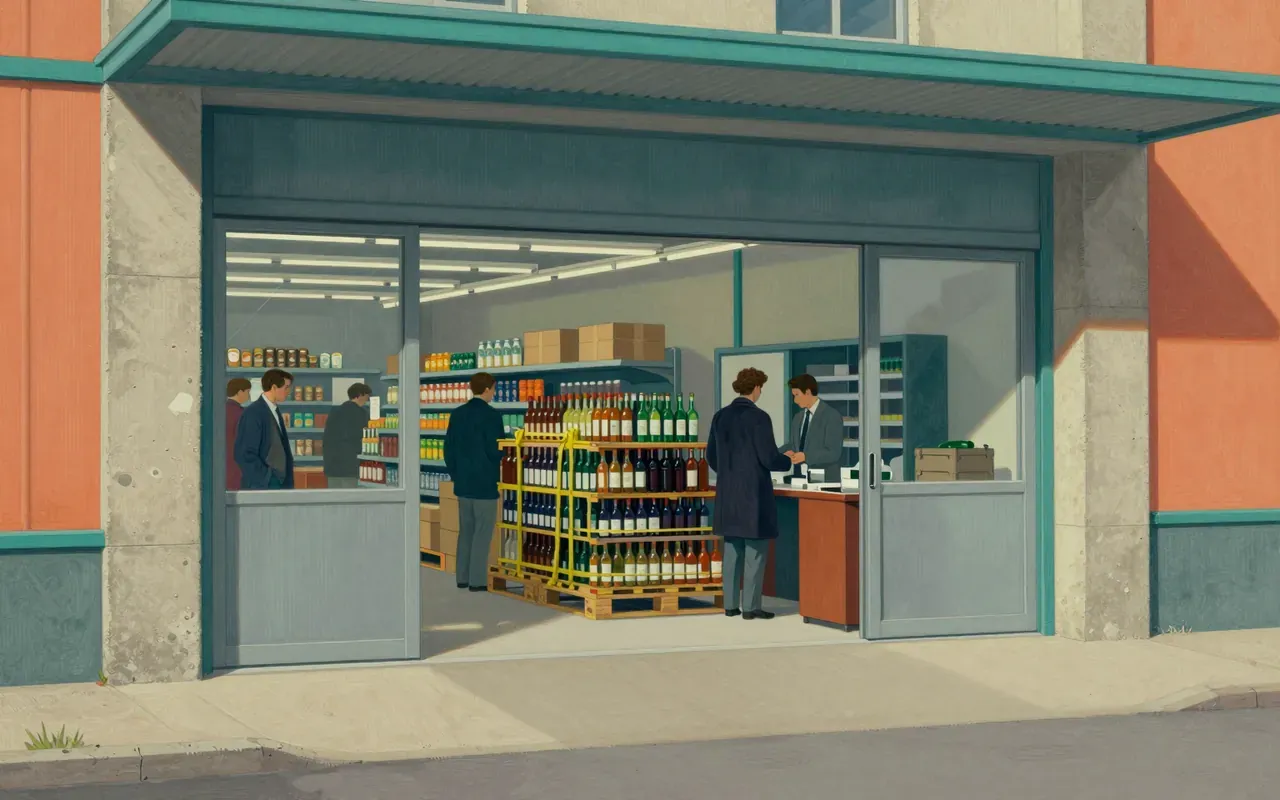
E.Leclerc is a French retailers’ cooperative founded in 1948. It pioneered the hypermarket format in 1964, adopted self-service retailing from the Félix Potin model, launched wine fairs in 1973, discontinued disposable plastic bags in 1996, introduced the Repère brand in 1997, and expanded internationally starting with Pamplona in 1992 and most recently into Luxembourg in 2023 via acquisition.


Alfa Romeo was not founded by Nicola Romeo. It was founded in 1910 as A.L.F.A. to acquire the assets of the failing Italian Darracq subsidiary. Romeo acquired it in 1915, took full ownership by 1918, renamed it in 1920, launched the first Alfa Romeo-branded car in 1921, won the inaugural 1925 World Manufacturers’ Championship, faced near-liquidation in 1927 due to poor investments, departed formally in 1928, and was taken over by the Italian state in 1933.

Netflix is a case study in operational iteration — not technological invention. Its value lies in how it structured incentives, removed friction, and scaled infrastructure — not in what it claimed to be.
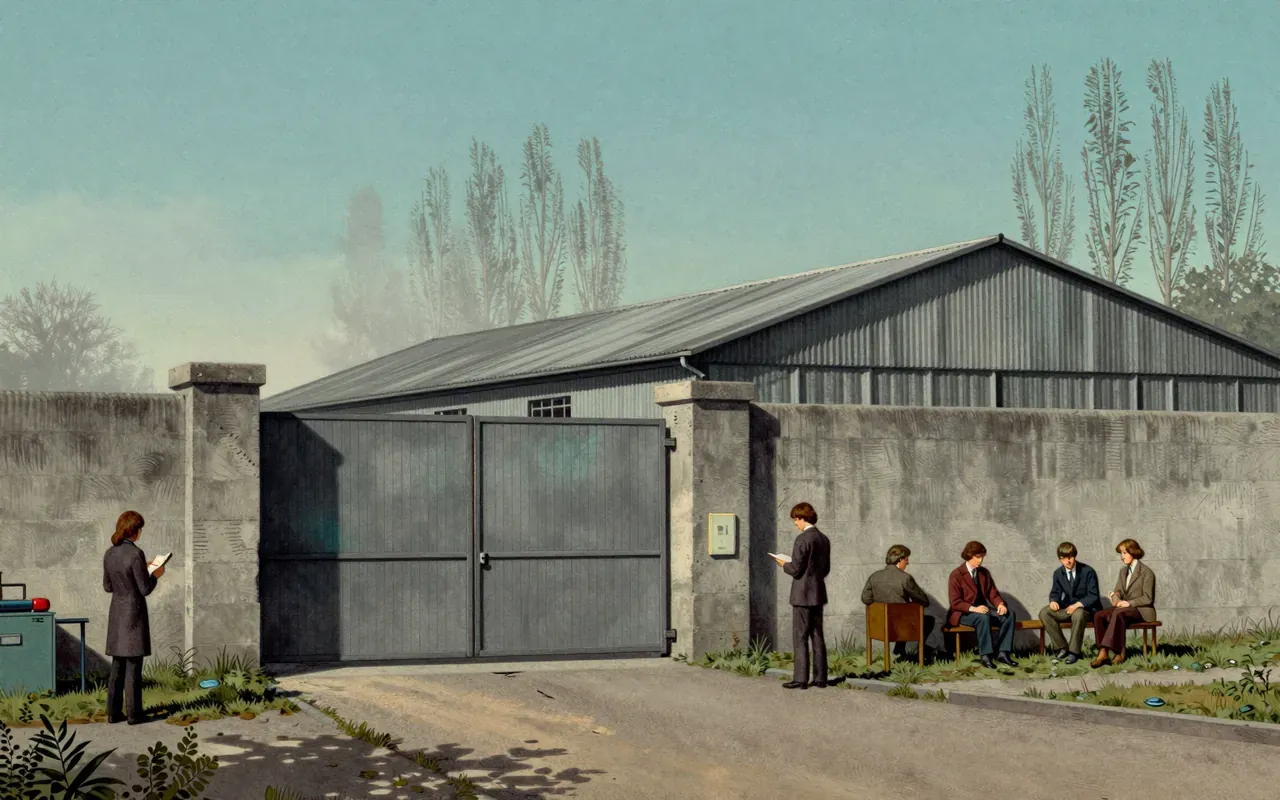

Biedronka is a Polish discount supermarket chain owned by Portuguese group Jerónimo Martins. It operates 3,730 stores in Poland, employs 84,000 people, and accounts for approximately 70% of its parent’s sales. Its model relies on high-volume, low-margin sales of local and own-label goods — not differentiation or premium pricing. Its sole international move — one store in Slovakia, opened March 2025 — shows no evidence of traction. Its strength is also its risk: extreme geographic concentration in Poland.


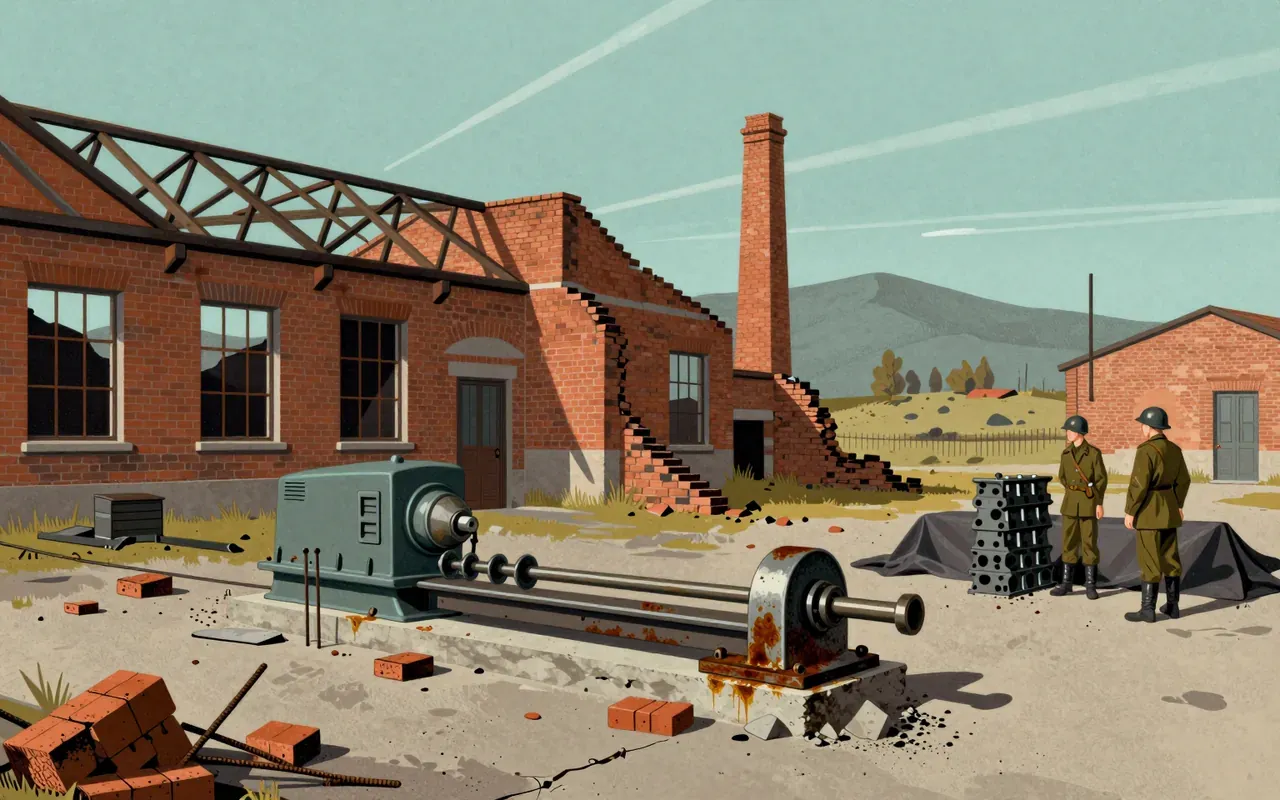



Regeneron is a biotech firm whose core innovation — the receptor trap — emerged from neurobiology, not pharmacology. It monetises that science via high-value partnerships and outsized government contracts, not broad platform dominance. Its success depends less on internal scale than on strategic leverage of public R&D funding.


John Deere is not a tech company. It is a manufacturer whose first product solved a tactile, geographic problem — soil adhesion — with a repeatable material fix. Its growth followed physical logic: water power, then scale, then diversification. Financial services are noted but undated. Nothing in the sources supports claims about digital transformation, autonomy, or data-driven farming.



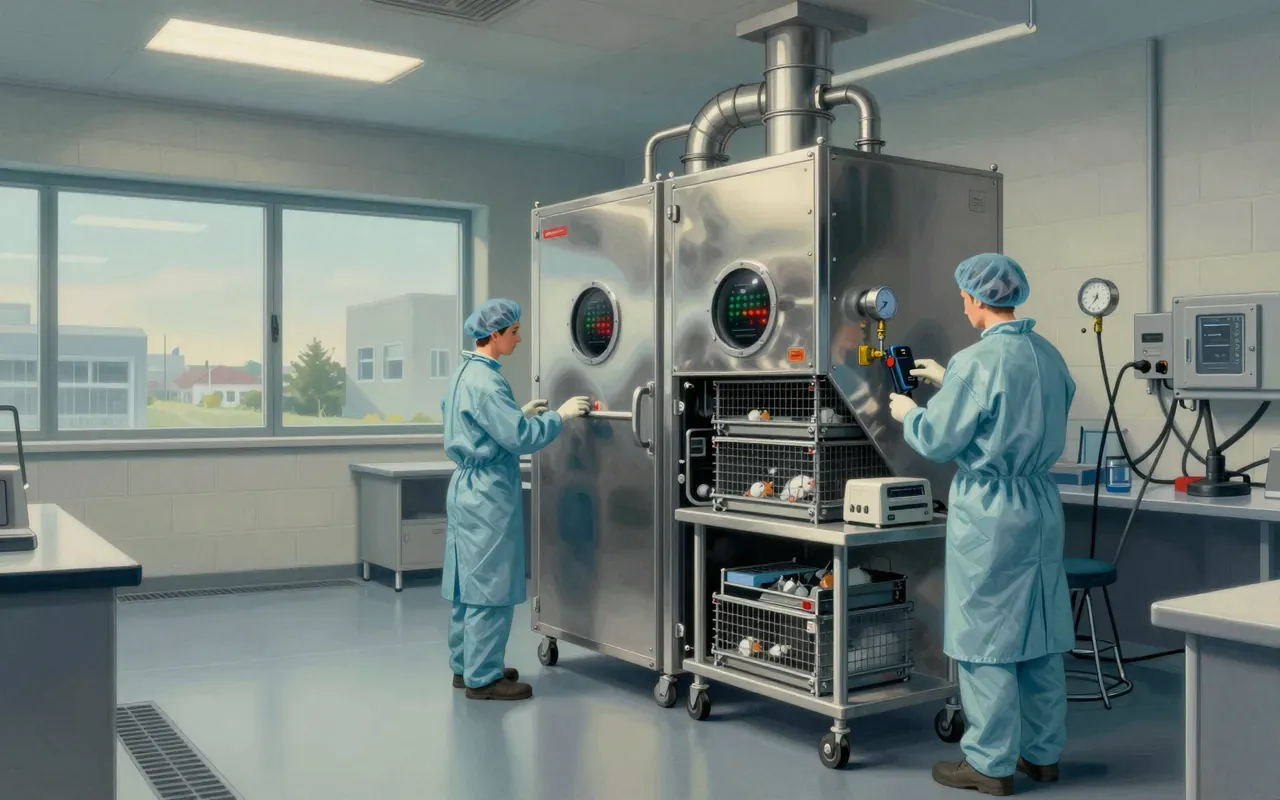
Genmab is a platform biotech — not a drug developer — built around two licensed and proprietary antibody generation methods. Its value is in reducing discovery risk and time, not in owning clinical or commercial outcomes.



Blockbuster’s story is not about disruption — it is about refusal. It controlled distribution, not demand. It priced convenience as punishment. Its collapse was mechanical, not mystical.

Instagram is a photo- and short-video-sharing social networking service launched in October 2010 by Kevin Systrom and Mike Krieger in San Francisco, after pivoting from a check-in app called Burbn.


eBay acquired PayPal on October 3, 2002, for $1.4–$1.5 billion. It shut down its competing Billpoint service three months later. PayPal became the dominant, user-chosen payment method on eBay — used in over 70% of auctions and ~25% of closed listings — and by Q3 2012 accounted for 40% of eBay’s revenue ($1.37B). The deal was not about innovation. It was about controlling the checkout.

Enron was an American energy, commodities and services company founded in 1985 through a merger. It grew into a major electricity, natural gas, communications, and pulp and paper company — then collapsed due to institutionalised, systematic accounting fraud. Its 2001 bankruptcy was the largest fraud-related bankruptcy in U.S. history. It reorganised as Enron Creditors Recovery Corp. in 2004.


Migros is a Swiss retail cooperative founded in 1925 in Zurich by Gottlieb Duttweiler as a private enterprise delivering six staple goods via five lorries to households with limited market access.

Moody's Ratings is the credit ratings division of Moody's Corporation, rebranded from Moody's Investors Service in March 2024. It provides international financial research on bonds issued by commercial and government entities, operates as one of the Big Three credit rating agencies, uses a standardized ratings scale measuring expected investor loss in default, assigns ratings from Aaa (highest) to C (lowest), and was founded by John Moody in 1909 to produce manuals of statistics related to stocks, bonds, and bond ratings.

Tesco is a British multinational groceries and general merchandise retailer headquartered in Welwyn Garden City, England. It was founded in 1919 by Sir Jack Cohen in Hackney, London, beginning with a market stall selling war-surplus groceries. The Tesco brand emerged in 1924 from supplier initials and Cohen’s surname. The first dedicated shop opened in 1931 in Edgware. It was floated on the London Stock Exchange in 1947. It pioneered self-service (1948) and supermarket formats (1956). Cohen’s core business method was 'pile it high and sell it cheap' and the motivational internal motto 'YCDBSOYA'.






AMD is not a story of disruption — it is a story of licensed dependence, contested access, and court-mandated self-reliance in semiconductor design.

Samsung’s origin contradicts its current identity: it was a trading and transport firm, not a tech innovator. Its electronics entry was late, small-scale, and licence-dependent — a strategic pivot enabled by infrastructure, not invention.



Reddit is a community platform whose founding mechanics—Lisp prototype, Swartz-led rewrite, rapid acquisition, deferred monetisation, and founder re-entry—reveal how infrastructure survives without a clear business model.

Kobe Steel is a Japanese industrial conglomerate whose name misleads: steel accounts for the smallest share of its business among major Japanese steelmakers. It grew not through market innovation but via naval technical guidance and orders after the Russo-Japanese War. Its real strengths lie in wire rods, transport aluminium, screw compressors, and wholesale power supply—three distinct divisions operating semi-independently. The gap between its identity (a steel company) and its economics (a diversified industrial group) is structural, not accidental.


Hemköp is a Swedish supermarket chain owned by Axfood. It operated around 200 stores in 2024. Its business model relies entirely on physical retail scale within a consolidated ownership structure. No data is provided on margins, digital performance, private label, or customer behaviour. Its value lies in infrastructure reuse — not innovation.





WeWork: Or the Making and Breaking of a $47 Billion Unicorn is a 2021 documentary film. It follows Adam Neumann, founder and leader of the real estate company WeWork, who was forced out after a failed IPO. The film centres the collapse on that removal — not on debt, defaults, or unit economics.




Pfizer’s origin story is not about curing disease — it is about solving chemical supply problems with fermentation. Its therapeutic dominance came decades after it mastered industrial microbiology under pressure.
Magnit is a Russian food retailer founded in 1994 in Krasnodar by Sergey Galitsky. It grew rapidly from a regional chain into a national leader, adopting the convenience store format in 2004 and expanding to 1,000 stores by 2000 and 1,500 by 2005—surpassing Pyaterochka in revenue. By 2010 it ranked among the world’s top 250 retailers (Deloitte), and in 2014 became Russia’s largest importer. Its growth continued with milestones including 10,000 stores (2015), entry into pharmacy and drogerie formats, and strategic acquisitions like Dixy (2021) and Samberi (2024). Ownership shifted significantly after 2018, with Marathon Group becoming the largest shareholder in November 2021. Management transitioned from Galitsky to external CEOs starting in 2018, and the company pursued vertical integration via in-house production facilities and distribution infrastructure.


Gap Inc. was a logistics play disguised as youth culture — and its early success came from solving stockouts, not selling identity.

Google is a search engine company founded in 1998 by Larry Page and Sergey Brin. Its core technology, PageRank, ranked websites by inbound links — a method co-published with Motwani and Winograd and patented by Stanford. Scott Hassan wrote the first implementation. The company launched from Susan Wojcicki’s garage. Its name misspelled 'googol' to signal scale. Initial funding came from Andy Bechtolsheim’s $100,000 cheque in August 1998. The sources say nothing about advertising, revenue, users, infrastructure costs, or market position beyond this.