businessbriefs
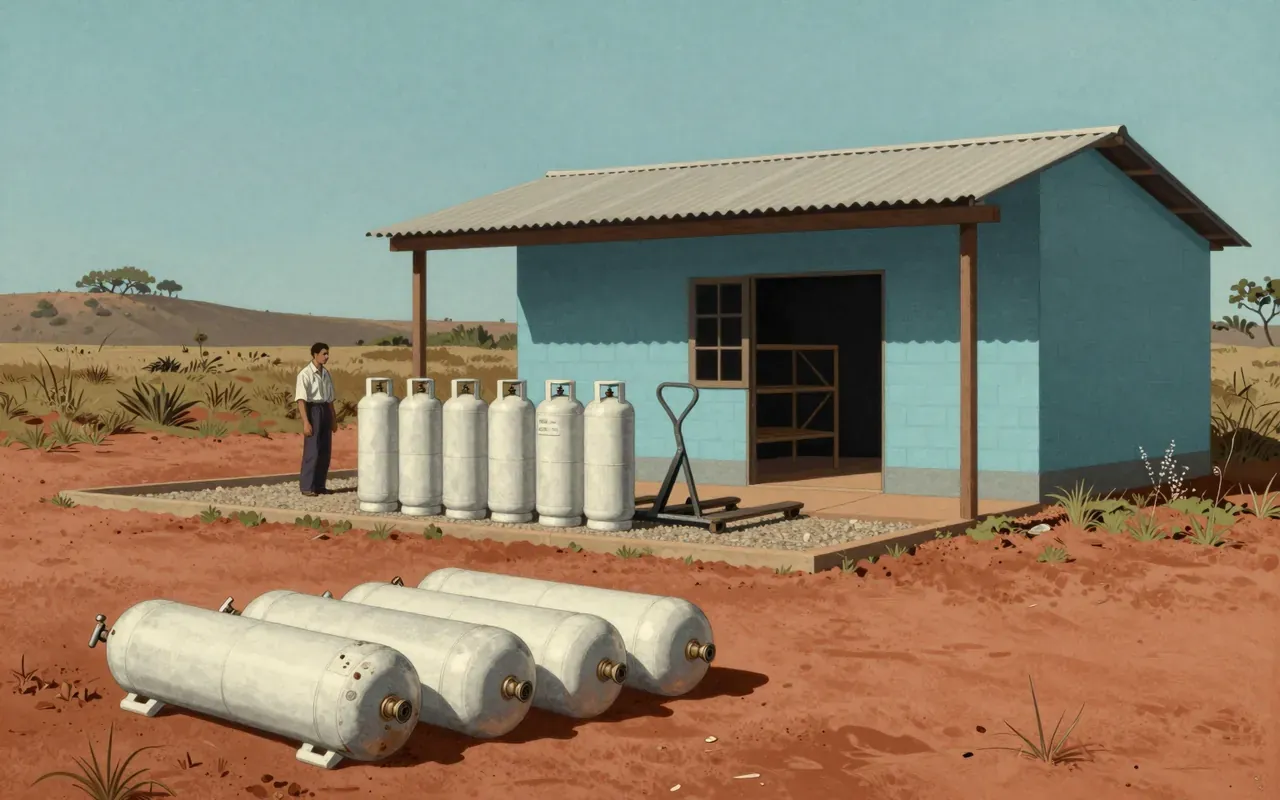
9:11in productionCh. 1 · 1937: A gas cylinder, not a vision/ 9:11 · ceiling 15 min
Companies · Strategy

Ultrapar

1937

A 1937-founded Brazilian conglomerate proves infrastructure dominance doesn’t require innovation—just scale, regulation, and control over the last mile of physical energy logistics.

Ultrapar is a Brazilian infrastructure holding company built on physical distribution assets—not technology, branding, or financial engineering. Its dominance lies in scale and regulatory positioning within three tightly defined downstream energy logistics markets. It has no upstream control, no digital moat, and no stated innovation mandate. Its 2022 R$147 billion revenue reflects volume, not margin expansion or disruption.

Chapters & takeaways4
  1. 1:06
    1937: A gas cylinder, not a vision

    Ultrapar began as a domestic LPG supplier in 1937—not as a tech startup, not as an energy producer, but as a local gas delivery service.

  2. 2:54
    Three pillars, no upstream

    It owns three distribution monopolies: fuel (second-largest), LPG (market leader in 2019), and bulk-liquid storage (market leader)—all downstream, all physical, all asset-intensive.

  3. 4:12
    R$147bn from pipes, tanks, and pumps

    R$147 billion in 2022 net revenue came entirely from moving physical commodities—not data, subscriptions, or financial engineering.

  4. 5:35
    1999: Public listing of a mature utility

    It went public in October 1999 on São Paulo and New York exchanges—not to fund growth, but to monetise an already mature, cash-generating infrastructure portfolio.

Worth your time?

Yes. Study the whole thing.

3.5/ 5
What works
  • scale in fragmented downstream markets
  • asset ownership in high-barrier logistics
  • regulatory alignment in essential services
What does not
  • innovate
  • control upstream supply
  • operate outside distribution and storage
Study it if
  • students of emerging-market infrastructure finance
  • analysts of regulated commodity logistics
Skip it if
  • startups seeking playbook inspiration
  • investors betting on energy transition tech
The written brief1 min read

What the company or idea is

Ultrapar is a Brazilian holding company founded in 1937, operating three subsidiaries across fuel distribution, LPG delivery, and bulk-liquid storage terminals.

How it actually makes money

Ultrapar makes money through fuel distribution (Ipiranga), LPG delivery (Ultragaz), and bulk-liquid storage (Ultracargo). It does not produce oil or gas. Revenue comes from wholesale and retail margins on physical commodities, not services, software, or platforms.

What works

Ipiranga is Brazil’s second-largest fuel distributor. Ultragaz held 23.25% of the LPG market in 2019. Ultracargo leads independent bulk-liquid storage terminals. All three hold dominant positions in their respective downstream infrastructure niches.

What does not

Ultrapar does not control upstream supply, refine fuel, or set national energy policy. Its market leadership is in distribution and storage only—not in pricing power, innovation, or regulatory influence.

What to take from it

Its scale—R$147 billion net revenue in 2022—comes from owning infrastructure that moves physical energy products in a high-volume, low-differentiation market. That model depends on density, regulation, and real estate, not IP or network effects.

Is it worth your time

Yes—if you are studying how Brazilian infrastructure conglomerates monetise regulated, asset-heavy, low-margin commodity logistics without vertical integration into upstream production.

Same desk · Companies4 of 224
9:55
All Nippon AirwaysYoshida Shoji · 1952ANA is Japan’s largest airline, rooted in a 1952 helicopter-and-aeroplane transport company. It launched Japan’s first postwar scheduled flight by a Japanese pilot in December 1953, added passenger service on the Osaka–Tokyo route in February 1954, and scaled into a dominant domestic carrier. Its growth reflects regulatory privilege more than competitive differentiation. No financials, pricing, or cost structure are disclosed in the source material.
9:32
E.LeclercÉdouard Leclerc · 1948E.Leclerc is a French retailers’ cooperative founded in 1948. It pioneered the hypermarket format in 1964, adopted self-service retailing from the Félix Potin model, launched wine fairs in 1973, discontinued disposable plastic bags in 1996, introduced the Repère brand in 1997, and expanded internationally starting with Pamplona in 1992 and most recently into Luxembourg in 2023 via acquisition.
8:42
MagnitSergei Galitskiy · 1994Magnit is a Russian food retailer founded in 1994 in Krasnodar by Sergey Galitsky. It grew rapidly from a regional chain into a national leader, adopting the convenience store format in 2004 and expanding to 1,000 stores by 2000 and 1,500 by 2005—surpassing Pyaterochka in revenue. By 2010 it ranked among the world’s top 250 retailers (Deloitte), and in 2014 became Russia’s largest importer. Its growth continued with milestones including 10,000 stores (2015), entry into pharmacy and drogerie formats, and strategic acquisitions like Dixy (2021) and Samberi (2024). Ownership shifted significantly after 2018, with Marathon Group becoming the largest shareholder in November 2021. Management transitioned from Galitsky to external CEOs starting in 2018, and the company pursued vertical integration via in-house production facilities and distribution infrastructure.
10:37
OMVHans Susta · 1956OMV is Austria’s major integrated oil- and gas company, founded in 1956 as the successor to the Soviet Mineral Oil Administration in occupied Austria. It makes money from refining crude oil at Schwechat, importing oil via the Adria–Vienna Pipeline from Trieste, selling natural gas supplied under contract with the Soviet Union, and operating transit infrastructure like the Trans-Austria Gas Pipeline. Its vertical integration worked: Schwechat refinery (1960), Soviet gas supply (1968), Adria–Vienna Pipeline (1970), and Trans-Austria Gas Pipeline (1974) formed a self-reinforcing system that locked in Austria’s role as a Central European energy node. OMV’s foundational model does not address decarbonisation, renewable generation, or energy storage. Its 1956–1974 expansion relied entirely on fossil fuel import, processing, and transit — with no indication of diversification beyond that scope in the source material. OMV shows how a national energy company can be built not through innovation or market creation, but through sequential infrastructure capture: refinery, pipeline, gas contract, transit corridor — each reinforcing the others’ value. Yes — as a case study in state-origined energy integration, infrastructure-led regional positioning, and Cold War-era resource diplomacy. Not as a model for modern energy transition strategy.
Up next in Business

Vale S.A.

1942 · 10:58

Vale owns the rails, the port, and the ships—but not the trust.

10:58