Saved
Scandals

Enron scandal

1985

Enron didn’t fail because it gambled — it failed because its accounts were weapons, not records.

Worth your time?4.5/5Yes.Study the whole thing.What works, what does not, who it is for ↓
9:24in productionCh. 1 · The Pipeline Origin/ 9:24 · ceiling 15 min
4 chapters · 9:24Ceiling 15:00

The brief is written and checked. The video joins this page when it is cut.4 chapters · 1 min read · 9:24 planned

Read the brief

Enron was formed in 1985 by merging Houston Natural Gas and InterNorth. It used hundreds of special purpose entities to hide debt. Executives misapplied mark-to-market accounting and misled the board and auditor. Its bankruptcy in December 2001 triggered the Sarbanes–Oxley Act. The collapse was not a market failure — it was a deliberate, systematised fraud enabled by broken oversight.

Chapters & takeaways4
  1. 0:59
    The Pipeline Origin

    Enron began as a pipeline merger — not a tech disruptor or financial innovator.

  2. 1:57
    The Shell Game

    Hundreds of special purpose entities masked debt by design, not accident.

  3. 3:42
    The Complicit Oversight

    The board and auditors were misled — not fooled — by opaque statements and pressure.

  4. 5:28
    The Triggered Collapse

    Bankruptcy followed public exposure of fraud — not market reversal or operational loss.

1 more chapterFewer chapters
Worth your time?

Yes. Study the whole thing.

4.5/ 5
What works
  • business/scandals
  • business/finance
  • business/management
What does not
  • business/startups-and-venture
  • business/ideas
  • business/product
Study it if
  • auditors
  • board-members
  • regulators
Skip it if
  • founders
  • marketers
  • product-managers
Who should study it, and who should skipHide who it is for
The written brief1 min read

What the company or idea is

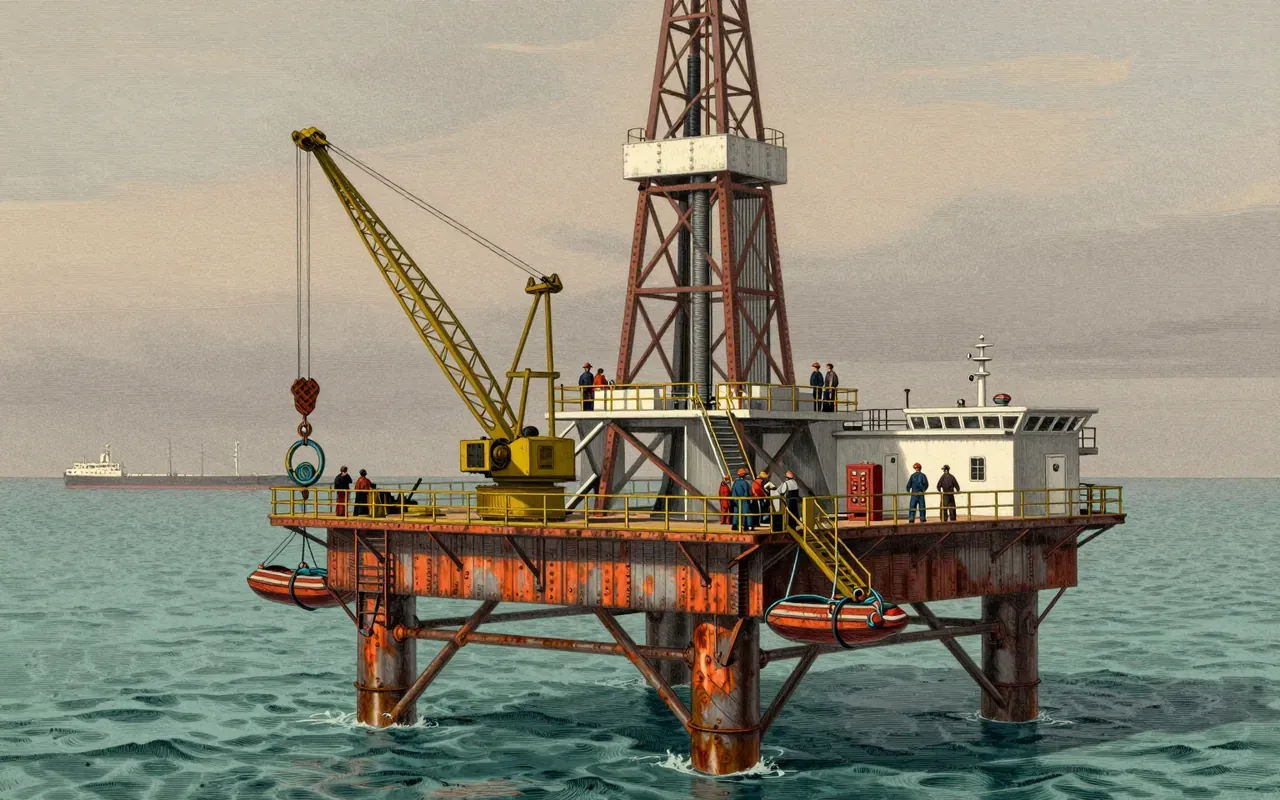
Enron was an American energy company formed in 1985 by merging Houston Natural Gas and InterNorth.

How it actually makes money

Enron made money by trading energy commodities and managing pipeline assets, but shifted focus to speculative financial engineering using off-balance-sheet vehicles.

What works

Its trading platform generated real revenue early on. Its merger created scale in natural gas infrastructure. Its use of special purpose entities worked — as designed — to conceal liabilities from balance sheets and ratings agencies.

What does not

Its financial reporting did not reflect economic reality. Its governance did not constrain executives. Its auditor did not audit. Its board did not oversee. Its disclosures did not inform.

What to take from it

The collapse was not caused by market forces or bad luck. It was engineered: hundreds of special purpose entities hid debt; mark-to-market accounting inflated earnings; executives misled the board and pressured auditors to ignore risk.

Is it worth your time

Yes. It is the canonical case study in how accounting opacity, auditor capture, and board abdication enable systemic fraud — not a cautionary tale about greed, but a forensic blueprint of institutional failure.
Same desk · Scandals4 of 22
9:40
Robert MaxwellRobert Maxwell built Pergamon Press by acquiring Butterworth-Springer in 1951 and rebranding it. He inflated its share price using transactions between his private family companies. In 1969, he lost control and was expelled from its board. A government inquiry concluded he could not be relied upon to steward a publicly quoted company. In 1984, he acquired Mirror Group Newspapers for £113 million. His death triggered immediate loan calls and the collapse of his empire. Posthumously, his fraudulent misappropriation of the Mirror Group pension fund was revealed.
9:15
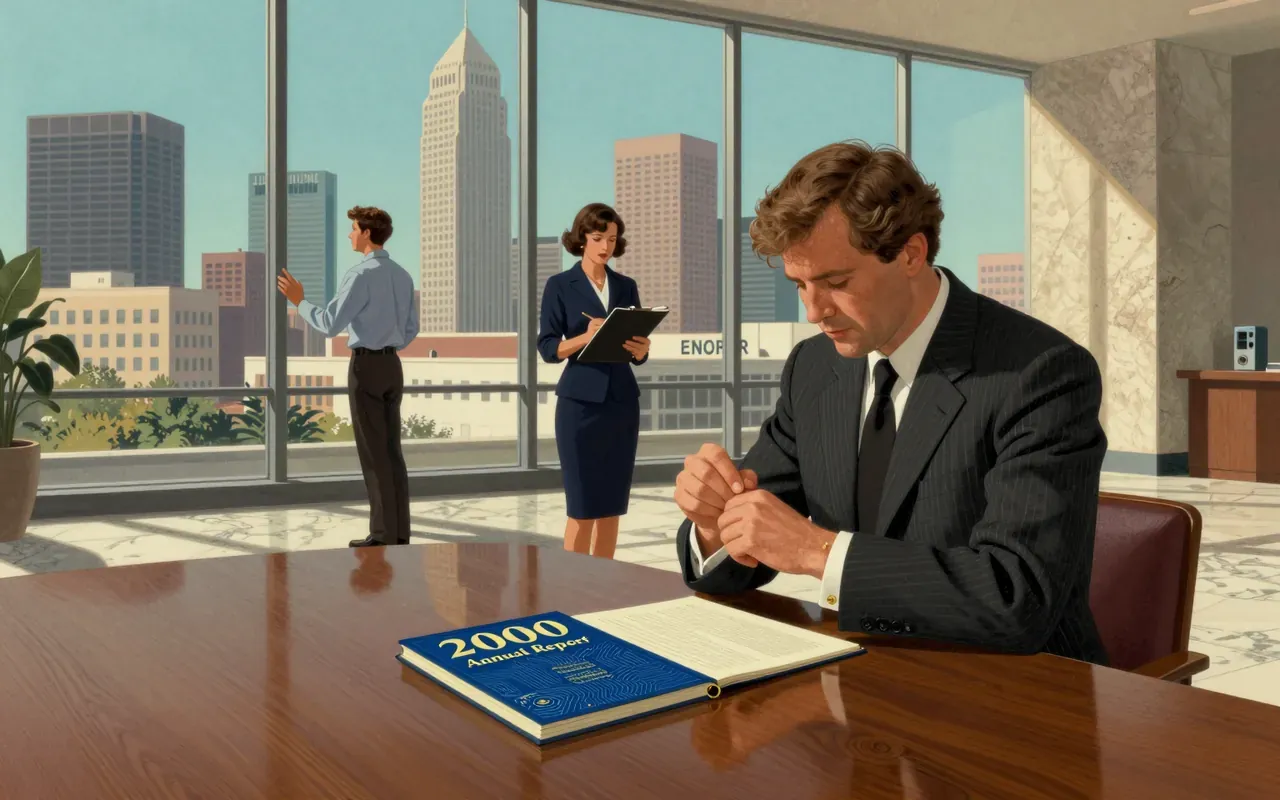
EnronKenneth Lay & Jeffrey Skilling · 1985Enron was an American energy, commodities and services company founded in 1985 through a merger. It grew into a major electricity, natural gas, communications, and pulp and paper company — then collapsed due to institutionalised, systematic accounting fraud. Its 2001 bankruptcy was the largest fraud-related bankruptcy in U.S. history. It reorganised as Enron Creditors Recovery Corp. in 2004.
10:09
Wirecard scandal2020Wirecard collapsed on 25 June 2020 when €1.9 billion vanished — not due to market forces, but because its financial statements were systematically falsified. Forged contracts, round-tripping, and inflated 'adjusted' accounts masked zero real cash flow. Auditors signed off. Regulators deferred. Investors relied on metrics that bore no relation to IFRS standards. The scandal exposed a governance vacuum where complexity was weaponised to evade scrutiny.
9:47
WorldCom scandalWorldCom was a telecommunications company whose collapse resulted from systematic, top-down accounting fraud — 49 identical, undocumented journal entries that shifted $3.8 billion in operating expenses to the balance sheet as capital expenditures. This inflated assets by over $11 billion and turned a $395 million loss into a $130 million profit for Q1 2002. The fraud was uncovered by Cynthia Cooper’s internal audit unit — not external auditors or regulators. It exposed how financial reporting can be weaponised when controls are overridden and documentation abandoned.
Up next in Business

ExxonMobil

Rockefeller Standard Oil · 1882 · 12:06

A single company emits 1.58% of the world’s CO2 — and calls itself an energy transition player.

12:06