Saved
Companies · Product

SMA Solar Technology

1981

SMA proves that in the energy transition, hardware scale — not software hype — still pays.

Worth your time?4/5Yes.Study the whole thing.What works, what does not, who it is for ↓
8:50in productionCh. 1 · What SMA actually is/ 8:50 · ceiling 15 min
4 chapters · 8:50Ceiling 15:00

The brief is written and checked. The video joins this page when it is cut.4 chapters · 1 min read · 8:50 planned

Read the brief

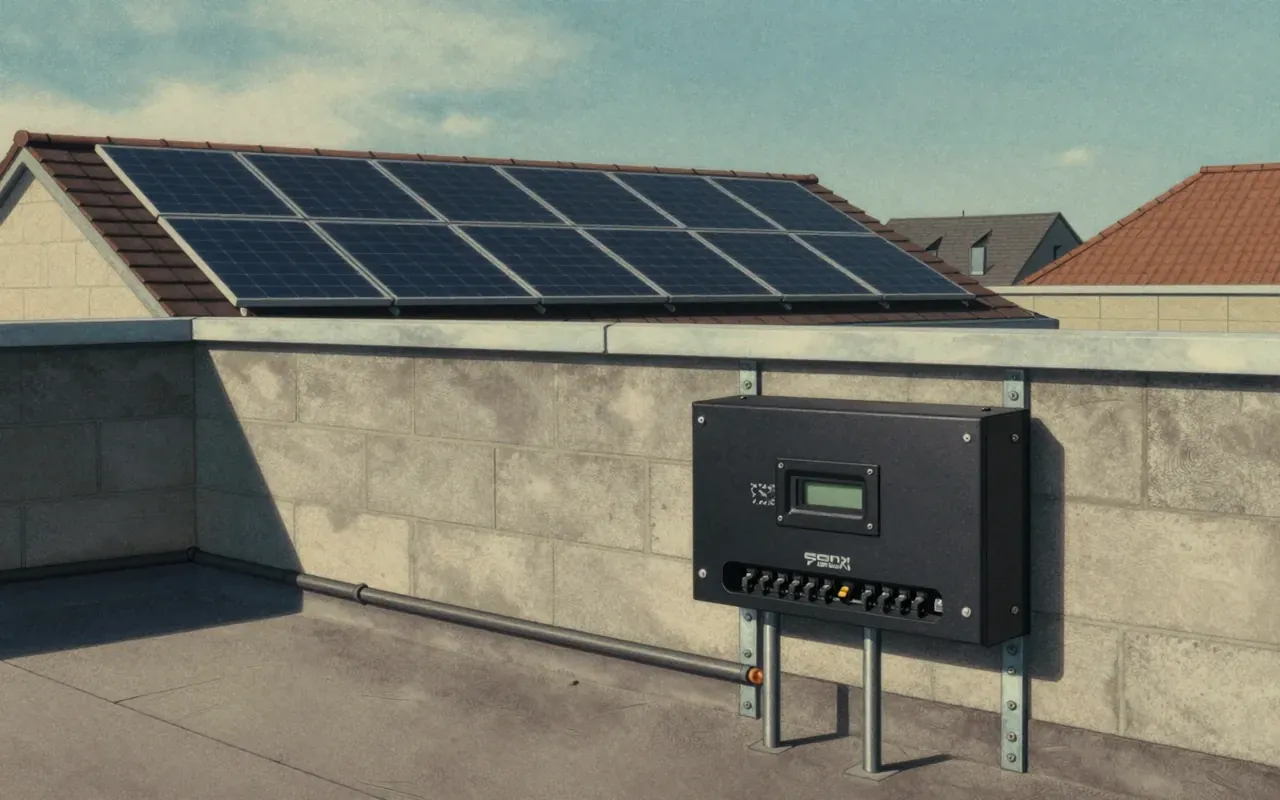
SMA Solar Technology is a German inverter manufacturer — not a solar developer, utility, or software platform. It generated €1.9bn in sales and €311m EBITDA in 2023 — real revenue, not funding or projections. It is Europe’s largest solar technology company by revenue — with offices in 20 countries. It bought its own component supplier in 2011 — then dropped unrelated businesses like railway engineering.

Chapters & takeaways4
  1. 0:54
    What SMA actually is

    SMA is a German inverter manufacturer — not a solar developer, utility, or software platform.

  2. 2:24
    How much it earns — and where

    It generated €1.9bn in sales and €311m EBITDA in 2023 — real revenue, not funding or projections.

  3. 4:06
    Scale without sprawl

    It is Europe’s largest solar technology company by revenue — with offices in 20 countries.

  4. 5:20
    Vertical moves, not diversions

    It bought its own component supplier in 2011 — then dropped unrelated businesses like railway engineering.

1 more chapterFewer chapters
Worth your time?

Yes. Study the whole thing.

4/ 5
What works
  • scale in core hardware
  • vertical integration via dtw acquisition
  • geographic reach across 20 countries
  • profitability in a volatile sector
What does not
  • software-defined energy
  • consumer-facing energy retail
  • solar farm development
  • upstream solar panel production
Study it if
  • industrial investors
  • energy infrastructure analysts
  • hardware supply-chain strategists
Skip it if
  • venture capital scouts
  • SaaS product managers
  • climate fintech builders
Who should study it, and who should skipHide who it is for
The written brief1 min read

What the company or idea is

SMA Solar Technology AG is a German manufacturer of solar inverters and related system technology for photovoltaics, battery storage, and energy management. Founded in 1981 and headquartered in Niestetal, Germany, it operates in 20 countries.

How it actually makes money

SMA makes money by manufacturing and selling solar inverters — hardware that converts DC electricity from solar panels into AC electricity for grid connection, off-grid use, or backup power. It also develops and sells battery storage systems and energy management technology.

What works

Its core inverter business delivers scale: €1.9bn in sales and €311m EBITDA in 2023. It holds the top revenue position among Europe-based solar technology companies. Its 20-country footprint supports global distribution without relying on a single market.

What does not

SMA does not control upstream solar panel production or downstream installation and operations. Its railway engineering and industrial computer divisions were abandoned. It has no disclosed involvement in solar farm development, financing, or consumer-facing energy retail.

What to take from it

SMA shows how a vertically aware hardware company sustains scale in renewables: by owning critical subsystems (e.g., acquiring its electronic components supplier dtw in 2011), focusing on reliability-critical infrastructure (inverters), and avoiding diversions into unconnected domains (it exited railway engineering and industrial computers).

Is it worth your time

Yes — if you are assessing European industrial players in the energy transition, especially those with scale, vertical integration in components (e.g., the 2011 dtw acquisition), and proven revenue discipline (€1.9bn sales, €311m EBITDA in 2023). No — if you expect innovation in software-defined energy or new business models like subscription-based grid services; SMA remains a hardware-first manufacturer.

Same desk · Companies4 of 325
10:01
MOL (company)1991MOL is a Hungarian multinational oil and gas company founded on 1 October 1991 and headquartered in Budapest, Hungary. It operates across exploration and production, refining, distribution and marketing, petrochemicals, power generation, trading and retail. As of December 2025, over 45% of its shares are free floated. As of September 2025, it suspended activities in Russia following the Russian invasion of Ukraine.
10:56
ABBCharles Eugene Lancelot Brown · 1988ABB is a post-merger industrial incumbent whose value lies in proven, regulated, physical infrastructure — not software, platforms, or scalability stories.
11:00
Valero Energy1980Valero Energy is a fuels producer focused on transportation fuels and related products. It is headquartered in San Antonio, Texas, United States. Throughout the United States, Canada, and the United Kingdom, the company owns and operates 14 refineries with a combined throughput capacity of approximately 3.2 million barrels per day, two renewable diesel plants that produce approximately 1.2 billion gallons per year, and 12 ethanol plants with a combined production capacity of 1.6 billion gallons as its subsidiaries. According to a number of estimates, Valero has become a major producer of corn ethanol and renewable diesel. Valero was established on January 1, 1980, as a spinoff of Coastal States Gas Corporation's Subsidiary, LoVaca Gathering Company. In 1997, Valero merged its natural gas service business with Pacific Gas and Electric Company and spun off its refining assets to form Valero Energy Corporation. In 2001, Valero completed its acquisition of Ultramar Diamond Shamrock. In 2009, Valero Energy Corporation entered the ethanol market by acquiring 7 ethanol plants in March, and another 3 ethanol plants, purchased in December, all located in the Midwest of the United States.
11:09
NNPC1977NNPC Limited is Nigeria’s state-owned oil monopoly, restructured in July 2022 as a limited liability company to project commercial credibility. It controls all petroleum operations in Nigeria, manages joint ventures with Shell, ExxonMobil, TotalEnergies, Chevron and others, and holds $153B in assets — making it Africa’s largest national oil company. Its claim to operate commercially post–2021 Petroleum Industry Act is undermined by its statutory monopoly, lack of competition, and continued role as the federal government’s exclusive petroleum agent. Its first DES LNG cargo to Japan in June 2024 marks an export milestone but reveals nothing about actual market access or governance reform.
Up next in Business

Soros Fund Management

George Soros · 11:46

A legendary hedge fund didn’t evolve—it vanished into a family office to avoid regulators.

11:46