What the company or idea is
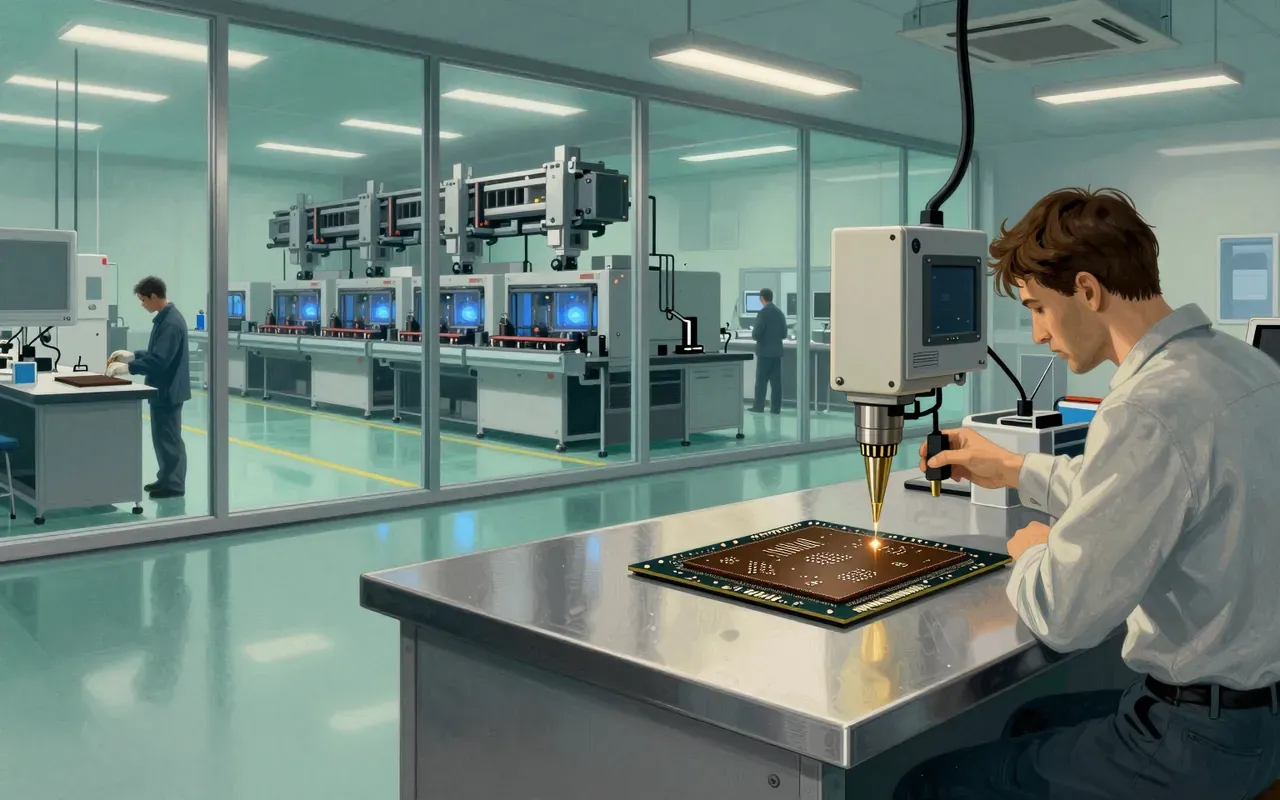
AMD is a multinational semiconductor company founded in 1969 in Santa Clara by Jerry Sanders and ex-Fairchild colleagues, building CPUs, GPUs, FPGAs, SoCs, and high-performance computing components.
AMD was incorporated on 1 May 1969 by Jerry Sanders and seven Fairchild colleagues. Sanders was Fairchild’s director of marketing, and had grown frustrated with the lack of support and flexibility there. To secure customers at once, AMD started as a second-source supplier of chips designed by Fairchild and National Semiconductor, guaranteeing quality control to United States Military Standard. It went public in September 1972, and total sales topped $100 million in fiscal year 1978.
How it actually makes money
AMD makes money by selling microprocessors, GPUs, FPGAs, SoCs, and motherboard chipsets to PC makers, gaming hardware vendors, data centre operators, and embedded-systems integrators.
The business has changed shape several times. AMD began by manufacturing its own chips, and outsourced manufacturing after GlobalFoundries was spun off in 2009, a joint venture with an investment company formed by the government of Abu Dhabi that gave AMD an infusion of cash and let it focus solely on chip design. It bought the graphics company ATI Technologies in 2006 for approximately $5.4 billion in cash and stock, and the FPGA maker Xilinx in an all-stock deal completed in February 2022 at an estimated $50 billion. In the late 2010s it regained market share with a penetration pricing strategy for Ryzen, offering competitive performance at lower cost than Intel.
What works
The 1981 cross-license agreement let AMD legally produce x86 clones, giving it market access without full R&D parity — a pragmatic path to scale in a capital-intensive industry.
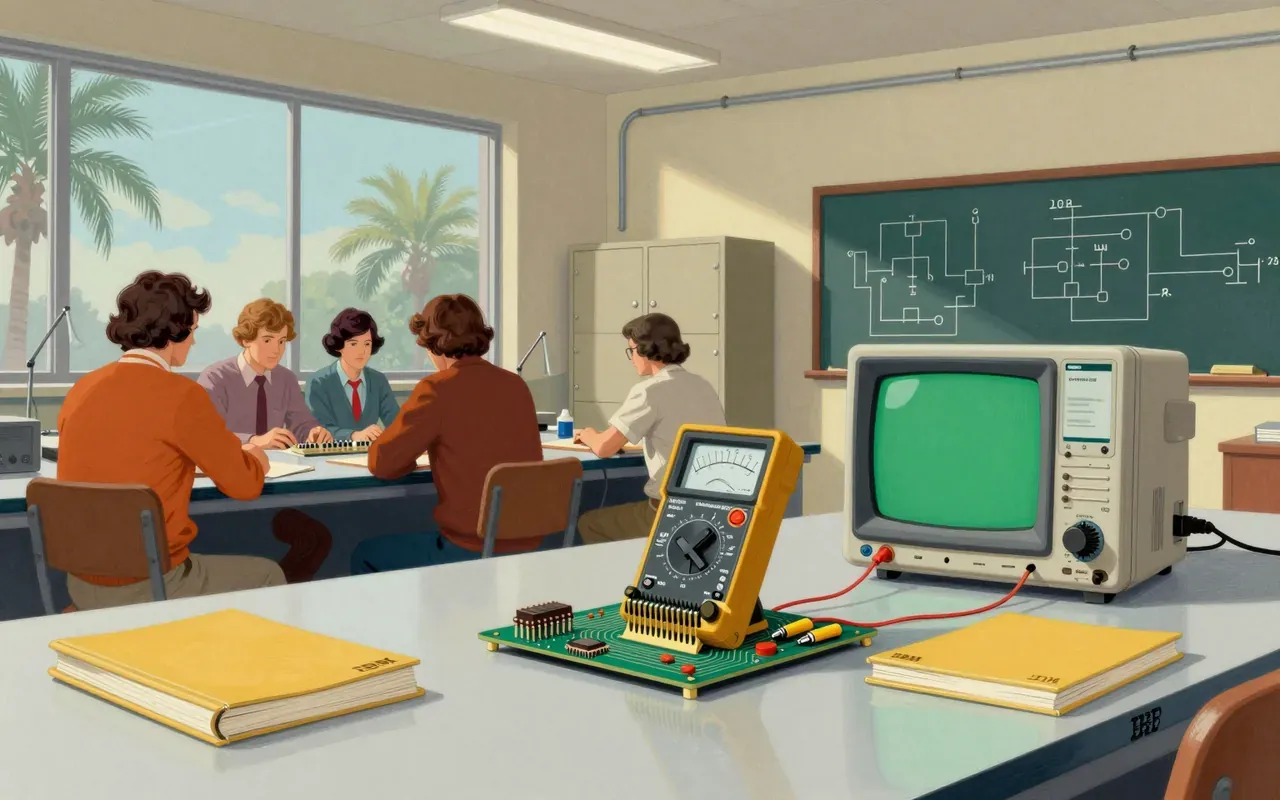
The 1981 arrangement came from IBM, which wanted Intel’s x86 processors only if Intel provided a second-source manufacturer. Intel and AMD signed a 10-year technology exchange agreement in October 1981, executed in February 1982, under which each could earn the right to make a product developed by the other by exchanging rights to a product of equivalent complexity. The developing company was paid a royalty. The agreement carried a catch: if AMD went bankrupt or was taken over, the cross-licensing agreement would be effectively cancelled.
What does not
AMD did not design its own x86 microprocessors until forced to do so after its 1994 legal victory over Intel — before that, it relied on cross-licensed clones.
That line needs qualifying. The Am386, a 386-compatible chip described as AMD-designed, dates to 1991, before the 1994 outcome. AMD’s earlier x86 position was as a second-source maker of Intel-licensed 8086, 8088, 80186 and 80188 parts from 1982, with its own Am286 clone of the 80286 by 1984. The seven-year legal battle began after Intel refused to share the blueprint of its i386 with AMD. The company was not always winning afterwards: it struggled to compete with Intel in the late 2000s and early 2010s, cut 1,100 jobs in 2009, and announced layoffs of more than 10% of employees in 2011. The inclusion of AMD chips in the PlayStation 4 and Xbox One was later seen as saving it from bankruptcy.
What to take from it
AMD’s history shows that technical autonomy in chip design is not a birthright but a hard-won concession — earned through litigation, not innovation alone.
Is it worth your time
Yes — AMD reveals how a semiconductor firm can survive decades as a second-tier supplier by leveraging legal licensing, reverse-engineering, and court-enforced independence from its dominant rival.