businessbriefs
Topic

Cooking

The daily technology, and the only one everybody practises.

2
in business
10:00
average
20 min
in total
158
across the network
Cooking across the network →
All briefs2
9:32

E.Leclerc

Édouard Leclerc · 1948

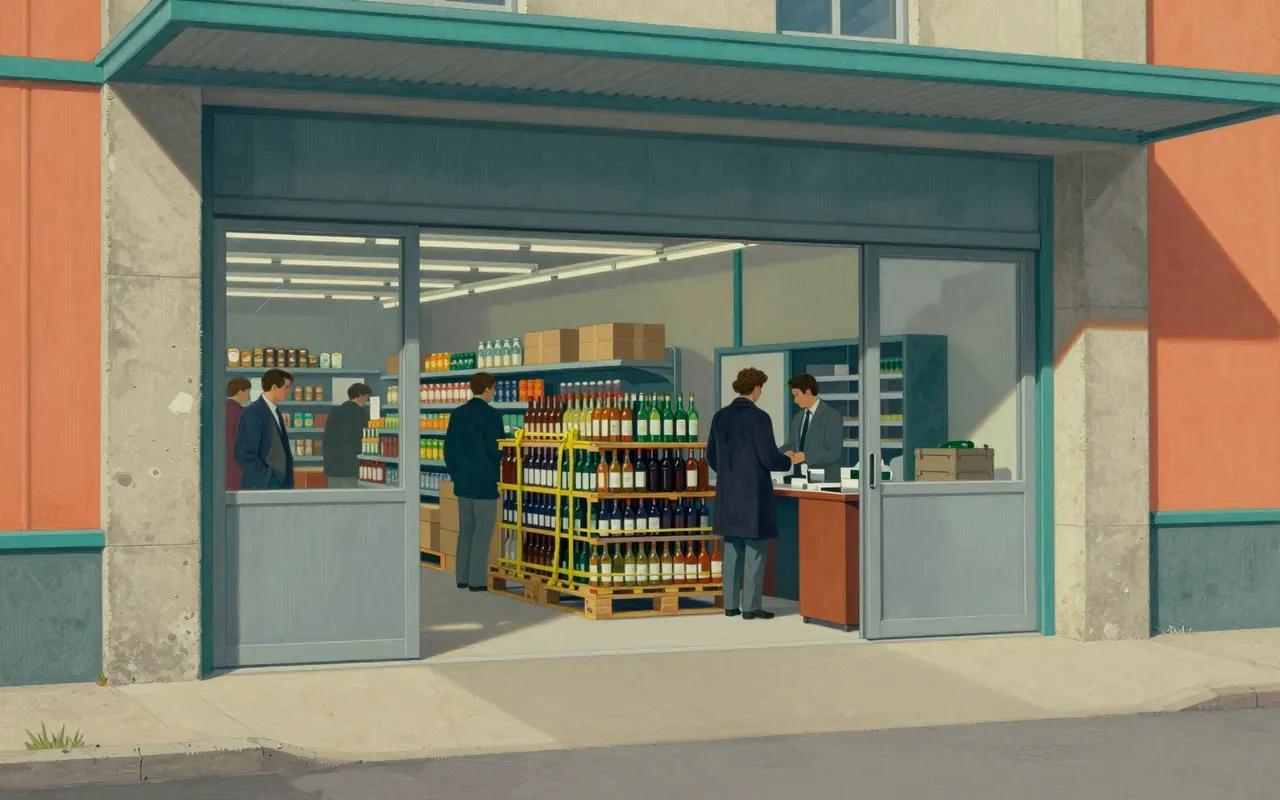
E.Leclerc is a French retailers’ cooperative founded in 1948. It pioneered the hypermarket format in 1964, adopted self-service retailing from the Félix Potin model, launched wine fairs in 1973, discontinued disposable plastic bags in 1996, introduced the Repère brand in 1997, and expanded internationally starting with Pamplona in 1992 and most recently into Luxembourg in 2023 via acquisition.

10:28

ShopRite

A supermarket empire built on shared warehouses—not shared shareholders.

More from business

All briefs →
video still
9:55

All Nippon Airways

Yoshida Shoji · 1952

ANA is Japan’s largest airline, rooted in a 1952 helicopter-and-aeroplane transport company. It launched Japan’s first postwar scheduled flight by a Japanese pilot in December 1953, added passenger service on the Osaka–Tokyo route in February 1954, and scaled into a dominant domestic carrier. Its growth reflects regulatory privilege more than competitive differentiation. No financials, pricing, or cost structure are disclosed in the source material.

video still
10:55

Free (ISP)

Xavier Niel · 1999

Free is a vertically integrated French ISP that built its own networks, hardware, and pricing model — rejecting reliance on incumbents and subscription lock-in. It achieved profitability and low churn through infrastructure control and disciplined bundling, not venture funding or hype.

video still
8:42

Magnit

Sergei Galitskiy · 1994

Magnit is a Russian food retailer founded in 1994 in Krasnodar by Sergey Galitsky. It grew rapidly from a regional chain into a national leader, adopting the convenience store format in 2004 and expanding to 1,000 stores by 2000 and 1,500 by 2005—surpassing Pyaterochka in revenue. By 2010 it ranked among the world’s top 250 retailers (Deloitte), and in 2014 became Russia’s largest importer. Its growth continued with milestones including 10,000 stores (2015), entry into pharmacy and drogerie formats, and strategic acquisitions like Dixy (2021) and Samberi (2024). Ownership shifted significantly after 2018, with Marathon Group becoming the largest shareholder in November 2021. Management transitioned from Galitsky to external CEOs starting in 2018, and the company pursued vertical integration via in-house production facilities and distribution infrastructure.

video still
10:37

OMV

Hans Susta · 1956

OMV is Austria’s major integrated oil- and gas company, founded in 1956 as the successor to the Soviet Mineral Oil Administration in occupied Austria. It makes money from refining crude oil at Schwechat, importing oil via the Adria–Vienna Pipeline from Trieste, selling natural gas supplied under contract with the Soviet Union, and operating transit infrastructure like the Trans-Austria Gas Pipeline. Its vertical integration worked: Schwechat refinery (1960), Soviet gas supply (1968), Adria–Vienna Pipeline (1970), and Trans-Austria Gas Pipeline (1974) formed a self-reinforcing system that locked in Austria’s role as a Central European energy node. OMV’s foundational model does not address decarbonisation, renewable generation, or energy storage. Its 1956–1974 expansion relied entirely on fossil fuel import, processing, and transit — with no indication of diversification beyond that scope in the source material. OMV shows how a national energy company can be built not through innovation or market creation, but through sequential infrastructure capture: refinery, pipeline, gas contract, transit corridor — each reinforcing the others’ value. Yes — as a case study in state-origined energy integration, infrastructure-led regional positioning, and Cold War-era resource diplomacy. Not as a model for modern energy transition strategy.