businessbriefs
10:52in productionCh. 1 · State birth/ 10:52 · ceiling 15 min
Companies · Strategy

Lukoil

Lukoil wasn’t built — it was decreed, then listed, then acquired.

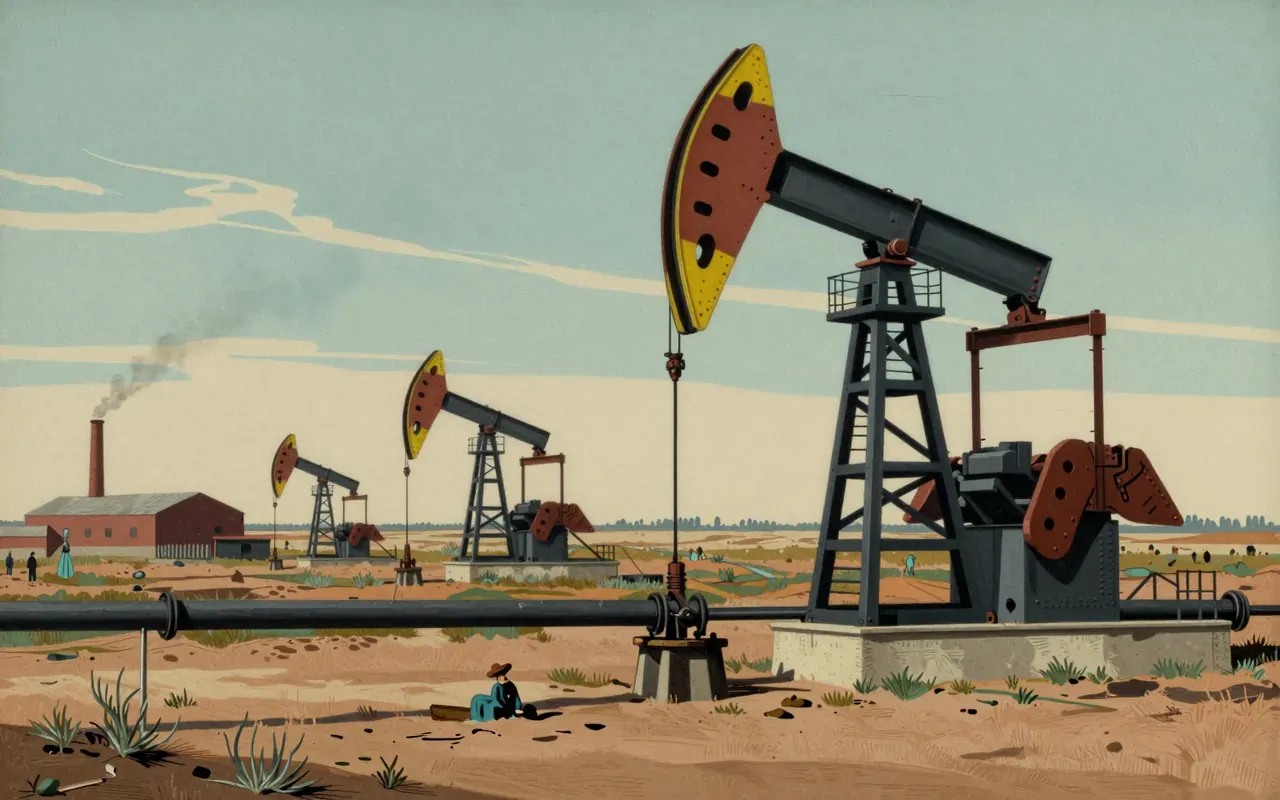
Lukoil is a Russian multinational energy corporation headquartered in Moscow, formed in 1991 by merger of three state-run western Siberian oil enterprises: Langepasneftegaz, Urayneftegaz, and Kogalymneftegaz.

Chapters & takeaways5
  1. 1:12
    State birth

    Lukoil began as a Soviet administrative merger — not a startup, not a spinout, but a top-down consolidation of three Siberian oil enterprises.

  2. 2:16
    Decree to shares

    Its 1993 reorganisation into a joint-stock company marked the legal pivot from state enterprise to private capital vehicle.

  3. 3:29
    First to list

    Lukoil pioneered Russian access to domestic and international equity markets — first on the Russian Trading System, then via U.S. ADRs.

  4. 4:54
    First to buy America

    Its 2000 acquisition of Getty Petroleum Marketing made it the first Russian company to own U.S. gas stations — a symbolic entry that failed to scale.

  5. 6:29
    Founder exit

    Vagit Alekperov’s 29-year tenure ended in 2022 — after becoming largest shareholder in 2008, he exited governance without succession detail.

Worth your time?

Yes. Study the whole thing.

3.5/ 5
What works
  • Its 1993 conversion to an open joint-stock company enabled it to become the first Russian firm to list on the Russian Trading System (1994) and file with the U.S. SEC (1995), establishing early credibility with foreign investors.
What does not
  • Lukoil’s Western-facing financial innovations — ADR listing, RAS listing, U.S. retail entry — did not sustain long-term integration or market share in the United States.
Study it if
  • investors assessing post-Soviet energy transitions
  • policy analysts studying state asset privatisation
  • strategists evaluating cross-border M&A in sanctioned markets
Skip it if
  • entrepreneurs seeking startup playbooks
  • consumers evaluating brand trustworthiness
  • climate analysts tracking decarbonisation progress
The written brief1 min read

What the company or idea is

Lukoil is a Russian multinational energy corporation headquartered in Moscow, formed in 1991 by merger of three state-run western Siberian oil enterprises: Langepasneftegaz, Urayneftegaz, and Kogalymneftegaz.

How it actually makes money

Lukoil makes money from extraction, production, transport, and sale of petroleum, natural gas, petroleum products, and electricity.

What works

Its 1993 conversion to an open joint-stock company enabled it to become the first Russian firm to list on the Russian Trading System (1994) and file with the U.S. SEC (1995), establishing early credibility with foreign investors.

What does not

Lukoil’s Western-facing financial innovations — ADR listing, RAS listing, U.S. retail entry — did not sustain long-term integration or market share in the United States.

What to take from it

Lukoil demonstrates how Soviet industrial assets were repackaged for private ownership and global finance — not through organic growth, but via decree-driven reorganisation, selective Western market access, and opportunistic asset acquisition.

Is it worth your time

Yes — as a case study in state-to-private energy transition, early Russian capital markets experimentation, and cross-border acquisition strategy under geopolitical constraint.
Same desk · Companies4 of 217
12:57
MeituanWang Xing · 2010Meituan is a Chinese technology company headquartered in Beijing that operates a platform for local services, including on‑demand food delivery, in‑store services, consumer reviews under Dazhong Dianping, hotel and travel bookings, and instant retail. It monetises through fees on its platform, taking a commission on food delivery orders and charging merchants for booking and in‑store services. Meituan’s rapid user growth is driven by its extensive coverage of local services, its integration of food delivery, in‑store services, and hotel bookings creating a one‑stop shop, and its large merchant base of 14.5 million active merchants providing network effects. Meituan faces regulatory scrutiny in China, its 2021 post by Wang Xing triggered a 7.1 % share plunge and anti‑monopoly investigation, and the company has been subject to scrutiny by Beijing Municipal Human Resources and Social Security Bureau. Meituan demonstrates the power of a diversified local‑services platform, its ability to scale across cities and internationally shows the importance of network effects, and its regulatory challenges highlight the need for compliance awareness. Meituan offers a case study in rapid scaling and diversification, but its regulatory risks caution investors.
10:56
ABBCharles Eugene Lancelot Brown · 1988ABB is a post-merger industrial incumbent whose value lies in proven, regulated, physical infrastructure — not software, platforms, or scalability stories.
10:50
AbbVie2012AbbVie is a textbook example of post-innovation pharmaceutical value extraction — built on a single blockbuster, sustained by patent thickets and pricing, checked only by biosimilars and congressional scrutiny.
11:08
Abu Dhabi National Oil Company1971ADNOC is the state-owned oil company of Abu Dhabi, UAE — founded by concession in 1939, ranked 12th globally by production, and expanding output to 5 million barrels per day by 2027. It is the UAE’s largest oil company. Output rose from ~2.5 mbpd in the 1990s to 2.9 mbpd in 2008 and 4.85 mbpd in 2024. It is described as efficient and well managed, but financially opaque. It is one of few oil companies increasing production amid climate pressure.
Up next in Business

Lundin Energy

2001 · 11:36

A fossil fuel company that sold its entire oil and gas business — then kept the name only for the renewables spin-off.

11:36