
businessbriefs
9:56in productionCh. 1 · The First Options Exchange/ 9:56 · ceiling 15 min
Finance · Companies

Cboe Global Markets

1973

A 1973 options experiment became a global exchange empire — but its open outcry floor is a museum piece, not a moat.

Cboe Global Markets is a vertically integrated exchange operator whose business rests on three geographically and structurally distinct markets — U.S. options, U.S. equities, and European equities — all anchored by a 1973 innovation. Its open outcry floor contradicts its electronic dominance. Its growth came not from product invention after 1973, but from acquisition and rebranding. It is a case study in infrastructure longevity, not disruption.

Chapters & takeaways4
  1. 1:06
    The First Options Exchange

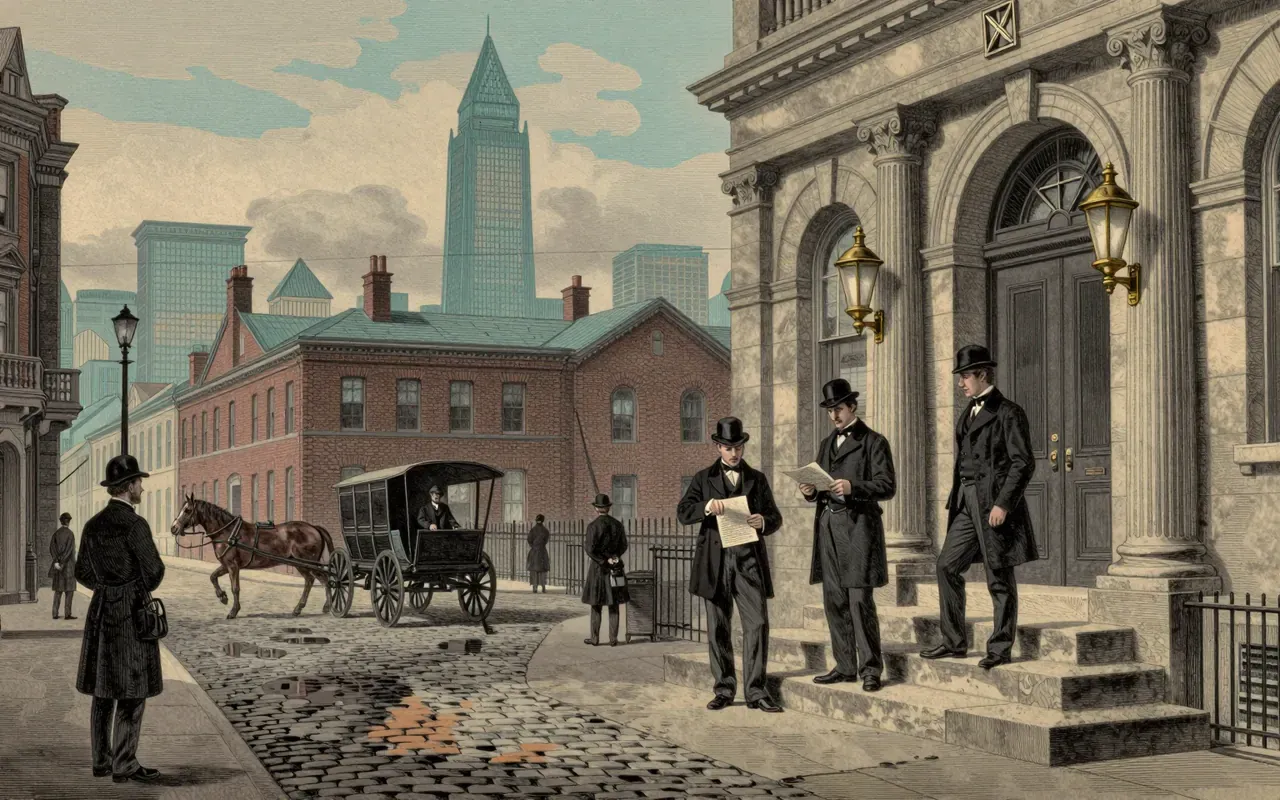
    Cboe was founded in 1973 by the Chicago Board of Trade to list the world’s first standardised, exchange-traded stock options.

  2. 2:22
    Three Exchanges, One Owner

    Cboe controls 30% of U.S. options, 10% of U.S. equities, and 25% of European equities — three distinct markets, one corporate entity.

  3. 4:07
    The Last Open Outcry Floor

    It maintains an open outcry trading floor in Chicago — the only major exchange operator still doing so at scale.

  4. 5:32
    From CBOE to Global Markets

    It went public in June 2010 and rebranded to Cboe Global Markets in October 2017 — signalling a shift from U.S. options specialist to global infrastructure provider.

Worth your time?

Yes. Study the whole thing.

4/ 5
What works
  • standardisation-as-infrastructure
  • acquisition-driven-globalisation
  • legacy-mechanism-as-brand-signifier
What does not
  • disrupt
  • invent
  • scale organically
Study it if
  • market-structure-analysts
  • exchange-regulators
  • financial-history-students
Skip it if
  • startup-founders
  • venture-capitalists
  • product-managers
The written brief1 min read

What the company or idea is

Cboe Global Markets is an American financial exchange operator founded in 1973, headquartered in Chicago, operating the largest U.S. options exchange (30% share), third-largest U.S. equities exchange (10%), and largest stock exchange in Europe (25%).

How it actually makes money

Cboe Global Markets makes money by charging fees for trading, listing, data, and market infrastructure services across its U.S. options, U.S. equities, and European stock exchanges.

What works

Its 1973 launch of standardised options created a new asset class and pricing discipline; its acquisitions and rebranding (2017) successfully extended that franchise into European equities and multi-asset infrastructure.

What does not

Its open outcry trading floor in Chicago is an operational anomaly in a fully electronic global market — costly to maintain and disconnected from its dominant electronic revenue streams.

What to take from it

Cboe shows how a single innovation — standardised, exchange-traded stock options — can anchor a decades-long business model even as ownership, branding, and geography expand far beyond its origin.

Is it worth your time

Yes — if you are studying how legacy financial infrastructure scales globally while preserving analog mechanisms like open outcry.

Same desk · Finance4 of 30
10:53
Apollo Global ManagementLeon Black · 1990Apollo Global Management is a $1.03 trillion alternative asset manager built on distressed-to-control investing, co-founded in 1990 by ex-Drexel bankers. It earns fees from pension funds, endowments, and sovereign wealth funds deploying capital across credit, private equity, and real assets. Its model works at scale—but its credibility fractures where leadership conduct contradicts its governance claims. The $158 million paid to Jeffrey Epstein did not disrupt operations, but it ended Leon Black’s tenure and exposed a rift between Apollo’s discipline-as-brand and its human risk.
10:03
BATS Global Markets2005BATS Global Markets was a stock exchange operator founded in June 2005 in Lenexa, Kansas. It became a licensed US stock exchange operator in 2008 and launched a pan-European market the same year. As of February 2016, it operated four US stock exchanges, two US equity options exchanges, the pan-European stock market, and a global foreign exchange market. It was acquired by Cboe Global Markets in 2017.
10:52
Bombay Stock Exchange1875BSE is a foundational financial infrastructure whose business model rests on regulatory privilege, not proprietary advantage. It has expanded jurisdictionally (India INX, commodities) but not substantively — no claim confirms new revenue streams, scale, or competitive differentiation. Its value lies in precedent, not performance.
9:53
Borsa Italiana1808Borsa Italiana is a regulated financial infrastructure asset with origins in Napoleonic statecraft. It generates revenue through listing and trading fees, but the material reveals no financial metrics. Its autonomy is constrained by successive foreign ownership: first LSEG (2007), then Euronext (2021). Its enduring function is regulatory — gatekeeping access to Italy’s public capital markets — not technological or competitive innovation. The gap between its self-presentation as a flexible market manager and its reality as a consolidated subsidiary is decisive.
Up next in Business

Cipla

1935 · 10:03

Cipla built scale before science—and still runs on that engine.

10:03