What the company or idea is
Adidas is a sportswear company founded in 1948 by Adolf Dassler after splitting from his brother Rudolf Dassler.
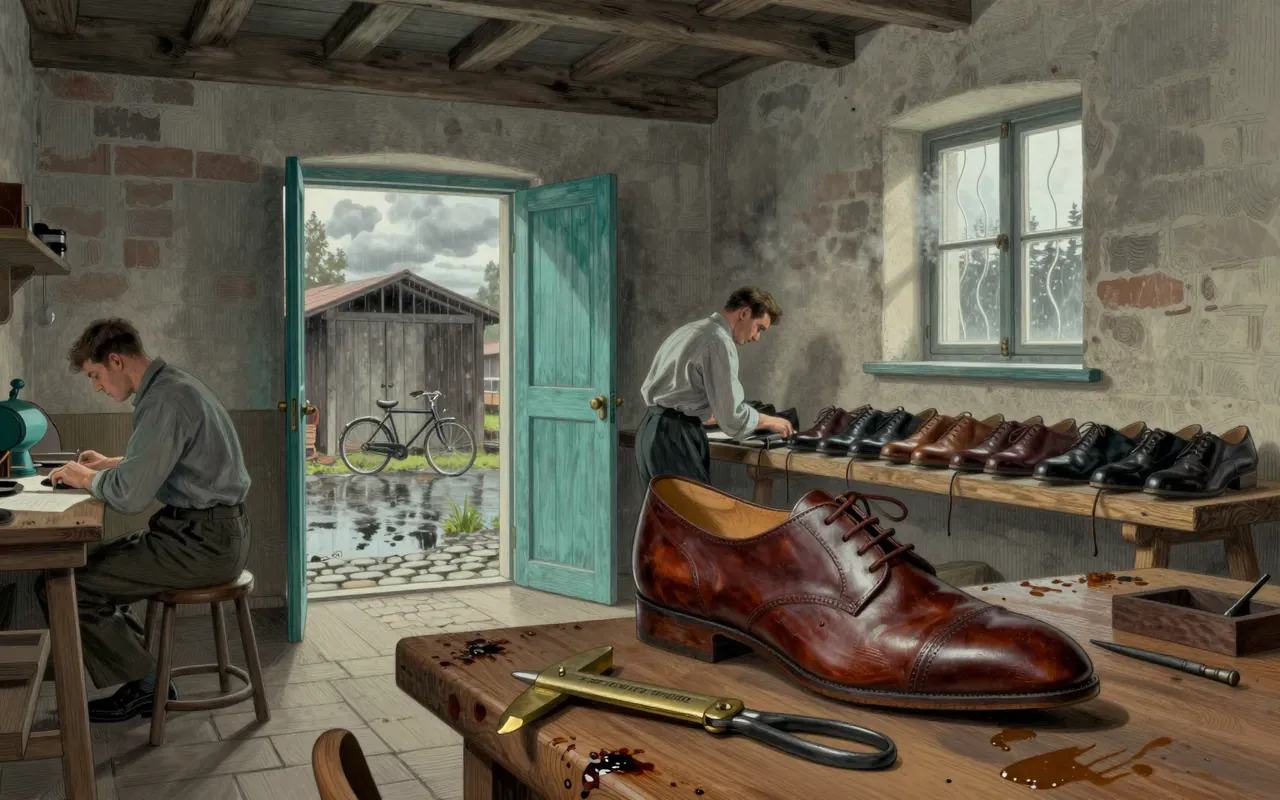
The firm began earlier, as Gebrüder Dassler, registered on 1 July 1924 in Herzogenaurach, with Rudolf joining the year before. It operated from a former washroom converted into a small workshop. In post-war Germany there was no reliable supply of materials or credit, so Dassler scavenged army debris, taking leather for soles from helmets and bread pouches. After the Second World War, until leather became available, he made shoes from the rubber of fuel tanks and rafts and the canvas of tents. When the brothers split, the employees chose which firm to join. Most of the sales staff went with Rudolf, while almost all the technicians and product developers stayed with Adolf, who ended up with nearly two-thirds of the workforce.
How it actually makes money
Adidas made money by selling sports shoes built with proprietary material experiments and athlete endorsements — not branding or lifestyle marketing.
The endorsement model has a traceable start. Jesse Owens accepted a wordless offer and wore Dassler shoes at the 1936 Berlin Olympics, and after the war American orders for basketball, baseball and hockey footwear gave the firm its first boost toward worldwide success. After the war Dassler became a regular presence beside the West German football coach Sepp Herberger, adjusting players’ shoes during matches. The three stripes began as a practical device: Dassler coloured the reinforcing straps on the sides differently from the shoe so that it was visible which athletes wore his footwear. He registered the three-stripe logo as a trademark in March 1949.
What works
Dassler’s scientific shoe development, use of unconventional materials (shark skin, kangaroo leather), early spiked shoes forged by a family smithy, and athlete endorsements delivered measurable outcomes: 17 factories and one billion Deutschmarks in annual sales at his death.
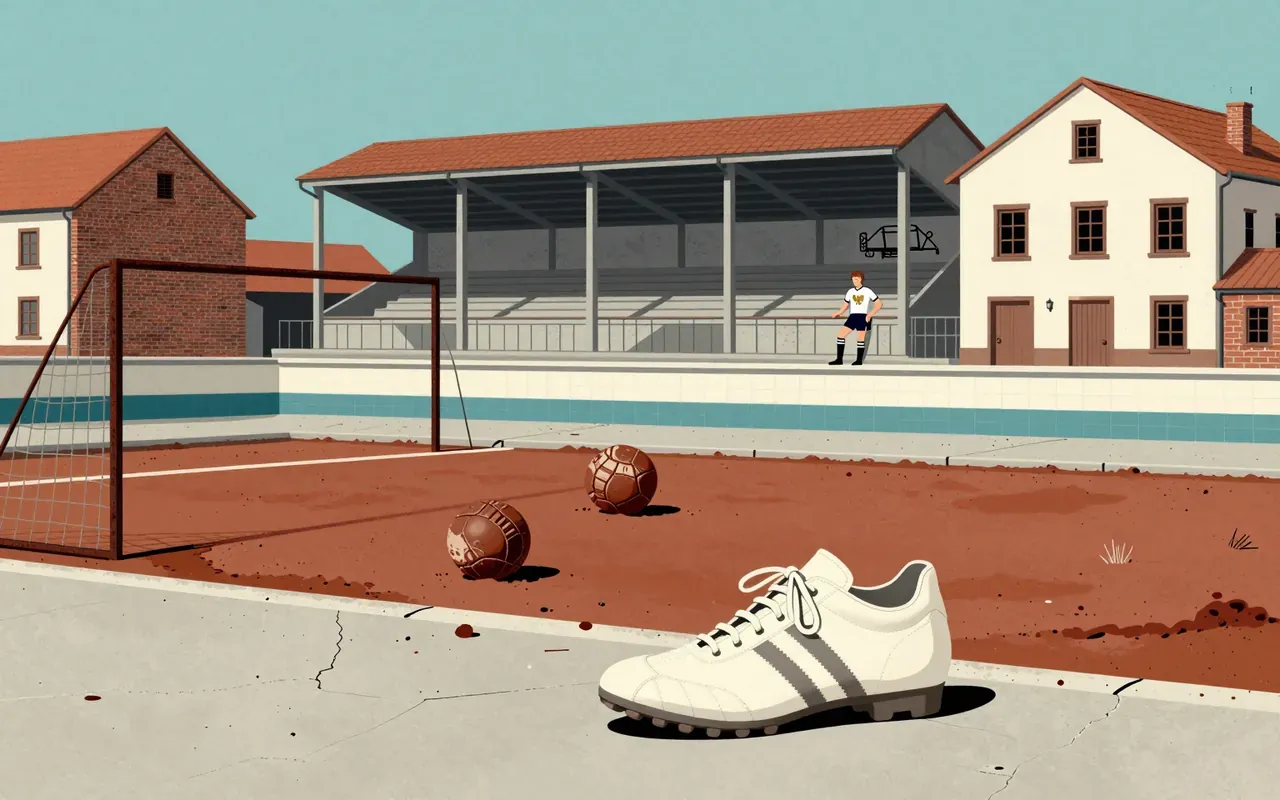
The clearest product case is the 1954 World Cup final. Dassler had developed screw-in studs, which let a player fit spikes of different lengths to the state of the pitch rather than relying on fixed leather studs. As the pitch at Wankdorf Stadium deteriorated, Herberger is recorded as saying, “Adi, screw them on.” West Germany came from behind to beat Hungary 3–2, and Herberger publicly praised Dassler as a contributor to the win.
What does not
The company did not scale through venture capital, digital platforms, or global retail partnerships. It operated as a vertically integrated German manufacturing business.
The company’s origins are not a clean story of product alone. Dassler joined the Nazi Party on 1 May 1933 and supplied Hitler Youth–affiliated clubs, and in 1946 a denazification panel first classed him a Belasteter, a category that could have removed him from managing the firm. On appeal he was first moved to Minderbelasteter and, on 11 November 1946, reclassified as a Mitläufer, and ownership was returned to him on 3 February 1947. The firm’s equipment was replaced in December 1943 to make Panzerschreck anti-tank weapons, and that Dassler showed the panel the firm lost 100,000 marks on that production.
What to take from it
A durable business can emerge from obsessive product development, localised production control, and athlete-driven validation — without mass media or shareholder pressure.
The family ownership he left behind did not last forever. After his death his wife and son took over management, Adidas became a private limited company in 1989, and it remained family property until its IPO in 1995.
Is it worth your time
Yes, if you are studying how product-led industrial companies scale through technical iteration and direct athlete collaboration — not founder mythmaking.