businessbriefs
10:37in productionCh. 1 · Shopfront origins/ 10:37 · ceiling 15 min
Companies

Mitsui

1876

Mitsui didn’t build Japan’s modern economy — it rebuilt itself inside every regime that followed.

Mitsui is not a company but a recursive institutional pattern: a shop that became a bank that became a holding company that became a network of nominally independent firms. Its durability comes from reusing the same financial levers — cash flow control, regulatory licensing, and inter-firm credit — across four centuries of political change.

Chapters & takeaways5
  1. 1:07
    Shopfront origins

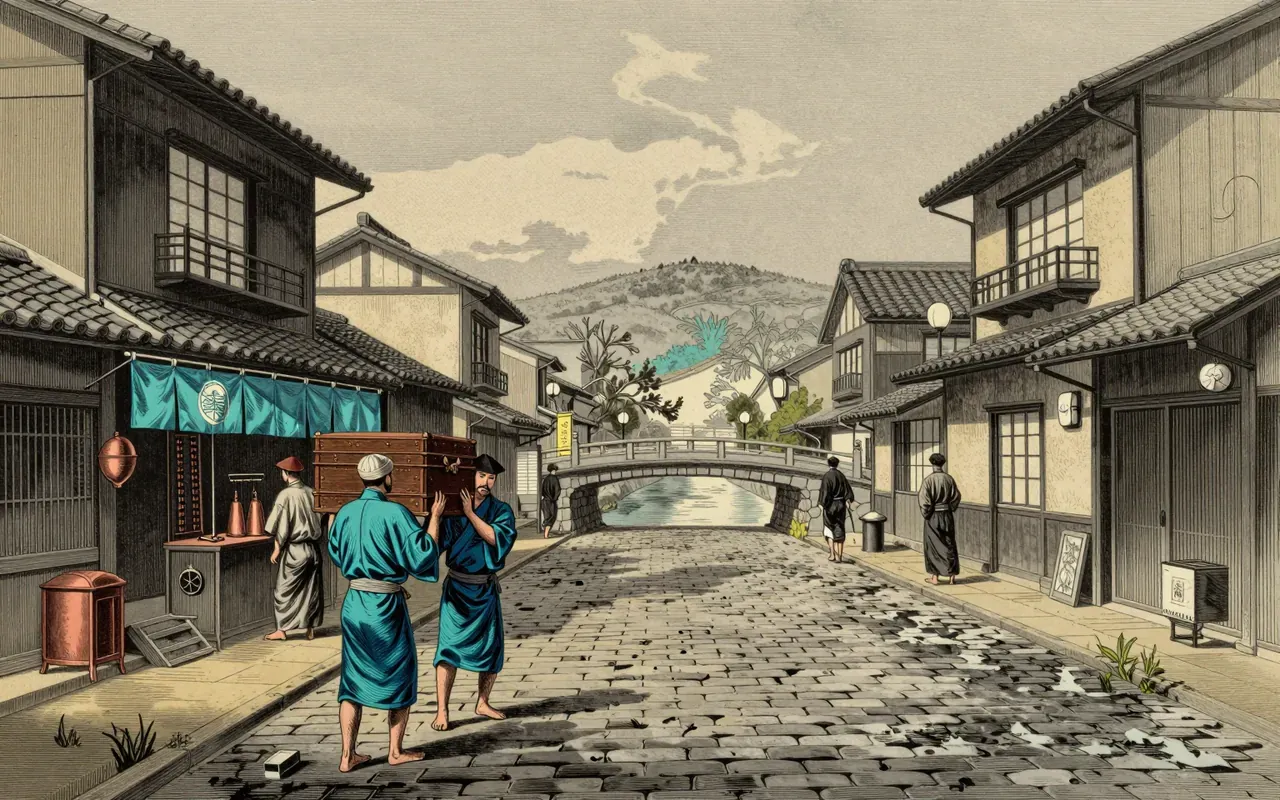
    Mitsui began as a kimono shop — not a conglomerate, not a bank, and certainly not a zaibatsu.

  2. 2:34
    Mechanics of trust

    Cash sales and licensed money exchanges were its first scalable, low-risk revenue engines.

  3. 3:43
    Bank as architecture

    Mitsui Bank wasn’t just a lender — it was the zaibatsu’s operating system from day one.

  4. 5:06
    Two legs, one ledger

    Drapery and finance weren’t adjacent businesses — they were the same business, run with different units of account.

  5. 6:19
    Autonomy as afterimage

    The ‘Mitsui Group’ today is not a successor — it’s a legal echo chamber for pre-1945 asset networks.

Worth your time?

Yes. Study the whole thing.

4.5/ 5
What works
  • It demonstrates how financial infrastructure outlives political regimes.
  • It reveals the difference between legal dissolution and economic continuity.
  • It shows that 'diversification' often means extending the same core service — credit — into new sectors.
What does not
  • Mitsui Bank was not Japan's first national bank — it was the first private bank.
  • Mitsui was not founded in 1876 — it was founded in the Edo period; 1876 marks formal zaibatsu institutionalisation.
  • The Mitsui Group is not a single company — it is a group of autonomous multinationals.
Study it if
  • Historians of corporate form
  • Students of postwar Japanese economic reconstruction
  • Analysts of keiretsu governance
Skip it if
  • Startup founders seeking innovation playbooks
  • Investors assessing current valuation or growth metrics
  • Marketers looking for brand storytelling templates
The written brief1 min read

What the company or idea is

Mitsui is a group of autonomous Japanese multinational companies, originating as a kimono shop in Edo in 1673 and formalised as a zaibatsu anchored by Mitsui Bank in 1876.

How it actually makes money

Mitsui made money through drapery, finance, and trade — with cash sales, pre-production retailing, and money exchange services enabled by shogunate permission. From 1876, Mitsui Bank served as the zaibatsu’s financial core, funding expansion into mining, shipping, and chemicals.

What works

Its early adoption of cash sales and pre-production retailing created predictable revenue cycles. Its licensed exchange shops mitigated transfer risk under shogunate oversight — turning regulatory permission into competitive advantage.

What does not

The zaibatsu model did not survive Allied dissolution orders after WWII. Its wartime use of American POW labor exposed a fatal misalignment between its operational logic and postwar geopolitical legitimacy.

What to take from it

Mitsui shows that ‘autonomy’ in a keiretsu is structural fiction: the real continuity lies in shared banking infrastructure, interlocking directorates, and inherited business lines — not shared ownership or strategy.

Is it worth your time

Yes — as a case study in how institutional continuity across political ruptures (Edo to Meiji to postwar) depends less on ideology than on control of capital flows and legal reconstitution.

Same desk · Companies4 of 164
Up next in Business

Nestlé

Henri Nestlé · 1866 · 11:01

Nestlé wasn’t built by Henri Nestlé — it was built by the state, the supply chain, and the people who kept its name after he left.

11:01