businessbriefs
9:48in productionCh. 1 · Vertically integrated/ 9:48 · ceiling 15 min
Companies

Grupa Lotos

1975

A national refiner with scale and lubricant leadership — but no defensible moat, no retail proof, and no independent future after 2022.

Grupa Lotos was a conventional, state-influenced Polish oil refiner — profitable at scale, dominant in lubricants, but without pricing power, retail traction, or strategic autonomy beyond 2022.

Chapters & takeaways5
  1. 0:57
    Vertically integrated

    Grupa Lotos was vertically integrated — controlling upstream, refining, and downstream operations.

  2. 2:06
    Refining at scale

    Revenue came from refining 6 million tons of crude annually and selling over 5.7 million tons of finished products.

  3. 3:26
    Lubricants leader

    It led Poland’s lubricants market — the only product segment where it held clear dominance.

  4. 4:28
    Profit surge, stable workforce

    Profit jumped sharply in 2005; headcount stood at 5,547 by mid-2006 — a stable, mature workforce.

  5. 5:52
    Absorbed, not acquired

    Its independence ended on August 1, 2022, when PKN Orlen completed the merger.

Worth your time?

No. The brief is enough.

2.5/ 5
What works
  • refining scale
  • lubricants leadership
  • profitability in 2005
What does not
  • retail market share
  • post-merger performance
  • exploration output
  • logistics margins
Study it if
  • students of European energy policy
  • analysts of vertical integration in commodities
Skip it if
  • founders seeking scalable models
  • investors assessing growth equity
The written brief1 min read

What the company or idea is

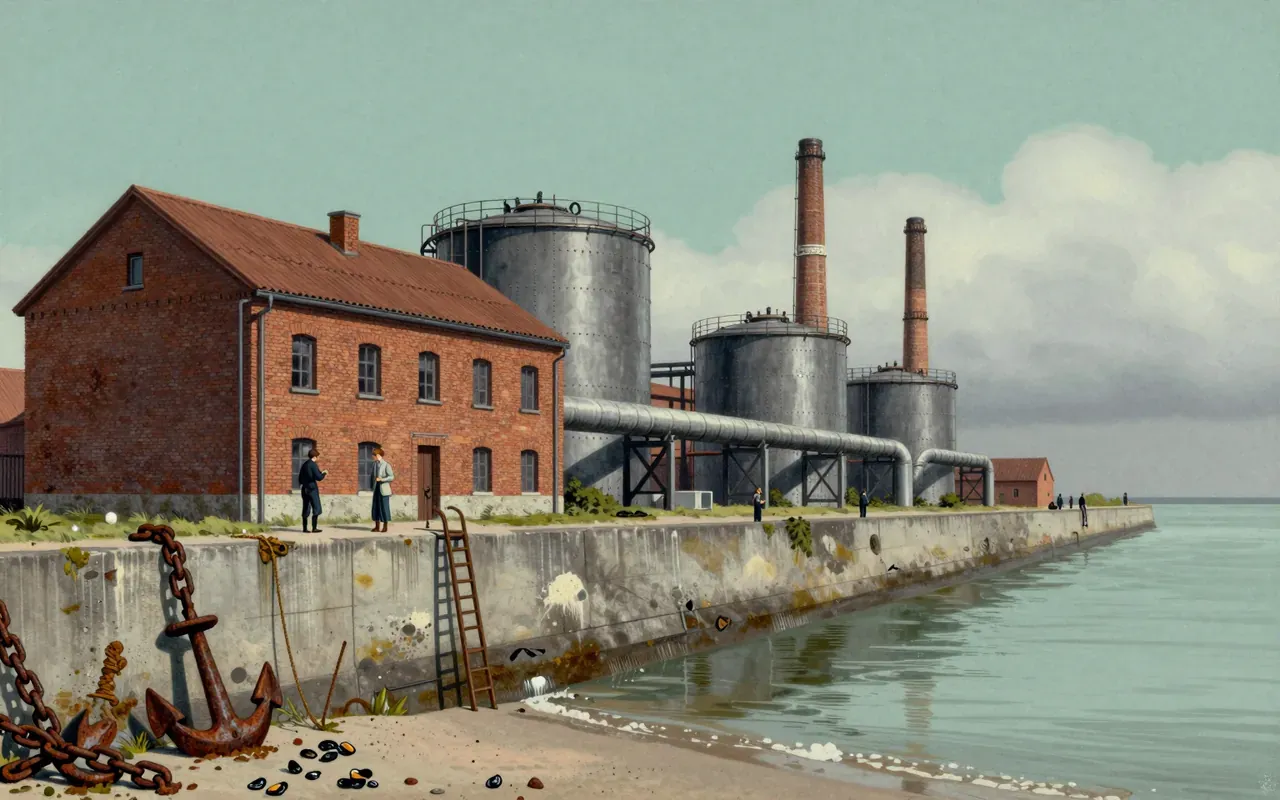
Grupa Lotos was a vertically integrated Polish oil company headquartered in Gdańsk, active in crude oil production, refining, and marketing of oil products.

How it actually makes money

Grupa Lotos made money by refining crude oil at its Gdańsk refinery (6 million tons/year capacity) and selling the resulting products: gasoline, diesel, aviation fuels, bitumens, waxes, and lubricants — where it led the Polish market.

What works

It operated a single large refinery at scale (6 million tons/year), sold over 5.7 million tons of refined products in 2005, and generated PLN 970 million in consolidated net profit that year — PLN 426 million more than in 2004.

What does not

Its retail expansion plan — targeting 500 stations and ~10% market share by 2012 — is stated as intent, but no evidence confirms achievement. The material gives no data on market share, station count, or retail profitability.

What to take from it

Vertical integration in refining is capital-intensive and exposed to margin volatility; leadership in lubricants did not translate into broader market dominance or structural advantage.

Is it worth your time

No. Its business model was conventional for a national oil refiner; its merger with PKN Orlen in 2022 marked absorption, not innovation.
Same desk · Companies4 of 297
10:34
Airbus1998Airbus in 1998 was a consortium — not a company — sustained by national governments and bound by treaty, not equity. Its money came from airliner sales, but its structure reflected diplomacy more than business logic. It worked because Europe prioritised strategic autonomy over market efficiency. It failed as a unified enterprise until it abandoned the consortium model entirely. The lesson is structural: scale in aerospace is political first, economic second.
12:10
Anglo American plc1917Anglo American plc is a British multinational mining company headquartered in London, founded in 1917 in Johannesburg. It is the world's largest platinum producer (40% of global output) and owns 85% of De Beers. It merged with Minorco in 1999 to become Anglo American plc, and with Teck Resources in 2025 to form Anglo Teck. Between 2015 and 2015, it cut 138,000 jobs. In early 2015, it reported a $3 billion loss. It withdrew from the Pebble Mine in 2013 and partnered with Engie and First Mode in 2019 to develop a hydrogen-powered haul truck.
12:01
Birks GroupHenry Birks · 2005Birks Group is the legal successor to Henry Birks and Sons — a Canadian jeweller founded in 1879, vertically integrated from design to retail, with manufacturing roots in Roden Bros. and national reach built through owned stores and co-branded acquisitions. Its 2005 merger with Mayors was a structural consolidation, not a new beginning.
11:34
Chorus Limited2011Chorus is a state-shaped infrastructure monopoly built from a 2011 demerger. It controls the physical layer of New Zealand’s internet — but not the customer relationship, pricing, or service design. Its success is measured in coverage and uptake, not profit per user or innovation. It works because regulation forces openness — not because it competes.
Up next in Business

Maxima Group

1992 · 10:32

Lithuania’s biggest retailer didn’t scale — it retreated.

10:32